


Green Supply Chains Start Here: Ethical Vendor Sourcing Strategies for 2026
The shift to responsible and environmentally conscious business practices is no longer an aspiration but is now an economic and regulatory necessity. As global markets face climate unpredictability, resource scarcity, and increasing scrutiny from both consumers and investors, the underpinnings of competitive advantage are changing. In this changing environment, the structure of a green supply chain becomes central to both resiliency and reputation. What began as a peripheral effort has become a strategic function and has shifted the priorities for procurement, vendor relationships, and growth into the future.
Ethical sourcing is a major part of this change. Companies are recognizing more and more often that they do not have the ability to fulfill their environmental pledges without looking beyond their four walls. Ultimately, a business is responsible for the upstream practices of its suppliers, subcontractors, and logistics providers. Consequently, an ethical and forward-thinking vendor sourcing strategy has rapidly made its way to the center of corporate responsibility. 2026 marks a period of acceleration, where governments, financial institutions, and markets are beginning to pay close attention to how businesses move from commitments to tangible and measurable outcomes.
Why Ethical Vendor Sourcing is Becoming Non-Negotiable
Leading industries, from manufacturing to technology to retail to consumer goods, find themselves under unusual external pressure to clean up their supply networks. Climate-related disclosures, sustainability audits, and compliance frameworks are taking hold across continents at an extraordinary rate. Companies today are not simply being asked to reduce emissions; they are asked to measure the environmental footprint of each link in their supply chain.
At the same time, buyers’ preferences have radically changed. Particularly in urban markets, buyers have demonstrated loyalty to brands that promise transparency, treat their workers fairly, and respect the environment in their production practices. Ethical sourcing is therefore more than compliance; it is a key differentiator in the marketplace.
The integration of sustainability expectations is also changing supplier behavior. Many small and mid-size businesses are discovering that long-term contracts will depend on their environmental policies and willingness to integrate greener production practices. This forms a reinforcing ecosystem where responsible sourcing becomes the norm, not the exception.
Building a Framework for Ethical Vendor Evaluation
A green and ethical sourcing framework operates on a combination of environmental, social, and governance (ESG) criteria. For 2026, the most effective models prioritise the following dimensions:
1. Environmental Performance Assessment
Procurement teams should evaluate suppliers more deeply than just their certifications. This means investigating water use, emissions intensity, waste management, and renewable energy. Their scope also has to include an examination of whether they maintain readily identifiable systems that demonstrate their inputs meet defined environmental standards.
2. Auditability and Transparency
Ethical sourcing requires verifiable facts. Companies need to ask for proof of facts—energy use, compliance certificates, independent evaluations, and audits. Evidence from digital records, blockchain systems, and traceability systems removes ambiguity and reduces potential misrepresentation.
3. Labour Conditions and Ethical Practices
Green supply chains cannot exist without a meaningful labour system. That means a safe working environment, no forced labour, gender equitable policies, and adherence to local and international labour regulations.
4. Policy Alignment and Long-Term Partner Commitment
Ethically sourcing is not a transactional exercise; it requires value and policy alignment. The most successful companies will favor suppliers they can have a long-term relationship with over suppliers who provide short-term compliance for competing for contracts.
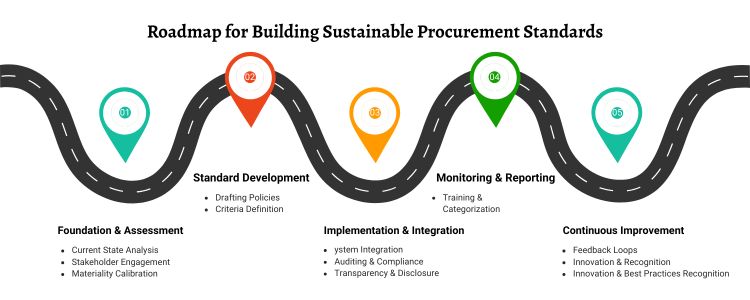
How 2026 Is Redefining the Green Supply Chain Landscape
The coming years will see significant developments shaping responsible procurement:
Technological Integration
Digital traceability systems will be the standard for monitoring materials, validating sustainability claims, and tracking carbon emitted in many layers of suppliers. Some will rely on third-party observers, while others may work with local global sourcing companies to have their material source credibility assessed.
Shift from Cost-Based to Value-Based Sourcing
The traditional focus on short-term savings is being replaced by a more comprehensive view of value, defined by factors such as environmental compliance, risk reduction, and long-term operational sustainability, rather than small differences in price.
Rise of Regional Supplier Clusters
Risks associated with climate, trade disruptions, and geopolitical insecurities are spurring a trend toward regional supply chains. Localized supplier ecosystems tend to result in reduced emissions and lead times, and provide superior oversight.
Expansion of Sustainability Regulations
Governments are already legislating mandatory disclosure requirements across Asia, Europe, and North America. Companies will be required to be more transparent in their reporting of carbon footprints and supply chain level details. This trend will continue pushing companies to improve the environmental credentials of their supply base by 2026.
Steps to Build an Ethical Vendor Sourcing Strategy
1. Conduct a Sustainability Baseline Analysis
Businesses must consider mapping their supply chains end-to-end to understand the high-impact areas of their business. This includes, but is not limited to: energy-intensive suppliers, logistical providers with high carbon emissions, and suppliers who cannot reasonably substantiate sustainability claims.
2. Develop Category-Specific Standards
Different product categories will come with different environmental footprints; thus, procurement teams should build appropriate guidelines for raw materials, packaging, textiles, electronics, and other specific materials.
3. Implement Supplier Segmentation Models
Suppliers should continue to be evaluated based on roles, responsibilities, influence, and risk. Critical suppliers tied to high emissions will require additional scrutiny and ongoing engagement.
4. Establish Training and Capability-Building Programmes
Procurement leaders must assist suppliers in implementing sustainable practices. Offering workshops, guidance manuals, and knowledge-sharing groups helps vendors change their operations without placing themselves in financial hardship.
5. Monitor Progress with Data-Driven Dashboards
In addition to conducting the initial screening, continue with periodic audits of suppliers to mitigate the risk to your supply chain. Using digital dashboards, emissions trackers, and performance scorecards facilitates continuous monitoring of progress in real time.
6. Enforce Ethical Sourcing Clauses in Contracts
Including contractual clauses for environmental compliance and reporting obligations to ensure supplier commitment over the long term while mitigating the risk in the future
The Economic Advantage of Green Supply Chains
Implementing a sourcing model that emphasizes sustainability does not equate to a loss of profitability, and in most instance,s profitability is improved. Cleaner operations which include reduced waste, decreased energy consumption, and improved logistics processes often yield more profitability. Investors are increasingly endorsing companies with apparent sustainability road mapping, recognizing that a commitment to responsible business practices equates to sustainability on a long-term basis.
Moreover, a properly designed green supply chain strengthens credibility with global partners. Businesses engaging with a product sourcing agent or looking to develop cross-border trade opportunities benefit from being perceived as reliable, transparent, and accountable. At the same time, companies providing vendor sourcing services will view increased demand as organizations seek external sources to thoroughly evaluate environmental performance. The long-term experience is this: responsible sourcing develops operational efficiencies, market access, and brand loyalty while reducing the risk of regulation and reputational damages.
Conclusion
Ethical sourcing is not a side project; it is the essence of corporate responsibility and sustainable competitiveness. As organizations prepare for 2026, building a supply chain rooted in transparency, environmental responsibility, and vendor accountability is a practical need and a strategic must.

A progressive vendor sourcing strategy proactively aligned with the principles of a green supply chain will ensure that companies are future-fit and not just compliant.
Frequently Asked Questions (FAQ)
Sourcing services companies are professional firms that assist businesses with supplier relationship management, with an emphasis on efficiency and compliance, enjoying a long-term relationship and collaboration.
Agents usually manage single transactions, whereas sourcing companies create a working relationship with suppliers by employing a complete supplier relationship management process with strategic oversight.
Because trust and compliance help assure quality, minimize risk, and ensure delivery performance.
Technology provides transparency, risk monitoring, and automates and enables collaboration between buyers and suppliers across borders.
Sourcing services firms help mediate disputes, enforce contractual obligations and formalize a corrective actions plan, whilst assuring business continuity.
No. Small and medium-sized enterprises will also leverage the knowledge of sourcing services companies and access to their network to connect to global suppliers without excess overhead.