

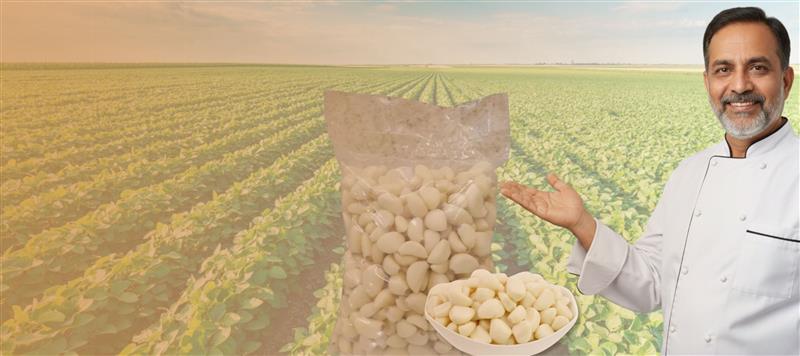
How to Source Fresh, Hygienic Peeled Garlic From India : A Buyer-Friendly Guide
In the past few decades India has been one of the major growers (producers) of Garlic around the globe, supplying both local and global markets with a vast array of processed and added-value versions. The demand for peeled garlic from India has surged in recent years, driven largely by the food service industry, the ready-to-cook segment, and global customers looking for convenience yet maintaining high levels of hygiene and freshness. There has been an increasing focus on both food safety (ensuring that food is safe to eat) and Supply Chain Efficiency (maximizing receptiveness of customers/reducing waste throughout the Supply Chain). Hence, exporters of peeled garlic from India have begun using high-tech processing techniques/technologies and meeting international standards in order to meet customer expectations globally.
For importers, wholesalers, Chain Restaurants, Food Manufacturers, Procurement Managers, etc., sourcing peeled garlic from India efficiently is very important. This guide will provide detailed insight into the capabilities of the Indian Garlic Industry, the quality parameters for peeled garlic, tips on selecting Exporters, and best practices to secure long-term supplier relationships.
1. Why India Has Become a Trusted Hub for Peeled Garlic Sourcing
The garlic crop is grown well in several Indian States, such as Madhya Pradesh, Gujarat, Rajasthan, and Uttar Pradesh. These states produce large amounts of bold garlic types with strong scent, long shelf lives, and uniform clove sizes required for processing.
The growing global appetite for processed garlic created a surge in India’s specialized garlic-peeling facilities that use hygienic, semi-automated, or fully automated systems. The presence of these types of systems gives international purchasers the assurance to purchase peeled garlic from an Indian supplier, as long as three conditions are met:
- Quality & Freshness: Most Indian processors strive to minimize the handling of garlic, apply rapid cleaning, and immediately vacuum pack the product to retain freshness.
- Cost Competitiveness: Compared with other global suppliers, Indian garlic is produced at lower costs, given that the export price of Indian garlic is also competitive with that of other global suppliers.
- Scalability: Exporters can readily meet small- or large-supply requests from customers, allowing India to fulfill bulk-supply orders.
With these three key strengths, India can serve as a reliable source for the purchase of high-volume or specialized peeled garlic.
2. Understanding the Types of Peeled Garlic Offered by Indian Exporters
Prior to contacting garlic exporters from India, the garlic buyer should know the main types of products that can be bought, as follows:
- Fresh Peeled Garlic – This type of garlic is harvested and processed within hours of being harvested. The cloves are washed, peeled by machine, and then stored using refrigerated storage methods.
- Vacuum Packed Peeled Garlic – This packaging keeps fresh by limiting oxygen so the garlic can last for several weeks.
- Nitrogen Flushed Packaging – This type of packaging is used to keep peeled garlic fresh for longer shipments by preventing oxidation and microbial development.
- IQF Peeled Garlic – This packing method is used for export and for use in industrial processing.
By understanding the various formats of garlic, buyers can easily determine whether or not their requirements align with what their suppliers offer.

3. Key Quality Parameters for Hygienic Peeled Garlic
Buyers must also insist on having all suppliers follow strict hygiene and quality standards while purchasing peeled garlic from India. When looking for hygienic peeled garlic from India, here are several standards buyers normally look for:
- Moisture Control: Cloves must be dried to prevent microbial growth.
- Size Uniformity: Ensures the same size throughout the garlic when it’s manufactured.
- No Preservatives: Reputable suppliers do not use chemicals but rather create controlled environments for the garlic.
- Microbial Standards: Export-grade peeled garlic must conform to international safety standards for yeast, molds, and bacteria.
- Certifications: FSSAI, HACCP, ISO, APED, and, in some instances, GAP certification.
These and other quality standards are required to be included in every inquiry for peeled garlic.
4. How to Select Reliable Peeled Garlic Exporters in India
An exporter’s ability to provide a reliable product, assurance of on-time shipping, and minimize long-term costs is dependent on their ability to perform consistently. The type of exporter you choose for your product(s) should be based on the following factors:
- Specialized Processing Facilities – A supplier should provide semi-automated peeling processes, refrigerated storage facilities, and sanitary packaging operations.
- Export Experience – The exporter should have good knowledge concerning international export standards, documentation, and means of transportation.
- Traceability from the farm to the factory – This fosters transparency in authenticity and quality.
- Minimum Order Quantity (MOQ) Flexibility and Pricing Structure – Buyers who plan to order small quantities or conduct a trial order should have flexibility concerning minimum order quantities (“MOQ”) and pricing structure.
Effective Communication with Your Supplier(s) and Their Ability to Respond Promptly – Effective communication should be emphasized when establishing and maintaining long-distance (global) procurement relationships.
A supplier audit, price negotiations, and order execution are services frequently provided by Suppliers and Sourcing Services partners.
5. Buying Strategies : From Sampling to Contracts
A structured buying approach will help you source peeled garlic from India more effectively.
Step 1 – Request a sample of the product(s) to confirm consistency in size, aroma, freshness, and durability of the package.
Step 2. – Compare processing methods used by exporters to peel the garlic. Exporters who use mechanical means to peel the garlic deliver a cleaner product due to a lack of human touch. The mechanical method tends to bruise the garlic. On the contrary, exported garlic that is peeled by hand maintains its original beauty and appearance.
Step 3. – Utilize a temporary contract before a long-term contract. A seasonal contract allows the buyer to measure consistency and reliability, thus providing the opportunity to convert to a long-term contract at the completion of the first season.
Step 4.– Clarify Shipping and Packaging Requirements. Airfreight for fresh peeled garlic, seafreight for vacuum-packed or IQF formats.
6. Price Factors and Market Conditions
Wholesale pricing for peeled garlic in India is influenced by several factors:
- Seasonality of the Market and Harvest.
- Availability of Raw Garlic and Regional Production.
- Types of Packaging (e.g., Vacuum Packaging, Nitrogen Flushing, IQF).
- Cost of Processing Labour.
- Logistics Route/Mode of Shipping.
Bulk buyers of garlic from India should ask suppliers about purchasing at discounted rates if they place multiple orders.
7. Ensuring Food Safety and Hygiene Compliance
Food Safety is one of the most important priorities for leading exporters, who adhere to strict hygiene protocols, including:
– Stainless Steel Processing Equipment.
– Clean Room Environments.
– UV Sterilisation Systems.
– Temperature-Controlled Storage Facilities.
– Gloves for Workers and PPE.
– Regular Microbial Testing.
Before placing large orders, buyers should request copies of facility videos or independent inspection reports to ensure that the suppliers meet their stated claims.
8. Logistics, Packaging, and Shelf Life Considerations
Garlic without the skin is sensitive to high temperatures and the presence of oxygen. Therefore, most exporters utilise:
- Vacuum Sealing– Will preserve garlic for 25–30 days
- Nitrogen Flushing– Best for long transits
- Refrigeration– Maintains consistent temperature during transport
For buyers who live within the US or at short distances, purchasing garlic in poly-bags inside a cardboard box is ideal.
9. Why International Buyers Prefer Peeled Garlic from India
The high demand for garlic in all forms globally is driven by many factors.
Firstly, exporters are able to turn around custom orders and tailor their products to suit local demands.
Secondly, India’s agricultural system allows for the supply of garlic products year-round, not just seasonally.
Thirdly, India has lower processing and labour costs than most countries, providing its suppliers with a significant cost advantage.
Fourthly, exporters that only export have to adhere to government-mandated international guidelines on food safety and hygiene standards.
Fifthly, buyers are increasingly viewing India as a reliable, cost-effective source of high-quality peeled garlic on an ongoing basis.
Conclusion
Importing peeled garlic from India gives buyers a strategic advantage in being able to buy the freshest, most cost-effective, highest-quality peeled garlic available. Additionally, the increased number of processors and exporters in India means that India is becoming a trusted supplier for retailers, food manufacturers, distributors, and wholesalers, as well as worldwide.
When purchasing peeled garlic for your food manufacturing, restaurant chain, retail supermarket, or wholesale business, India will be able to provide you with high-quality and competitively priced peeled garlic options at all stages of the supply chain.