


What is a Product Sourcing Agency and How to Guide Product Sourcing in 2026
Over the years, global procurement has gone through a drastic change from being driven mainly by price arbitrage to now being focused on risk mitigation through regulatory compliance and reliable long-term supplier partnerships. Due to these changes, sourcing agencies now have a greater importance and are increasingly partnering with companies who want to source products in 2026 from another country. Companies need to understand how sourcing agencies work to source goods effectively across borders.
This article provides an easy-to-follow structure to learn more about what sourcing agencies are, how they aid companies in their procurement decision-making process, and why sourcing agencies play a growing part of the Global Supply Chain in a fragmented world.
What Exactly is a Product Sourcing Agency?
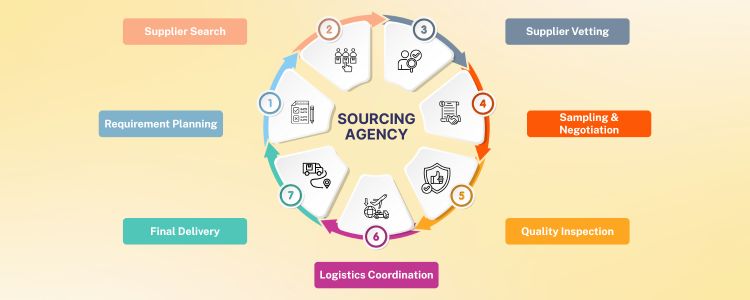
Sourcing agencies are intermediaries that connect businesses that want to procure goods with potential suppliers both in their home market as well as abroad. Sourcing agencies don’t just act as brokers between buyers and sellers; instead, sourcing agencies provide an end-to-end service for businesses, from identifying potential suppliers to coordinating the product delivery.
One of the greatest advantages of using a Product sourcing agency to procure goods is that they eliminate the problem of people who are making procurement decisions being “blinded” by the extensive amount of information that exists now due to rapid technological advancements. A company entering a new market or wanting to purchase a product from another country may have many questions about the suppliers they may be considering establishing a relationship with.
When sourcing agent are utilized by these companies or buyers, they are able to gain access to valuable information about their supplier options in order to make well-informed, strategic decisions on whom to partner with. These agencies also provide a means of checking the reliability of a supplier’s operations through a reviewing process based on regulations set forth by the suppliers’ governing authorities.
Why has the Role of Sourcing Agencies Expanded in Recent Years?
In today’s world, sourcing agencies support small to mid-sized firms by providing a new array of services that empower them to address the complexity of procurement while managing the potential risks associated with supplier diversification.
In many instances, sourcing agencies have evolved, as a result of numerous structural changes, into more than just transactional intermediaries between buyers and suppliers and have instead transitioned into the realm of facilitating responses to dynamic supply chain conditions, while concurrently ensuring that businesses remain both compliant and maintain operational continuity.
How does a Product Sourcing Agency Differ from Direct Procurement?
The business practice of direct procurement (i.e., buyer and seller settings) puts buyers in control of their supply chains and allows them to deal directly with manufacturers or suppliers; however, the potential for buyers to face risks associated with supplier quality, fraud, and regulatory non-compliance increases in markets that they are unfamiliar with.
This potential risk is mitigated through the efforts of a product sourcing agency, which performs due diligence on suppliers, negotiates terms and conditions, and monitors supplier execution of contracts. These functions are particularly beneficial for small to mid-sized businesses without dedicated international procurement teams.
What are the Core Functions of a Sourcing Agency?
The services offered by sourcing agencies typically include:
- Supplier identification and shortlisting
- Price benchmarking and negotiation
- Quality inspections and audits
- Compliance and documentation support
- Logistics coordination and shipment monitoring
These functions collectively support disciplined product sourcing without requiring buyers to build extensive in-house capabilities.
How does a Sourcing Agency Support Strategic Procurement Decisions?
In 2026, the procurement of goods and services will be more strategic than operational. Sourcing agencies provide insights into market-level factors (such as supplier diversification, cost forecasting, and risk) that inform buyers’ decision-making processes. Sourcing agencies, unlike traditional buying agents, provide advisory services that help companies anticipate regulatory changes, seasonal price fluctuations, or alternate sourcing regions.
What role does Geography Play in Sourcing Effectiveness?
Geographic proximity and local knowledge remain two key advantages for sourcing agencies. Companies that source products from agents who are near their production facilities can monitor their suppliers’ performance and react quickly when issues arise.
Due to the diversity of manufacturing in India and the country’s focus on exports, many global companies work with a sourcing agent in India. By working with a local organization, buyers are able to screen suppliers more effectively, have a better understanding of cultural compatibility, and resolve issues much faster.
How do Sourcing Agencies Manage Quality and Compliance?
When products fail to meet quality standards and/or regulatory requirements, the financial and reputational impact can be severe. Sourcing agencies minimize these risks through the implementation of inspection protocols, factory audits and standardized reporting forms.
Sourcing agencies verify certifications, confirm compliance with regulations, and monitor any potential changes to international trade or safety regulations through the compliance oversight process. This structured approach minimizes any surprises when it comes time to clear customs and complete post-delivery audits.
Are Sourcing Agencies Relevant for All Business Sizes?
Although large corporations typically have their own purchasing departments, sourcing agencies are still relevant in a large corporate environment. Sourcing agencies are often relied on for new market entry, supplier diversification or the unique needs of specialized product categories.
For many small and medium-sized businesses (SMBs), sourcing agencies serve as an extension of their purchasing departments and provide expertise and resources that would otherwise be too expensive to develop in-house.
How do Sourcing Agencies Fit Within Modern Procurement Models?
The current approach for forming procurement models is based on creating modifiable and flexible procurement systems where internal teams partner with outside experts to ensure optimal performance.
Sourcing Services Companies are selected based on project or geography rather than analytical skills or in-house experience allowing organizations to increase project capacity without being tied to any long-term commitments related to overhead costs.
What Risks Should Businesses Consider when Choosing a Product Sourcing Agency?
Not all sourcing firms utilize a unified approach. There are numerous risks involved such as poor transparency, little to no oversight, and inconsistent quality controls. It is critical for organizations to assess sourcing firms based on an organization’s past performance, clarity of reporting to clients, and the quality of governance.
In order to mitigate misalignment between organizations and sourcing firms, organizations should have contractual agreements that clearly define the parameters of each relationship. It will be vital to establishing mutually agreeable terms of delegation of authority between organizations and sourcing companies.
How will Sourcing Agencies Evolve in 2026 and Beyond?
Technology is changing how companies access and manage sourcing operations. Digital databases of suppliers, data analytics, and remote inspection tools are the hallmarks of a digitally transformed sourcing operation. Additionally, sustainable and traceable supply chains are driving greater focus on the sustainability and traceability of procurement decisions.
Future-oriented sourcing agencies are investing in digital capabilities to establish themselves as long-term partners for their clients and not just transactional partners within the sourcing framework.
Conclusion: Why Sourcing Agencies Remain Relevant
A product sourcing agency will become much more than a facilitator of supplier introductions by 2026. A sourcing agency will be established as a risk buffer, a compliance adviser, and as an integral part of the strategic approach for managing global procurements.
Businesses that consider incorporating sourcing agencies thoughtfully into their procurement approaches will have a better chance to succeed at achieving a balance between cost efficiencies and a resilient supply chain as the complexity of the supply chains continues to grow and the level of scrutiny through increased regulatory oversight continues to increase.

1. Is a product sourcing agency the same as a buying agent?
No. A product sourcing agency typically offers broader services including compliance, quality control, and supplier management.
2. Do sourcing agencies increase procurement costs?
While agencies charge fees, they often reduce overall costs by preventing quality failures and delays.
3. Can sourcing agencies help with new market entry?
Yes, they provide local insight and supplier networks that ease market entry risks.
4. Are sourcing agencies suitable for small businesses?
Absolutely. They help smaller firms access expertise without building large internal teams.
5. How are sourcing agencies typically paid?
Payment models vary and may include retainers, commissions, or project-based fees.
6. What should be checked before appointing a product sourcing agency?
Experience, transparency, references, and compliance practices should all be reviewed.

Diptanshu
Leading research and marketing at Inductus Global, Diptanshu drives the company’s vision to transcend traditional trading through thought leadership in import-export. He spearheads a research-driven approach that prioritizes quality over price arbitrage, positioning Inductus as a strategic sourcing partner rather than a transactional intermediary. His work spans market intelligence, supply chain innovation, and trade dynamics, while playing a key role in sales and business development.