


How to Import 1121 Sella Basmati Rice from India to UAE?
If you have ever savored a perfectly fluffy plate of biryani or pulao in the UAE and feel it was prepared using some magical ingredient, then it’s probably 1121 Sella Basmati. This golden delight has become synonymous with one of the staple foods found in the kitchens across the UAE.
However, the thing is – whether you’re a restaurateur keen on procuring premium quality rice to feature on your menu, a shopper interested in stocking the best grains available, or a business mind seeking to leverage the burgeoning food import market, importing 1121 Sella Basmati Rice from India to the UAE may appear to be a complicated process.
Why Is the UAE a Key Market for Basmati Rice Imports?
In the Gulf region, the United Arab Emirates has become an import center for food products, due to the limited agricultural production of the country, and its extensive diversity of consumers, all with a strong interest in food consumption. The UAE also has a very large amount of hotel and restaurant establishments, and a very high per capita income, which contributes to the overall demand for imported food products.
The most significant food product that is consumed in the Emirates is rice, which forms a major part of all households and is a staple in all foodservice businesses, from the poorest to the richest. The fact that there is an equal distribution of rice consumption across all income levels means that the UAE is a high-volume importer of rice, and that it needs imported rice of consistent quality, as well as reliable supply chains.
What Makes 1121 Sella Basmati Rice Suitable for the UAE Market?
1121 Sella Basmati Rice is a highly sought-after rice in the UAE, and is known for its long grain; its light, golden colour after parboiling; and being able to withstand high cooking temperatures. The sella (parboiled) process makes the base of this type of rice very strong, so it can be used in kitchens and restaurants where rice is prepared in large batches.
In the UAE, where a large number of meals are prepared in bulk, this particular variety of Basmati rice performs very well under high heat and retains individual grains of rice. The attractiveness of this rice; its cooking and length of cooking time; and the amount of rice produced when used in recipes for large gatherings and celebrations further enhance its appeal to the commercial buyer of rice.
How Should Importers Source Reliable Suppliers in India?
Due to agro-climatic conditions suitable for premium basmati varieties and an established export structure, India offers the best price of premium basmati. Importers generally start with identifying mills who have consistent production over the previous years, experience exporting, and have been certified by a third party for their quality.
Basmati rice has a number of different grades available from India, but for importers targeting the UAE market, the buyers look for suppliers who can produce basmati rice with consistent grain length and moisture content between shipments. Pre-contract sampling and audits of the mills are common practice used by importers to mitigate quality risk prior to financial commitment.
What Regulatory Approvals Are Required in the UAE?
The federally mandated import safety and labelling regulations for food products into the UAE are very stringent. Importers must register their products with the appropriate municipal authorities before they arrive in the UAE. Documentation will typically include a certificate of origin, a phytosanitary certificate, and laboratory testing results.
Staple foods are heavily regulated in terms of compliance due to their high volume of consumption. Any errors regarding labelling and documentation will result in delays during the clearance process, therefore, Preparing for compliance with the regulatory requirements is critical in the import process.
How Does Logistics Planning Affect Import Efficiency?
The cost of logistics planning and delivery timelines are determined mainly by this item. When it comes to shipping rice from India, UAE ports receive most of their shipments within the same shipping schedule, but the congestion in ports and high demand at different times of the year may have an impact on the transit times.
An experienced importer will not bring one large shipment of rice into the UAE, but instead schedule two or more small shipments throughout the shipping schedule. This provides continuity in their inventory and helps prevent storage overcrowding, while also providing the ability to adjust quickly to changes in demand on the domestic market.
What Role Does Market Demand in Dubai Play?
With its unique position as both a consumer and a redistribution hub for the entire Middle East region, Dubai is greatly influenced in its demand for Basmati rice. The hospitality industry, tourism, and population growth create demand levels that change significantly throughout a year. Importers of Basmati rice closely watch these indicators in order to plan their shipping volumes properly.
Many of Dubai’s retail chains have a process whereby they place forward orders, which allow importers to take the risk out of stocking products in anticipation of demand. This means that importers of Basmati rice are less exposed to the costs and risks associated with price and inventory loss.
Read this Articles – organic spices export from india
How Do Quality Checks Differ for Various Rice Types?
Of all the different rice categories imported into the UAE, the 1121 sella rice category accounts for most of the imports. In contrast, other rice categories such as brown basmati rice have an increased amount of oversight from the government regulatory bodies to ensure proper moisture content and shelf life due to the bran layers.
This highlights the difference between the various rice categories and how important it is to correctly classify and document the rice products. Importers who deal with more than one rice category must ensure that each shipment meets the requirements for that particular category set by the regulators.
What Are the Commercial Steps to Import Basmati Successfully?
There is an order that importers generally follow when importing Basmati Rice from India into the UAE. This sequence begins with the selection of a supplier, followed by the execution of a contract, pre-shipment and then the booking of transportation, Customs clearance and finally). Payment for goods can differ but for new transactions Letters of Credit are often used.
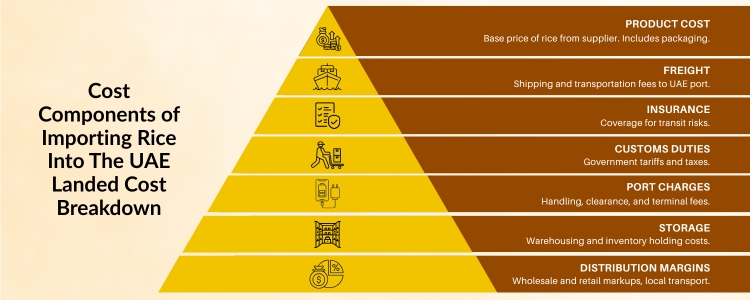
Customs clearance will include establishing the landed cost, which includes currency exposure, Freight Rates, and Insurance costs. Successful Importers will manage these variables within an overall Risk Management Program instead of as Separate Costs.
Read this Articles – basmati rice export from India to Saudi Arabia
How Can Importers Minimise Risk and Delays?
To Mitigate Risks, the Importer must ensure that the correct paperwork has been completed and that the Supplier is Reliable. Additionally, the Importer should maintain a Buffer Stock, Diversify their Logistics Partners, and send/receive Shipments outside Peak Hours.
A successful Importer will Ask their Exporters and Shippers for Regular Updates so that they can anticipate Potential Issues before they result in Expensive Delays.
1. Why is 1121 sella preferred over raw basmati in the UAE?
Its grain strength and cooking resilience make it suitable for bulk foodservice operations.
2. How long does shipping from India to the UAE take?
Transit times typically range from two to three weeks, depending on port and shipping line.
3.Are laboratory tests mandatory for rice imports?
Yes, with government-backed infrastructure upgrades, Indian agents can manage medium-to-large scale production effectively.
4. Can small businesses import basmati rice into the UAE?
Yes, provided they complete product registration and meet regulatory requirements.
5. Is advance planning necessary for rice imports?
Absolutely. Early planning reduces exposure to logistics bottlenecks and price volatility.
6. Does packaging affect customs clearance?
Yes. Packaging must meet labelling and safety standards to avoid delays

Author’s Bio :
Leading research and marketing at Inductus Global, Diptanshu drives the company’s vision to transcend traditional trading through thought leadership in import-export. He spearheads a research-driven approach that prioritizes quality over price arbitrage, positioning Inductus as a strategic sourcing partner rather than a transactional intermediary. His work spans market intelligence, supply chain innovation, and trade dynamics, while playing a key role in sales and business development.