

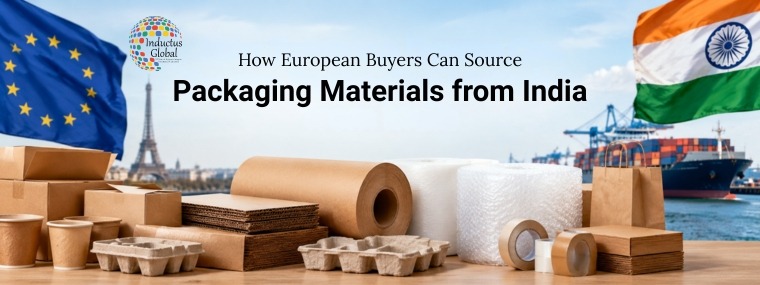
How European Buyers Can Source Packaging Materials from India
European manufacturers, retailers, and distributors are looking for alternative markets for their packaging supplies. India is one such emerging market that offers a wide range of packaging products.
However, the buyers need to make the right choice while selecting a supplier due to the complexity associated with packaging goods. A supplier who quotes a lower rate may fail to meet the specific requirements, leading to higher losses.
A thorough buyer’s guide can help the European buyers to select the most reliable manufacturers, compare the offers and finalise the procurement process accordingly.
Why European Buyers Are Interested In Sourcing From India?
India’s packaging market is growing steadily due to developments in the food processing, pharmaceutical, consumer goods, and e-commerce sectors. The manufacturers are investing heavily in the latest printing, equipment, and quality control technologies.
One of the main advantages that make India attractive to European importers is the variety of products that can be sourced from a single manufacturer. For instance, the buyers can get corrugated boxes, paper bags, films, sacks, laminated pouches, woven bags, and other related items.
However, it is essential to highlight that not all manufacturers can provide the same range of products and the buyers should focus on a firm that has the required manufacturing expertise corresponding to the buyer’s requirements.
Determine the Scope of Your Packaging Specifications Before Supplier Shortlisting
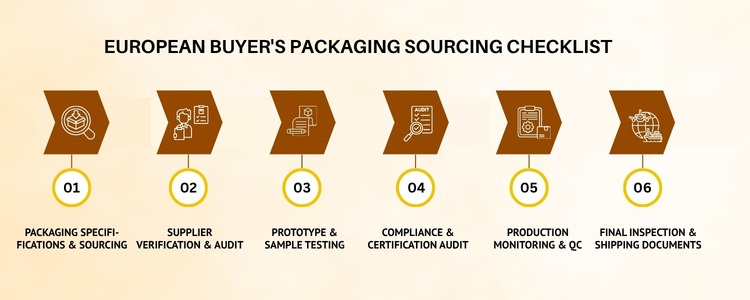
Prior to contacting the manufacturers, it is essential for the European buyers to prepare the detailed technical specification of the target packaging product. This is particularly important for buyers sourcing food, cosmetic, or pharmaceutical packaging. The specification sheet may consist of the following information:
- Material
- Size and Thickness
- Weight
- Printing
- Color
- Barrier properties
- Seal design
- Load-bearing capacity
- Packaging and Palletisation
- Certifications
- Quantity (Monthly/Yearly)
The specification document should also highlight the artwork requirements in detail, as minor mistakes in color, size, or materials can lead to significant losses when ordering large quantities of packaging items.
It will also assist the shortlisted manufacturers to quote the best possible rates based on the identical requirements, allowing the buyer to compare the offers more efficiently.
Evaluate Potential Packaging Suppliers in India
The next step is to carry out extensive research on the shortlisted packaging manufacturers to identify the best partner for long-term collaboration. Ideally, the buyer should go beyond the company’s website and product catalogues and try to find out more information about the manufacturing capabilities, equipment, production capacity, quality control policies, and export experience.
It is also essential to clarify whether the manufacturer carries out the production in-house or outsources it to other subcontractors. This is particularly important for the buyers sourcing complex packaging solutions.
It is advisable to contact the manufacturer and ask whether they have experience working with the other European companies. Ideally, the exporter should have a sound comprehension of the export documentation process and other compliance requirements.
Verify the Compliance Requirements Before Finalising a Supplier
The compliance requirements should also be taken into consideration when shortlisting the potential Indian packaging exporters. There are several regulations associated with the packaging materials, including food, chemical, labeling, and waste management regulations among others.
It is advisable for the European buyers to identify the relevant directives corresponding to the target product category and contact the manufacturers to obtain copies of the technical documents and test reports.
The buyers should not be satisfied with generic statements indicating that a certain packaging material meets the EU standards. They should dig deeper and request specific documentation highlighting how the product corresponds to the relevant requirements.
Request and Evaluate Product Samples Before Placing an Order
Physical samples of the packaging materials are crucial, as they enable the buyers to inspect the products’ dimensions, materials, printing, and other features. It is advisable to ask for the sample in advance and go through the quality control procedures before finalising the order. In addition to visual inspection, it may be necessary to carry out laboratory tests depending on the packaging material’s intended use.
Once the supplier’s samples have met all the quality control standards, it is advisable to utilise the same reference sheet when evaluating other manufacturers’ offerings. It is essential to highlight that the mass production should correspond to the approved sample and technical specifications.
Compare the Quotations Based on Similar Assumptions
When comparing the quotations, it is essential to ensure that all the manufacturers have followed the same set of assumptions when coming up with the proposals. In most cases, the price difference may be determined by the level of customization, quantity, printing, material grade, tooling, and packaging among others.
It is essential to understand that the wholesale packaging materials offered at a lower rate may not be the most cost-effective option due to higher freight, insurance, duty, port handling charges, and other expenses that should be taken into consideration.
It is advisable for the buyers to negotiate payment terms and utilise the most competitive option based on the overall value offered. It is essential to start with a smaller order when establishing a new business relationship before scaling up the order size.
Consider the Minimum Order Quantity and Delivery Schedule
It is advisable for the buyers to consider the production volume, minimum order quantity, and lead time before finalising an order. Ideally, most manufacturers recommend higher production volumes as it is more cost-effective for both the buyer and seller.
The buyers should also clarify the production timeline, along with the reorder cycle. This is particularly important for companies that manufacture seasonal products. It is essential to allow enough time for production, especially when dealing with international suppliers.
Highlight Sustainability Requirements When Communicating With Packaging Manufacturers
Some of the European buyers are prioritising environmentally-friendly packaging materials and are willing to pay a premium for such products. It is advisable for the buyers to discuss this issue with the manufacturer and clarify the company’s sustainability practices.
In most cases, the packaging firms will indicate the percentage of recycled materials utilised in a specific product range. In addition, the buyer should ask whether the materials are suitable for recycling in the target market. The same approach should be utilised when analysing other environmental aspects, including biodegradability and carbon footprint.
Establish Realistic Buyer-Seller Expectations and Communication Policies
When establishing a new buyer-seller relationship, it is advisable to develop a comprehensive document outlining the main expectations for both parties. The specifications regarding delivery, tolerances, inspection, and payment terms should be clearly stated.
The European buyers may also consider carrying out regular supplier audits or third-party inspections, especially when dealing with high-value or high-volume packaging products.
Effective communication is also vital when dealing with overseas suppliers, as miscommunication can lead to various complications. It is advisable for the buyers to utilise proper purchase orders, artwork approval, and technical specifications to avoid confusion.
Key Takeaways for European buyers Sourcing Packaging Materials from India
India offers a wide range of flexible, paper, woven, and corrugated packaging materials, making it an attractive destination for the European manufacturers, retails, and distributors. However, the buyers should understand that lower prices are not always synonymous with value for money.
The buyer should start with preparing the detailed product specifications, carrying out extensive supplier due diligence, requesting product samples, and verifying compliance requirements. It is also essential to carry out a cost analysis and consider the minimum order quantity, lead time, and sustainability requirements before finalising an order.
For the buyers sourcing customised packaging materials, it is advisable to start with a small trial order to gain a better understanding of the supplier’s quality control procedures, documentation policies, and delivery processes.
The most reliable supplier is the one that offers the most competitive price, required packaging specifications, compliance documentation, and delivery schedule. It is always essential for the European buyers to utilise all these parameters when making packaging material purchasing decisions in India.
1. Why should European buyers consider sourcing packaging materials from India?
India has a wide range of manufacturing capabilities, and the suppliers offer a wide range of packaging materials. The buyers can get competitive prices while also benefiting from the range of customisation on offer.
2. What packaging materials can European buyers source from India?
Depending on the manufacturer, the buyers can source corrugated boxes, cartons, paper bags, flexible pouches, sacks, films, laminates, and other related items.
3. How can buyers verify an Indian packaging supplier?
The buyers can carry out extensive research on the targeted manufacturer’s production capacity, equipment, certifications, quality control policy, compliance documentation, and experience.
4. What determines the cost of imported packaging materials?
Several factors can affect the final cost, including material grade, size, printing, order quantity, tooling, packaging, inland transportation, duties, and freight among others.
5. Are Indian packaging materials suitable for the European market?
The materials should meet the relevant standards, and the buyers should request the appropriate compliance documentation from the manufacturer.
6. How can buyers establish a long-term packaging material supply relationship with Indian manufacturers?
Buyers should start by identifying their requirements and utilising the appropriate specifications when communicating with the manufacturers. The buyers should also request and approve samples before finalising the order. It is advisable to start with a smaller order to ensure that the supplier adheres to the quality control standards, inspection requirements, and delivery terms before placing larger subsequent orders.

Diptanshu
Leading research and marketing at Inductus Global, Diptanshu drives the company’s vision to transcend traditional trading through thought leadership in import-export. He spearheads a research-driven approach that prioritizes quality over price arbitrage, positioning Inductus as a strategic sourcing partner rather than a transactional intermediary. His work spans market intelligence, supply chain innovation, and trade dynamics, while playing a key role in sales and business development.