


Brass Diyas Exporters in India: Bulk Buying Guide for Global Buyers
Brass diyas occupy a unique position in India’s handicraft and religious products markets. Used both for worship and as a festive decor item, these oil lamps have carved a niche for themselves in home décor, gifting and ethnic lifestyle products.
For overseas buyers, India presents an opportunity to source from a diverse manufacturer base, benefit from traditional metalwork expertise and enjoy design flexibility. However, there are several considerations beyond the visual appeal of brass diyas that can impact the value of a bulk order. Factors like metal quality, weight, finishing, dimensions, packaging, consistency and export-readiness need to be taken into account when procuring brass diyas in bulk. The process of identifying a reliable supplier involves defining the product requirements and evaluating whether the potential exporter can consistently deliver what was agreed upon.
Why Source Brass Diyas from India?
India has a long-standing brass craftsmanship tradition, with artisan groups and manufacturers specialising in metal lamps and other decorative items. Over the years, different centres have developed their distinctive methods and styles of metalwork.
This variety can be an advantage to international buyers, as it means that a single supplier may cater to varying requirements. While a home décor retailer may be interested in traditional-style lamps, a distributor may seek more generic products for general retailing. Hotels, temples, gifting companies and home décor stores have significantly differing needs and budgets.
Indian manufacturers tend to be flexible in terms of the product’s shape and size, engravings, polishing, and packaging. However, buyers should differentiate between a manufacturer and a trader and ensure that the supplier has the capability to produce the ordered goods.
Define the Product Before Requesting Quotes
It is essential to provide a detailed description of the intended product when seeking quotes from potential suppliers. A prospective buyer should not expect an exporter to base a large order on a picture or a sample.
Some of the key specifications that should be communicated to the manufacturer include:
- Brass composition or standard
- Dimensions
- Weight
- Number of wicks or holders
- Finish
- Engravings
- Base
- Colours and polish
- Packs
- Carton quantity
- Labelling requirements
Particular attention should be paid to the weight, as two lamps of a similar size can have significantly different weights due to variations in the thickness of the metal used.
If the buyer has an approved sample, its description should be included in the initial communication to the manufacturer.
Evaluating Brass Diya Suppliers
Finding a reliable supplier involves researching into the company’s production capabilities and commercial credibility. Brass Diya Suppliers can range from small-scale workshops to larger exporters with production facilities. It is advisable for international buyers to understand the exporter’s production capacity and ensure that the proposed order volume is viable for the selected supplier.
Asking questions about the monthly production volume, production timelines, quality control procedures and the source of raw materials can help establish whether the supplier is capable of fulfilling the order. In addition, buyers may ask whether the products are made in-house or sourced from multiple workshops. Having multiple supply points is not necessarily a disadvantage but it can make the task of quality control more challenging.
The company’s past experience in exports and references from previous clients can also be used as a reference point.
Inspect Brass Quality and Finishing
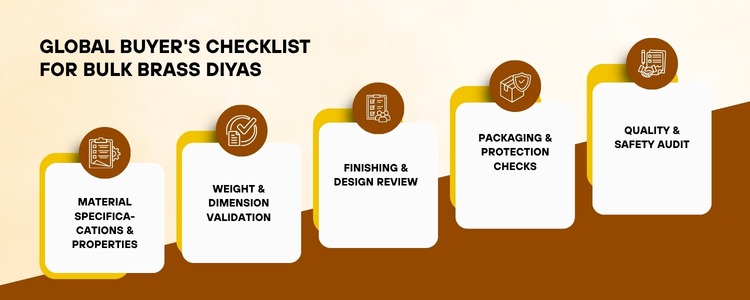
While the appearance of a diya is important, buyers should pay particular attention to the quality of metalwork and craftsmanship. Prior to finalising an order, it is advisable to inspect the product for structural flaws, such as cracks, casting imperfections, rough or uneven surfaces and sharp edges.
Attention should also be paid to the quality of finishing, including polishing and engraving. Varying degrees of finish can be visually apparent when displaying multiple lamps in a retail environment.
When it comes to engraved or handmade products, buyers should clarify what degree of variation is acceptable, as minor differences in size and detailing are inevitable in handmade items. If the visual appearance of the product is of particular importance, a pre-shipment inspection can be requested to identify any potential issues.
Design and Customisation for International Markets
One of the advantages of working with Indian manufacturers is the ability to choose from a variety of traditional and contemporary designs. A buyer may select from a range of single-wick lamps, multi-tier constructions, engraved metalwork and other variations.
Suppliers may also offer customisations, such as size, motifs and finishes, as well as retail packaging. However, customised orders typically require additional production time and may have minimum order volumes.
Before proceeding with a bulk order, buyers should approve the design drawings, photographs or samples, particularly if the product includes intricate detailing or a specific religious motif.
Brass Diyas for Religious and Retail Markets
The demand for brass diyas for pooja tends to peak during religious festivals and events. However, the international market for brass lamps is not limited to religious items, as the decorative potential of the product appeals to a wider audience. This opens up opportunities for both religious and retail buyers, depending on the target market.
For some buyers, the presentation and individual packaging of a product can be as important as the product itself. A high-quality diya with a smooth finish and reliable packaging can be more appealing to a retail customer than a lower-priced item with a generic pack.
Packaging and Shipping Considerations
While brass is a durable metal, the surface of the product can be prone to scratches and other imperfections during transport. Appropriate packaging, such as individual wrapping and protective inserts, will help prevent surface abrasions.
Buyers should specify their packaging and labelling requirements and ensure that the selected carton size and weight are appropriate for the shipment. For larger orders, requesting photographs of the packed cartons prior to shipment can be an additional measure to ensure that the products have been packed according to the agreed specifications.
Pricing and Bulk Orders
The price of a bulk order will depend on the weight of the brass, the complexity of the design, finishing, labour, material costs and the overall quantity. While wholesale purchases typically offer a lower per-unit price, buyers should compare quotes based on the same specifications.
It is possible that a lower-priced option uses thinner metal or simpler finishing, while a higher-priced supplier offers more intricate metalwork, such as engraving. Buyers should request a breakdown of costs and ensure that they understand all elements, including the price of packaging and shipping.
It is important to calculate the final landed cost, which includes transportation, insurance (if applicable), customs duties and any additional expenses.
Documentation And Export Readiness
International buyers should confirm that the exporter is able to provide the necessary shipping documentation, such as a commercial invoice, packing list, certificate of origin, and bill of lading. The information provided in different documents, including quantity and weight, must align.
Buyers should also ensure that the destination country does not have any restrictions or duties for the specified product category, including potential restrictions on additional materials (e.g., stones, coatings, packaging).
Building a Reliable Supply Relationship
A trial order is the best way to establish an exporter’s reliability, as it allows the buyer to assess the quality of the product, the accuracy of the packaging, and the general reliability of the supplier. Once the relationship has been established, it is possible to negotiate repeat orders or seasonal purchases, depending on the needs of the buyer.
Particularly during festive periods, planning in advance becomes essential. It is advisable to discuss production schedules and shipping timelines with the supplier and establish a reliable order schedule.
The most reliable relationships are built on a clear understanding of specifications, realistic timelines, and consistent quality, rather than verbal agreements.

Final Considerations for Global Buyers
India offers international buyers a range of brass diya designs, along with the advantages of an established handicraft industry and metalwork expertise. However, there are several considerations beyond the visual appearance of the item that need to be taken into account.
Before finalising an order, buyers should request samples, approve the specifications, inspect the quality of the product and ensure that the packaging is appropriate for transit. While price is an important consideration, it should be balanced against the durability, quality of finish and overall value.
In summary, for an international buyer, the task is to find a manufacturer or exporter that is able to appreciate the cultural significance of the product while also understanding the commercial realities of the international market.
1. Why are Indian brass diyas popular abroad?
India has a long tradition of metalcraft, particularly brass items such as lamps used for worship or as decorative objects. Sourcing from India offers buyers an opportunity to choose from a range of traditional, decorative and customised designs, as well as different sizes and weights.
2. What should buyers check when purchasing brass diyas in bulk?
Buyers should check the quality of brass used in the item, the weight, size, finishing, structural integrity, craftsmanship, packaging and ensure that the product is consistent with the approved sample.
3. Can brass diyas be customised for overseas retailers?
Yes, depending on the manufacturer, buyers may request customisations in size, shape, motifs, engraving, finishes, branding and packaging. Such orders may involve minimum quantities and additional lead time.
4. How can an importer verify an Indian brass diya exporter?
Buyers can request information about the company’s credentials, manufacturing facilities, export history, product samples, references from other buyers and quality control procedures. A trial order or inspection can also help verify the exporter’s reliability.
5. What packaging is suitable for international shipment?
Ideally, individual items should be packed in a way that minimises the risk of scratches or impact damage, with appropriate cartons to hold the packs in place and minimise shifting during transit. The specifics of the packaging should be agreed upon with the exporter.
6. What affects the price of brass diyas?
The weight of the brass, level of detailing and engraving, complexity of the design, quality of finishing, packaging, quantity, transportation and freight costs are some of the factors that affect the final price.

Diptanshu
Leading research and marketing at Inductus Global, Diptanshu drives the company’s vision to transcend traditional trading through thought leadership in import-export. He spearheads a research-driven approach that prioritizes quality over price arbitrage, positioning Inductus as a strategic sourcing partner rather than a transactional intermediary. His work spans market intelligence, supply chain innovation, and trade dynamics, while playing a key role in sales and business development.