

How to Import Dry Red Chilli from India to Sri Lanka and Bangladesh
Dry red chilli is an essential ingredient across South Asian cuisines, making it a commercially significant agricultural commodity in regional food trade. India, with its extensive chilli cultivation, processing infrastructure and export network, is an important sourcing market for buyers in Sri Lanka and Bangladesh. Both countries have established demand for dried chillies used in household cooking, spice processing, food manufacturing and wholesale distribution.
For importers, sourcing dry red chilli from India offers access to a variety of grades, colour profiles, pungency levels and price points. However, importing agricultural commodities involves more than negotiating rates and arranging transportation. Buyers must understand product specifications, customs procedures, food safety regulations, documentation and import permissions applicable in their respective countries.
The trade opportunity for buyers working with Dry Red Chilli Exporters depends on selecting suitable products, complying with destination-country regulations and maintaining a reliable supply chain. A clear understanding of the import process can help businesses reduce delays, control costs and establish stronger commercial relationships with Indian suppliers.
Why Sri Lanka and Bangladesh Import Dry Red Chilli from India
India’s chilli-producing regions offer a wide range of dried chilli varieties, including commercially traded types from Andhra Pradesh, Telangana, Karnataka and other producing states. Buyers can source chillies with varying levels of pungency, colour intensity, size and moisture content.
Sri Lanka has a strong culinary demand for dried chilli, which is used in curries, spice blends, sauces and food processing. Bangladesh also consumes dry red chilli extensively and has a substantial market for wholesale spices, food manufacturing and retail distribution.
Indian suppliers can offer bulk quantities, customised grading, different packaging formats and shipment arrangements suited to regional trade. Geographic proximity can also make India a practical sourcing destination, although freight costs, trade conditions and import regulations must be evaluated for each transaction.
Step 1: Identify the Right Dry Red Chilli Variety
Before placing an order, importers should identify the chilli variety and grade suited to their business. Different varieties may offer different characteristics in terms of colour, heat, size, appearance and processing suitability.
Buyers supplying spice manufacturers may prioritise pungency and consistent quality, while food processors may focus on colour retention, cleanliness and uniformity. Retail distributors may prefer visually appealing chilli pods with clearly defined product specifications.
Working with experienced Red Chilli Suppliers can help importers identify suitable grades. Before finalising an order, buyers should request samples and confirm the specifications in writing, including:
- Chilli variety and grade
- Moisture content
- Colour and pungency
- Foreign matter and broken chilli percentage
- Insect damage and visible contamination
- Packaging and net weight
These specifications should be included in the purchase agreement to reduce the risk of quality disputes.
Step 2: Verify the Indian Exporter's Credentials
Importers should assess the supplier’s business credentials before making advance payments or committing to large shipments. A supplier’s experience in international trade, documentation capabilities, processing facilities and quality-control practices can influence the reliability of the transaction.
Buyers should request the supplier’s Importer Exporter Code (IEC), relevant FSSAI licence details, business registration information and available quality certifications. Exporters should also demonstrate their ability to provide consistent batches and meet the buyer’s specific requirements.
Sample testing and clear written specifications are advisable before confirming a bulk order.
A credible supplier should be able to explain the sourcing origin, processing methods, packaging, available testing reports and shipment arrangements. Buyers may also consider third-party inspection before loading, particularly for larger consignments.
Step 3: Check Import Regulations in Sri Lanka and Bangladesh
Import regulations for agricultural commodities can differ between Sri Lanka and Bangladesh. Buyers should confirm the applicable requirements with local customs authorities and food or plant-health regulators before arranging shipment.
In Sri Lanka, importers may need to comply with food safety regulations, plant quarantine requirements and applicable import licensing or registration procedures. Depending on the commodity and current regulatory conditions, a phytosanitary certificate or other supporting documentation may be required.
Bangladesh also has import procedures involving customs, food safety and plant quarantine authorities. Importers should verify the applicable import permissions, plant-health conditions, testing requirements and documentation before the goods are dispatched.
Both destinations may impose requirements relating to pesticide residues, contaminants, aflatoxins, microbial quality or other food safety parameters. Dry chilli is an agricultural product, and improper drying or storage can increase the risk of contamination.
Importers should therefore confirm current requirements for the specific chilli product and shipment rather than assume that the procedures for previous consignments will remain unchanged.
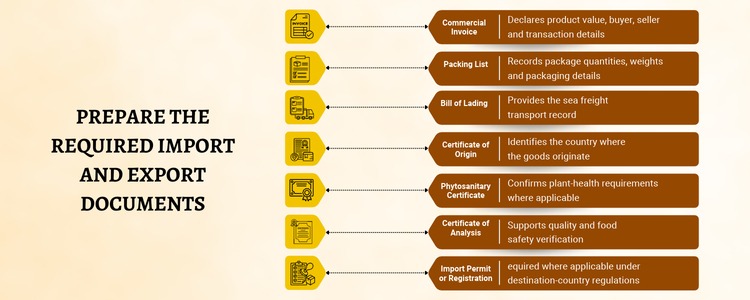
Step 4: Prepare the Required Import and Export Documents
Documentation is central to international spice trade. Missing or inaccurate paperwork can result in clearance delays, inspection costs or rejection of cargo.
The commonly required documents include:
Document | Purpose |
|---|---|
Commercial Invoice | Declares product value, buyer, seller, and transaction details. |
Packing List | Records package quantities, weights, and packaging details. |
Bill of Lading | Provides the sea freight transport record. |
Certificate of Origin | Identifies the country where the goods originate. |
Phytosanitary Certificate | Confirms plant-health requirements where applicable. |
Certificate of Analysis | Supports quality and food safety verification. |
Import Permit or Registration | Required where applicable under destination-country regulations. |
The exporter generally prepares the export documentation, while the importer or customs agent manages destination-side clearance. Both parties should review the documents before dispatch to ensure that product descriptions, weights, quantities, invoice details and shipping information are consistent.
Step 5: Ensure Quality, Packaging and Storage Standards
Dry red chilli should be adequately dried, cleaned and packed to protect its quality during transportation. Excess moisture can encourage mould development, while poor storage may result in insect infestation, colour deterioration or contamination.
Importers should request relevant laboratory reports covering pesticide residues, aflatoxins and other parameters specified by the buyer or applicable regulations. The testing scope should be appropriate to the product and destination-country requirements.
Bulk shipments are commonly packed in suitable food-grade bags, with packaging selected according to the transport conditions, expected storage period and buyer requirements. Containers should be dry, clean, and free from contamination before loading.
For long-distance transportation, proper ventilation, moisture protection and careful container loading can help preserve product quality. Importers should also ensure that warehouse conditions after arrival are suitable for dried spices.
Step 6: Arrange Shipping and Customs Clearance
Dry red chilli is generally transported by sea freight for commercial bulk orders, as it is often more economical than air freight. The choice of port, container type, shipment size and delivery schedule should be agreed upon before the order is finalised.
Indian exporters commonly coordinate with freight forwarders to arrange cargo booking, export customs clearance and shipment documentation. Importers in Sri Lanka and Bangladesh should work with customs agents familiar with agricultural commodities and spice imports.
Upon arrival, the shipment may undergo document verification, customs inspection, plant-health checks or food safety testing, depending on the applicable regulations. Importers should account for clearance time, port charges, duties, taxes and any inspection-related costs when planning their procurement.
Step 7: Finalise Commercial Terms and Calculate Landed Cost
Importers should evaluate the total landed cost instead of focusing only on the price per kilogram. Freight, insurance, customs duties, taxes, port handling, inspection charges, storage and inland transportation can significantly affect the final cost.
The commercial agreement should specify payment terms, delivery conditions, shipment timelines, product specifications, dispute resolution arrangements and responsibilities under the agreed Incoterm.
Businesses exploring dry red chilli export from india should also understand their buyer’s market expectations and pricing pressures. In regional trade, reliable delivery, consistent quality and transparent commercial terms can often prove as important as the initial purchase price.
Conclusion
Importing dry red chilli from India to Sri Lanka and Bangladesh offers opportunities for spice wholesalers, food manufacturers, distributors and traders. India’s production base, variety of chilli grades and established export network make it a practical sourcing market for regional buyers.
However, successful imports depend on careful supplier selection, product testing, regulatory verification, accurate documentation, and well-planned logistics. Businesses that establish clear specifications and maintain communication with suppliers and customs representatives are better positioned to manage import risks and develop sustainable sourcing relationships.
1. What documents are required to import dry red chilli?
Common documents include a commercial invoice, packing list, bill of lading, certificate of origin and relevant quality or phytosanitary certificates, where applicable.
2. Is a phytosanitary certificate required for dry red chilli imports?
It may be required depending on the destination-country plant-health regulations and the specific commodity conditions. Importers should confirm before shipment.
3. How can importers check the quality of dry red chilli?
Importers can inspect samples, review moisture and cleanliness specifications, assess colour and pungency, and request laboratory reports for relevant food safety parameters.
4. How is dry red chilli shipped from India?
Commercial bulk consignments are commonly transported by sea freight, although air freight may be suitable for samples or urgent shipments.
5. Are pesticide residue tests important when importing dry chilli?
Yes. Importers should verify applicable pesticide residue limits and request appropriate testing to support compliance and product quality.
6. How can buyers find reliable Indian chilli suppliers?
Buyers can review supplier credentials, request samples, verify licences, examine testing reports and assess previous export experience before confirming an order.

Diptanshu
Leading research and marketing at Inductus Global, Diptanshu drives the company’s vision to transcend traditional trading through thought leadership in import-export. He spearheads a research-driven approach that prioritizes quality over price arbitrage, positioning Inductus as a strategic sourcing partner rather than a transactional intermediary. His work spans market intelligence, supply chain innovation, and trade dynamics, while playing a key role in sales and business development.