

How to Find Trusted Edible Oil Suppliers in India: A Buyer’s Guide
India’s edible oil market supports a range of domestic and international businesses, from food processing and retail to hospitality and restaurant industries. However, sourcing oil can be a complex task due to the importance of ensuring quality, food-safety, traceability, consistency, documentation and costs.
A trusted supplier helps buyers to secure product standards, control costs and reduce the risks of shipment delays or specification problems. The challenge, for buyers, is to differentiate between established exporters and sellers whose reputation and operational capabilities do not necessarily reflect their commercial proposition.
For businesses researching Edible Oil Suppliers, a structured approach to supplier assessment can help to streamline procurement and reduce the risks associated with new partnerships.
Understand Your Own Edible Oil Requirements
Prior to approaching potential suppliers, buyers should consider their own needs, including the category of oil, application and quantity required. Different oils offer nutritional, processing, food-safety, shelf-life and commercial benefits.
Importers may have different requirements for refined or crude oils, depending on the processing facilities and commercial opportunities available. A specification should include the type, grade, refining status, packaging, quantity, shelf life and relevant food-safety parameters for the oil. Buyers should clarify whether the oil is for retail, restaurant, industrial or further processing, to ensure that suppliers submit matching proposals.
Verify the Supplier’s Business Credentials
Supplier verification should start with basic due diligence, including the company’s registration details, address, tax identification numbers where applicable, and relevant export credentials.
Established suppliers should be able to provide information on sourcing, processing, storage, and experience in domestic or international markets. Buyers should also assess whether the company manufacturers or refines the oil or purchases finished goods from third parties. There is no right or wrong option, but this information will support buyers in understanding the level of accountability and control within the supply chain.
For large orders or repeat purchases, it may be possible to request references from other traders or assess the company’s ability to deliver on previous shipments. A video tour or independent factory audit may also help, if a buyer is unable to visit the supplier in person.
Examine Product Quality and Food Safety
Edible oil quality should be measured against specification, not general statements such as ‘premium grade’ or ‘pure oil.’
Depending on the category and intended use, parameters may include free fatty acid, peroxide value, moisture, impurities, fatty acid composition and other indicators of oxidation or quality. Buyers should request a recent certificate of analysis and confirm the laboratory that conducted the tests. Independent laboratory assessments may be necessary for new suppliers or large volumes.
Food-safety documentation is also a priority. Importers should determine whether the supplier implements hygienic, storage and handling procedures that align with relevant certifications or audits. The required documentation will depend on the product category and destination country. Buyers should confirm the applicable regulations prior to signing a purchase contract.
Review India's Different Edible Oil Categories
India’s edible oil trade covers multiple product categories, each with different sourcing considerations.
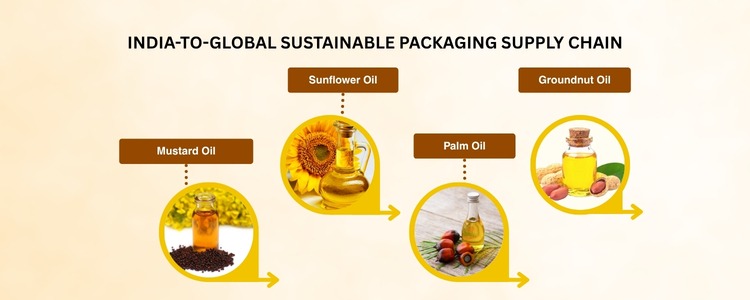
Mustard oil is suitable for certain culinary applications and market preferences. Buyers should specify the grade, intended use and destination requirements when requesting prices. Sunflower oil covers a wide range of applications, from cooking and food-processing to retail. Buyers should confirm requirements for refined or crude oils, along with specifications and packaging. Palm oil can be used for food-manufacturing, bakery, confectionery and other industrial applications. Buyers should consider product grade, refining status and any sustainability documentation relevant to their market or customers.
All categories are unique and should be assessed according to their intended use. Specifications and packaging will differ between products.
Compare Suppliers Against Total Commercial Value
Price is an important consideration for commodity buyers, but the cheapest option is not always the most cost-effective solution. Differences in quality, packaging, freight arrangements and payment terms can significantly impact the commercial value of a deal.
Buyers should compare prices on a like-for-like basis, which may involve clarifying the specification, order quantity, delivery terms and quotation validity period. The total landed cost may also include inland transportation, export management, freight, insurance where applicable, customs duties, port costs and delivery expenses.
For bulk purchases, buyers should also clarify the minimum order quantity, production or dispatch lead time and the ability of the supplier to honour repeat orders. A reliable supplier with consistent quality and delivery terms may offer better value than one that focuses on price competition.
Review Packaging and Storage Arrangements
Packaging is an important consideration for preserving product integrity. Depending on the category, size, and requirements of the buyer, suppliers may offer food-grade drums, cans, bottles, intermediate bulk containers or flexitanks for suitable bulk shipments.
Buyers should confirm that packaging is suitable for the oil category and complies with relevant food-contact safety standards. Storage conditions can also impact quality, particularly temperature, exposure to light or oxygen, and the suitability of containers. Importers should discuss storage conditions, shelf-life and handling procedures prior to dispatch. For bulk shipments, buyers should confirm loading procedures, tank cleaning and suitability of previous cargo with the logistics provider.
Confirm Export Documentation and Regulations
International edible oil transactions typically require commercial and regulatory documentation. Depending on the product category and destination, documentation may include a commercial invoice, packing list, certificate of origin, bill of lading, certificate of analysis, and relevant health or food-safety certificates.
Importers should confirm whether their destination country has specific labelling, ingredient, product registration or additional testing requirements.
For buyers assessing Sunflower Oil Export From india, these considerations are even more relevant when importing refined products for retail sale or food-processing. The same principle applies to other edible oil categories – requirements should be clarified for each product and destination, rather than relying on generic information.
Documentation should be verified prior to dispatch, due to the potential impact on customs clearance, additional costs, or rejection of a shipment.
Assess Supply Capacity and Market Knowledge
A supplier may be able to meet a small order, but unable to deliver regular, larger volumes. Buyers should therefore clarify the company’s monthly availability, storage capacity, dispatch schedule and access to raw materials.
Companies sourcing from Palm Oil Exporters should also confirm the origin, grade, refining status and traceability of the product, if relevant to their own market requirements. For regular orders, it is important to understand how suppliers manage price fluctuations, exchange rates and shipping costs. Open communication on availability and price validity dates helps both parties to plan purchases and shipments.
Start With a Trial Order
A trial order is an effective way to assess a new supplier, with an opportunity to review product quality, packaging, documentation and delivery performance.
Both parties should agree on specification, inspection requirements, payment terms and procedures for non-conforming products, prior to placing an order. Once performance has been verified, buyers can consider regular contracts, scheduled shipments, or volume-based purchasing arrangements for repeat orders.

Conclusion
Finding a trusted supplier in India’s edible oil market requires buyers to balance commercial and technical considerations. Buyers should review business credentials, product quality, food-safety documentation, export experience, laboratory reports and customer references. A trial order or independent inspection can also offer valuable insight.
The right supplier is not necessarily the cheapest option, but one that can consistently deliver the required product, with accurate documentation and commercial flexibility, to meet the buyer’s market requirements.
For international importers and domestic buyers, a trial order is a good way to assess a new supplier and build a long-term, reliable partnership.
1. How can buyers find reliable edible oil suppliers in India?
Buyers should assess business credentials, product specifications, food-safety documentation, export expertise, laboratory reports, and customer references. A trial order or independent inspection can offer additional reassurance.
2. Which edible oils can be sourced from India?
Depending on availability and supplier capability, buyers can consider mustard, sunflower, soybean, groundnut, rice bran and other edible oils.
3. Can buyers purchase edible oil in bulk?
Yes. Depending on the category, order size, and destination requirements, suppliers may offer bulk shipments in suitable containers or tank arrangements
4. How should buyers verify food safety?
Buyers should confirm that the supplier has relevant certificates or laboratory reports, and that handling, storage and packaging procedures are consistent with destination requirements.
5. What export documents are generally required for edible oil?
A commercial invoice, packing list, certificate of origin and bill of lading are generally required. Additional certificates and registrations may be required, depending on the destination.
6. What quality documents should buyers request?
A certificate of analysis is a useful starting point. Depending on the transaction, buyers may also request food-safety certifications, laboratory reports, traceability records and other documents required by the importing country.

Diptanshu
Leading research and marketing at Inductus Global, Diptanshu drives the company’s vision to transcend traditional trading through thought leadership in import-export. He spearheads a research-driven approach that prioritizes quality over price arbitrage, positioning Inductus as a strategic sourcing partner rather than a transactional intermediary. His work spans market intelligence, supply chain innovation, and trade dynamics, while playing a key role in sales and business development.