

Why UAE Importers Prefer Indian 1121 Basmati Rice?
The UAE has proven to be one of the biggest importers of Indian 1121 Basmati rice, and this is due to a host of compelling reasons. Indian 1121 Basmati rice is famous for its extra-long grain, unique aroma, and superior cooking properties that have captivated the UAE’s multicultural population. The rice’s unique property of extending twice its original size after cooking, along with its non-sticky texture and robust flavor, makes it the perfect choice for Arabian, Indian, and international cuisine that is popular in the UAE.
The UAE importers appreciate the quality, affordability, and efficient supply chain networks that Indian exporters provide. Moreover, the stringent quality norms and certifications that Indian mills strictly follow ensure the authenticity and purity of the food. Given the UAE’s multicultural population and rich culinary traditions, Indian 1121 Basmati rice has become an integral part of every household and the booming hospitality industry.
Why Is the UAE a Strategic Market for Premium Rice Imports?
One Experience The UAE holds an exceptional position in the world foods business; due to limited home-grown agricultural production capacity and a high number of the population is comprised of the global workforce through the employment attraction of foreigners, much of the daily food consumption is met through food imports. As with virtually every food conglomerate, rice is the main stay food of the UAE.
Factors, when determining what to import into the UAE, are determined by more than just price. When distributors and institutional buyers within the United Arab Emirates make decisions regarding what rice they will buy, overriding factors in their procurement selection include consistent supply assurance, factors associated with the consumer’s expectations. In the U.A.E., for many distributors and institutional buyers, the potential consequences associated with the inconsistency of rice often far outweigh the minor price variations they deal with. This has consistent supported the preference for select quality types of rice for organizational and market-style requirements.
What Sets 1121 Indian Basmati Rice Apart from Other Varieties?
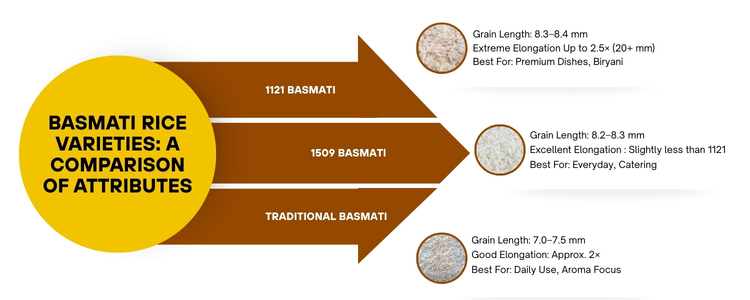
Rice known as “1121 Basmati” Indian origin rice is a long grain variety as many of the major rice varieties from the Indian region, due to the rice grown in areas of high humidity and moisture apart from the Upper Valley.
The long grain shape and the slimness of this rice type is one of the reasons why rice is very popular with restaurant and banquet operations in the UAE. Due to the characteristics associated with this rice type, all methods of preparation and cooking (raw and parboiled) have become increasingly common in the UAE, reinforcing preference and support by chefs and food service operations.
How Does Supply Consistency Influence Importer Preference?
The supply ecosystem of 1121 basmati from India is one of the biggest advantages of the product. Based on India’s cultivation base, milling infrastructure and export-driven logistics, exporters can guarantee repeat orders while maintaining specific characteristics.
For UAE-based importers, the ability to maintain uninterrupted supply reduces the risk of running out of stock or breaching contracts. In a market where both retailers and hospitality operators demand a continuous supply chain, this reliability is a deciding factor in selecting a supplier.
Why Do Importers Value Long-Term Supplier Relationships?
Rice imports to the UAE generally do not occur on a transactional basis. Instead, UAE importers tend to use an annual or multi-season procurement cycle to decide when to import and where to import the rice, in accordance with their demand forecasts and storage capacities.
Finding a trusted UAE based supplier allows importers to better align their overseas sourcing of Indian-origin Basmati Rice with their local distribution methods and provide importers with better coordination during times of high demand, such as Ramadan and peak tourism seasons. Additionally, importers benefit from predictable shipment schedules, priority allocations, and a faster resolution of any quality issues or documentation problems during high-demand periods.
How Does Consumer Preference Shape Import Decisions?
The development of familiarity with imported foods over time has also contributed to building consumer preferences for the aroma, appearance and texture of the Indian basmati rice. This consumer preference has led to continued demand for premium basmati rice varieties through both retail and wholesale channels.
The conversations about Basmati Rice in the UAE often highlight a trust-based relationship due to the experience of cooking Basmati Rice numerous times, versus the claims made through advertising and marketing efforts. As such, importers will typically concentrate their purchases on the basmati rice varieties that reduce the likelihood of consumer dissatisfaction.
What Role Does Branding Play in the Premium Segment?
A further level of consumer preference occurs through brand positioning. Brands that have historically been known to have consistent grain quality and heritage-based cultivation are most often recalled by consumers at times of the year when consumers celebrate their culture or holidays. The premium segment of the retail channel has identified Royal Basmati Rice as a quality standard for quality-focused consumers. This supports a strong association for consumers seeking high-quality food products to buy Basmati Rice that is identified with heritage-based farming practices.
Importantly, the ability of brands to assist importers in differentiating their product offerings in the marketplace, without having to change the underlying commodity, facilitates the margins of importers being protected within that competitive retail space.
How Does India’s Export Framework Strengthen Trust?
India has developed over the last few decades an extensive trade and regulatory framework specifically for the exporting of Basmati rice. The overall standardisation of export documentation, traceability systems, and quality certification as part of this developing process has helped reduce the compliance risks for countries that import this significant staple food.
The standardized method of exporting Basmati rice from India benefits both the commercial buyers and regulatory authorities of the UAE, allowing for reduced uncertainty in terms of purchasing a commodity that is often regulated and monitored for quality and safety. In addition, this predictability is of particular importance with respect to staple foods, where regulatory breaches could result in rapid market intervention.
Does Regional Demand Within the UAE Affect Sourcing Strategy?
Dubai continues to be the dominant trade hub within the United Arab Emirates; however, demand for Basmati rice throughout the federation varies from region to region based on many factors. In Sharjah, for example, much of the demand for Basmati rice results from wholesaler redistribution and foodservice operators accommodating workers in labor camps. On the other hand, demand in Abu Dhabi is driven more by institutional buyers and operators in the hospitality industry. When importers prepare shipment sizes and packaging formats, they take these regional differences into account.
How Do Logistics and Shelf Stability Support Preference?
The fact that 1121 Basmati is a versatile product enables importers to address this varied demand without the need to create multiple product lines for 1121 Basmati. Basmati 1121 rice is available in various forms, including Sella (white) and Golden Brown Sella; however, Sella version has better shelf stability than many other aromatic varieties. This factor significantly reduces spoilage risk during storage and transportation of the product within inland areas of the United Arab Emirates, especially given the high humidity and temperature levels of the region.
By importing 1121 Basmati, importers benefit from both reduced breakage rates and improved grain integrity when storing large volumes of product. This stability and security of product for a longer period allows importers to save on operating costs over time.
What Should Importers Focus on Going Forward?
The preference for Indian 1121 basmati rice in the UAE illustrates a much larger trend toward selecting high-quality procurement for the future. As importers align their sourcing strategies with the expectations of the consumer, regulatory requirements and logistics, they will be in a better position to continue to grow.
Moving forward, the competition will become increasingly challenging for businesses and as such, businesses will find it more challenging to succeed by opportunistically buying and instead will require continued relationships with existing suppliers to ensure a steady supply of basmati rice.

1. Why do UAE importers prefer 1121 basmati over shorter-grain rice?
Its grain length, cooking yield, and presentation suit both retail and foodservice needs.
2. Is price the main factor in importer preference?
No. Reliability, quality consistency, and consumer acceptance often outweigh price considerations.
3. Does 1121 basmati suit bulk catering operations?
Yes. Its cooking resilience makes it ideal for large-scale meal preparation.
4. Are UAE consumers brand-sensitive when buying basmati rice?
In premium segments, brand recognition plays a significant role in purchasing decisions.
5. How important is origin traceability for importers?
Very important, as it supports regulatory compliance and consumer trust.
6. Can smaller importers compete in this segment?
Yes, with reliable suppliers and disciplined logistics planning.

Diptanshu
Leading research and marketing at Inductus Global, Diptanshu drives the company’s vision to transcend traditional trading through thought leadership in import-export. He spearheads a research-driven approach that prioritizes quality over price arbitrage, positioning Inductus as a strategic sourcing partner rather than a transactional intermediary. His work spans market intelligence, supply chain innovation, and trade dynamics, while playing a key role in sales and business development.