

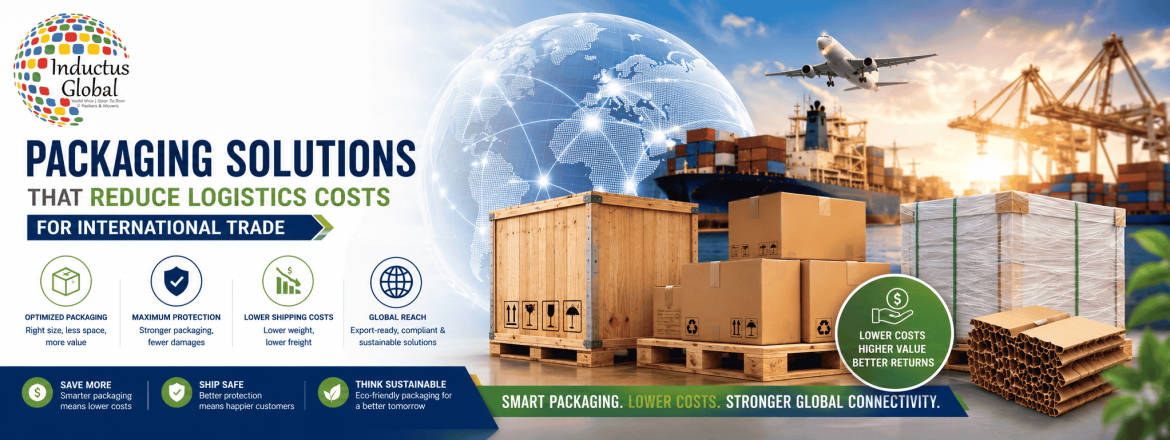
Packaging Solutions That Reduce Logistics Costs for International Trade
In today’s competitive global commercial environment, companies are always looking at how they can reduce costs without sacrificing efficiency. One area in particular, that is often overlooked but has a significant impact, is packaging. Well-designed Packaging Solutions will not only cut down on logistics costs; but, will also increase the efficiency of the supply chain, and provide product protection during shipping.
This article provides an overview of how strategic packaging decisions affect the cost structure of international trade and discusses practical examples of their effect on the costs of exporters, importers and logistics professionals.
The Strategic Role of Packaging in Global Trade
Packaging is not simply a form of protection any longer, but rather has become an integral component of ensuring the cost of transporting goods is kept to a minimum, as well as ensuring that the goods remain viable (intact) while being transported. In the context of international trade, where goods are typically transported over a substantial distance and through numerous handling points, the packaging of products is of even greater importance in terms of reducing the likelihood of loss, and controlling costs.
Examples of effective Packaging Solutions can be found in terms of reducing damage rates, optimizing shipping container use, and simplifying the handling process of goods between the point of origin and destination. When strategic packaging and logistics planning are complimentary, the potential to achieve measurable cost savings can be substantial.
Understanding Cost Drivers in Logistics
When exploring ways to enhance packaging methods, identifying the costs associated with international logistics is critical (freight expense based on weight/volume), warehousing, and storage incurred, labor and handling costs, losses due to customs and damage due to returns or replacements.
The effect of packaging on the various items is extensive, including how they can ultimately impact shipping charges (based on gross weight) and increase the efficiency of loading containers/pallets through generally accepted packaging methods, thereby lowering the number of shipments made.
Optimising Packaging Design for Space Efficiency
Improving packaging designs can lead to significant cost reductions in logistics.
Design considerations for packaging include:
– Selecting the appropriate size packages minimizes the amount of unused space (known as empty space) and decreases the amount of volumetric weight charged by freight carriers.
– Packages should be designed for stacking to increase the number of pallets that can fit into a container.
– Use of standardized package dimensions simplifies loading and decreases wasted product space.
– Efficiently designed packages allow companies to ship more products per container which will reduce the average transportation cost per product.
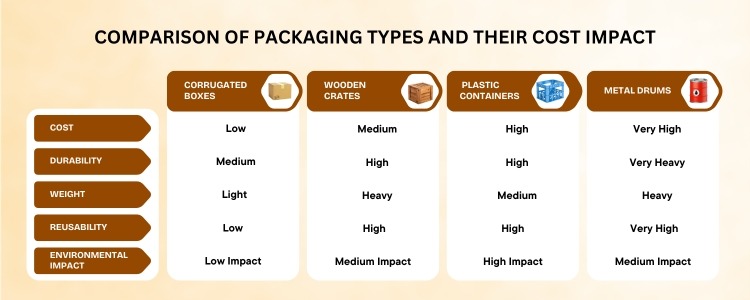
Material Selection and Its Cost Implications
Design considerations for packaging include:
– Selecting the appropriate size packages minimizes the amount of unused space (known as empty space) and decreases the amount of volumetric weight charged by freight carriers.
– Packages should be designed for stacking to increase the number of pallets that can fit into a container.
– Use of standardised package dimensions simplifies loading and decreases wasted product space.
– Efficiently designed packages allow companies to ship more products per container which will reduce the average transportation cost per product.
Adopting Cost-effective packaging solutions
Selecting the most appropriate package material is imperative to achieve an acceptable level of durability while not drastically increasing costs.
Typically used types of packaging materials include:
Corrugated cardboard
Polymer plastics
Wood crates
Steel containers for heavy-duty materials
A reliable packaging materials exporter can provide materials at an acceptable cost point with appropriate levels of durability while meeting international requirements. Lightweight (but durable) materials can result in savings on freight expenses without sacrificing the protection of the goods.
The Role of Customisation in Packaging
Customized packing solutions allow businesses to make their products look better by having them fit into boxes specifically designed for their size, weight, type, etc. Custom packing solutions allow companies to have a flexible solution that fits their logistics needs and reduces the amount of packaging they use.
Benefits of Customization Include:
- Reduction In Waste Material.
- Improved Protection of Product While They Are In Transit.
- Lower Dimension Weight.
- Improve Brand Presence In The Marketplace Due To Improved Packaging Design
Minimising Damage and Return Costs
Shipping damaged products will cost a company a lot of money because they will have to ship a new product, pay additional postage/handling fees, and lose customers due to poor quality products. To reduce shipping costs associated with damage due to shipping, companies should:
- Use packing materials that have shock absorbing characteristics.
- Properly Seal and Cushion Your Product during Shipment.
- Follow International Packaging Guidelines.
- A Long-Term Investment Will Lower The Cost Of Shipping To Customers By Reducing The Cost Associated With Producing A Replacement Product If It Gets Damaged In Transit.
Sustainability and Cost Efficiency
The issue of packaging sustainability is becoming very important for companies who do business internationally. An interesting trend is that packaging that is considered “good” for the environment is often also good for a company’s bottom line. Examples of sustaining packaging practices could include:
- Use Of Recyclable Packaging Material.
- Reducing Number Of Layers.
- Designing For Reusable Packaging.
Packaging that has a lower cost and uses recycled materials will result in better brand reputation in countries that are environmentally-conscious.
Impact of Packaging on Freight Costs
Freight costs are typically determined by dimensional weight. This factor is tied to the length & width as well as weight of the shipment. Inefficient packaging may contribute to a higher freight cost, even if there is not a lot of actual mass associated with the parcel.
Ways to minimise your freight outlay:
- The design of your packing should be done in a compact fashion
- Remove large amounts of filler you do not absolutely need in your box
- Use lighter weigh materials to pack your items
Optimising your International shipping package will help ensure that you are only paying for the space that you actually require.
Technology Integration in Packaging
The use of modern-day packaging solutions and technology continues to evolve and increase. Examples are:
- Smart packaging that has tracking devices used within the packaging
- Automated systems for packing and using
- Digital modelling of packaging design
With the above examples of modern packaging solutions, a business can be able to track shipments, reduce mistakes, and optimise their configuration.
Regulatory Compliance and Packaging Standards
When you are shipping internationally all sorts of regulations need to be adhered to regarding the packing of your products. Examples are:
- ISPM-15 Standards (wooden packaging etc.)
- Label information that must be included
- Hazardous material classification
If your shipments are non-compliant with these types of regulations, then you will incur additional logistics costs due to delays in getting your shipments, fines and/or rejection of your shipments
Case Example: Cost Reduction Through Packaging Optimisation
A mid-sized exporter sends consumer products to Southeast Asian markets, and by redesigning their packaging to be 15% smaller, their containers able held 20% more than before, leading to a lower number of shipments and lower freight costs.
The case studies provide a clear example of the measurable return on investment for developing and implementing cost-effective packaging solutions.
Challenges in Implementing Advanced Packaging Solutions
Other than the potential for saving through the investment in upgrading packaging, companies often find other challenges when implementing new packaging strategies. Companies are likely to experience:
- Initial investment
- Limited suppliers
- Resistance to changes in process
Planning for these challenges and creating an incremental implementation strategy will help alleviate these potential barriers.
Future Trends in Packaging for International Trade
The future of packaging changes over time and is likely to be influenced by:
- Greater use of biodegradable materials
- Increased use of automation and robotics in the packaging process
- Design optimisation driven by data
As business continues to grow globally, packaging will play an increasingly important role in reducing costs and increasing operational efficiencies.

Conclusion
In the global marketplace, packaging has gone from being a secondary issue in international trade to a key driver of cost efficiencies. Many businesses that invest in efficient packaging that is designed for maximum effectiveness can expect to achieve significant cost savings as well as improvements in their operational efficiencies.

Diptanshu
Leading research and marketing at Inductus Global, Diptanshu drives the company’s vision to transcend traditional trading through thought leadership in import-export. He spearheads a research-driven approach that prioritizes quality over price arbitrage, positioning Inductus as a strategic sourcing partner rather than a transactional intermediary. His work spans market intelligence, supply chain innovation, and trade dynamics, while playing a key role in sales and business development.