

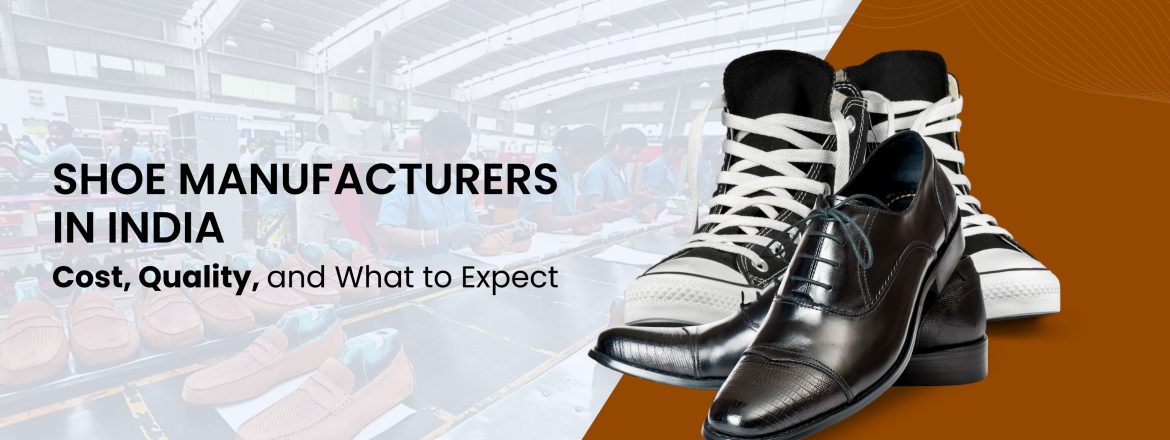
Shoe Manufacturers in India: Cost, Quality, and What to Expect
The global footwear sector has been steadily growing in size since the late 1990s. As a country with a highly-skilled workforce, large-volume production capabilities, and competitive production prices, India is now one of the most preferred countries for brands and retailers seeking dependable suppliers for their products. The past two decades have shown that Shoe Manufacturers In India have continued to increase their exports, providing footwear to Europe, the Middle East, North America, and parts of Asia.
For many international purchasers and buyers, India is an attractive option because of its combination of low cost and high quality. In terms of quality, the Indian footwear industry is known for its wide range of products, from hand-made to factory-made footwear. Knowledge of the industry structure, cost structures, and commonly encountered challenges when sourcing from India will help buyers make better sourcing decisions.
1. The Growth of India’s Footwear Manufacturing Industry
India is one of the biggest footwear producing nations in the world producing billions of shoes each year (different types of footwear including leather footwear, sports footwear, sandals and safety boots). There are both large-scale organisations and small artisan based companies involved in footwear manufacturing as well.
Many factors have contributed to the growth of Shoe Manufacturers In India:
- Availability of leather and synthetic materials (along with other materials)
- Availability of skilled workers with artisan manufacturing abilities
- Low cost of labour relative to Western markets
- Government policies in support of manufacturing and exports.
In addition, the footwear sector in India has a large volume of footwear required by the domestic market which provides the ability for manufacturers to maintain their production throughout the year.
2. Key Shoe Manufacturing Cities in India
India has different clusters to produce footwear, which means that each area of India produces a particular type of shoe but also provides the necessary supply chain to provide all the materials and components needed.
Some of the major shoe manufacturing city clusters in India include:
- Agra (Uttar Pradesh) – Often known as the footwear capital of India, there are many hundreds of factories producing leather shoes to be sold domestically and to export internationally.
- Chennai / Ranipet (Tamil Nadu) – This area in southern India specializes in exporting shoes with a focus on high-quality leather shoes and safety shoes.
- Kolkata (West Bengal) – Known for its craftsmanship and focus on fashion, contributors in Kolkata produce shoes catered towards boutique brands and niche markets.
- Delhi/NCR – The majority of manufacturers in the Delhi/NCR region have modern factories that produce synthetic shoes and athletic shoes for international brands.
Each of the aforementioned shoe-producing regions utilizes specialized supplier networks that will make purchasing much easier for companies who buy shoes for sale outside of India.
3. Cost Advantages of Manufacturing Shoes in India
Cost savings are one of the main reasons that many of the world’s largest brands source from Indian producers. The cost of producing an item in India is typically less than what it would be in most of Western and Eastern Asia.
One of the main reasons for the cost savings are:
Labour Costs
In terms of leather goods makers and the process of hand-finishing items, there is a large number of skilled workers in India that are available at a very competitive wage.
Availability of Raw Materials
As one of the top producers of leather and synthetics used to create shoes, India has a lower reliance on outside countries for the raw materials required to manufacture footwear.
Operational Efficiency
The existence of large manufacturing districts, allows suppliers to access components used in the production of shoes, and reduce transportation and logistical costs typically associated with using suppliers, which at times, makes the time to produce goods much quicker.
For international buyers that source footwear, India often represents the best balance between price and quality.
4. Quality Standards and Manufacturing Practices
Quality Control has been the main focus of shoe manufacturers from india, as they raise their capabilities in competing globally. Many companies have implemented international production standards and certifications to maintain consistent quality throughout their product lines.
Here are a few of the typical practices used to ensure product quality:
– Rigorous material testing for the durability and flexibility of the materials used.
– Accurate cutting and stitching methods.
– Regular quality control checks throughout the various stages of production.
– Conformance to international safety standards.
A number of larger factories now utilize computerized machinery in order to meet the expectations placed upon them by global retailers and fashion brands.
5. Export Strength and Global Reach
Through strong networks of shoe exporters in india will be able to provide those by supported…the export of footwear from india to over 100 countries worldwide, with the most common destination being United States, United Kingdom, Germany Italy, and united Arab Emirates.
Warehousing at major ports, such as Mumbai, Chennai, and Mundra, is providing very good logistics in getting products exported from india quickly, allowing shoe manufacturers in india maintain competitive shipping times and are supporting the increase of shoe export from india as a result of the increasing global demand of both leather and lifestyle footwear.
6. Choosing the Right Footwear Supplier
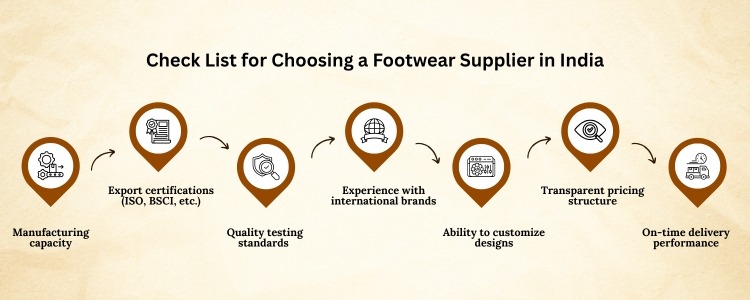
It is essential for buyers looking to establish a long-term partnership with a footwear supplier to select one that offers the best opportunity for consistent quality and on-time delivery. There are many manufacturers in India from which to choose, but the supplier’s scale and quality have to be considered before developing a long-term relationship. Prior to sourcing a foot wear manufacturer to set up a long-term partnership, buyers should take the following factors into consideration:
– Manufacturer’s production capacity and specialization
– Manufacturer’s disposable experience with international buyers
– Manufacturer’s certification status with compliance requirements
– Manufacturer’s capacity to create customized designs and use alternate materials
– Manufacturer’s transparency in communication and pricing
One of the most effective ways to evaluate a new supplier is through factory audits and product samples.
7. What Buyers Should Expect When Working with Indian Manufacturers
Buyers are generally required to follow a structured sourcing process when collaborating with Indian manufacturers.
Four primary steps are typically taken by buyers to purchase goods from India, by following each of the three stages of production:
– Product Design & Development
Manufacturers manufacture product prototypes and/or product samples per the buyers specifications.
– Price Negotiation
Price is based on the type of materials being used, volume of orders, and scope of customization based on buyer requirements.
– Production & Quality Control
Factories will perform quality inspections on products before packaging and shipping.
– Shipping and Export Documentation
Exporters are responsible for providing compliance documentation and logistics services for export.
Communication during all of the above stages of the sourcing process will decrease the likelihood of misunderstandings and result in a smoother order fulfillment experience.
8. Opportunities for Global Buyers
The growth of India’s footwear industry has been driven by increased global demand and efforts to develop and grow local manufacturing capabilities. A diverse range of footwear production and manufacturing capabilities allow footwear manufacturers to develop various product categories (including high-volume commercial foot-wear, high-quality custom-made footwear).
For buyers, the benefits of sourcing from Indian footwear manufacturers include:
- Diverse Footwear Categories and Styles
- Ability to Custom Manufacture to Buyer Specifications
- Competitive Manufacturing Costs
- Reliable Export Logistics Network(s)
Providing an appealing option for both major brands and new retailers as an internationally recognized source for quality and competitively priced footwear products.
Conclusion
In summary, the Indian footwear industry has a unique mix of craftsmanship, competitive pricing, and scale of production. Due to the manufacturing clusters, exporting networks, and comparative industry expertise in meeting international production quality standards, many Manufacturers of Shoes in India have solidified their place in the global market for footwear.
Buyers of footwear seeking dependable partners for the production of footwear will find India to be a dynamic environment for sourcing due to the established manufacturing companies and the well-developed supply chains in the country. Buyers can develop long term relationships in a rapidly growing footwear marketplace by having an understanding of the footwear industry structure, costs, and quality assurance practices.
Frequently Asked Questions (FAQ)
Sourcing services companies are professional firms that assist businesses with supplier relationship management, with an emphasis on efficiency and compliance, enjoying a long-term relationship and collaboration.
Agents usually manage single transactions, whereas sourcing companies create a working relationship with suppliers by employing a complete supplier relationship management process with strategic oversight.
Because trust and compliance help assure quality, minimize risk, and ensure delivery performance.
Technology provides transparency, risk monitoring, and automates and enables collaboration between buyers and suppliers across borders.
Sourcing services firms help mediate disputes, enforce contractual obligations and formalize a corrective actions plan, whilst assuring business continuity.
No. Small and medium-sized enterprises will also leverage the knowledge of sourcing services companies and access to their network to connect to global suppliers without excess overhead.