


How to Import Indian Robusta & Arabica Coffee for UK B2B Buyers
Indian Coffee: Luxury Blend of Aromas
Indian coffee is more than an agricultural export; it is a geographical expression of monsoon winds, mountain ecosystems, and centuries-old traditions. Across the mist-covered Western Ghats, Arabica coffee flourishes at higher elevations, while the fertile landscapes of Karnataka, Kerala, and the Deccan Plateau produce some of the world’s finest Robusta beans. From the monsoon-filtered environments of the Nilgiris to the shade-grown estates of Wayanad, Indian coffee develops remarkable depth and complexity.
It’s beyond a mere sip or cup. Filter kaapi, the iconic coffee of South India served in steel tumblers and dabaras, is a cultural ritual. Modern café culture in India is gaining international recognition. Today, Indian coffee is found in artisanal ice creams, mixed with premium spirits, and used in special culinary creations.
According to the International Coffee Organization (ICO) and Coffee Board of India, India produces more than 270,000 tonnes of coffee annually and remains the world’s largest producer of natural (unwashed) Robusta. With intoxicating floral notes, velvety body, and exceptional versatility, Indian coffee offers UK buyers a distinctive origin story and commercial advantage.
Choose your Ultimate Coffee from a wide range of Indian Coffee
India offers a wide variety of coffee, providing a sourcing advantage ideal for industry applications. Global markets specially UK and Europe, have better options for selection.
| Variety | Coffee Type | Origin (Region) | Altitude | Tasting Notes | Ideal Usage | B2B Applications |
|---|---|---|---|---|---|---|
| Coorg Robusta | Robusta | Karnataka | 800–1,200 m | Cocoa, bold, earthy | Espresso blends | Instant coffee manufacturing |
| Malabar Monsoon | Arabica | Karnataka Coast | 900–1,500 m | Heavy body, low acidity | Specialty blends | Roasters, private labels |
| Bababudan | Arabica | Karnataka | 1,200–1,800 m | Floral, fruity | Single-origin coffee | Premium brands |
| Wayanad AA+ | Arabica | Kerala | 900–1,500 m | Balanced, nutty | Gourmet roasting | Traceable specialty programs |
| Nilgiris Peaberry | Arabica (Peaberry) | Tamil Nadu | 1,500–2,000 m | Sweet, complex | High-end cafés | Premium partnerships |
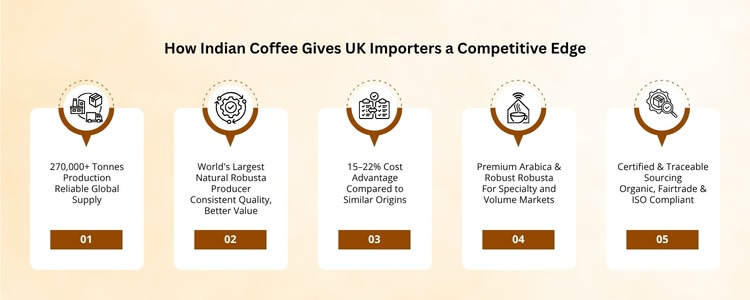
Why UK B2B Buyers Choose Indian Coffee Range?
The UK imports more than 120,000 tonnes of coffee every year, and lately, more buyers are looking to India to meet both everyday and specialty demand. If you’re in the business of making instant coffee, running coffee chains, or working with big foodservice operations, Indian Robusta gives you a real edge on cost without compromising on quality. For those focused on the premium end, think specialty roasters, gourmet retailers, or indie coffee brands, Indian Arabica fits right in with those high-end strategies.
The numbers make sense, too. Indian coffee often comes in 15–22% affordable than similar East African beans, and it still hits a consistent quality mark. Plus, Indian exporters know their way around the post-Brexit paperwork; they can handle Certificates of Origin and all that compliance hassle without skipping a beat.
So, why shell out for expensive East African coffee when Indian Robusta hits those same flavor profiles for a lot less? For UK businesses keeping an eye on margins, India serves up that hard-to-find mix of quality, reliability, and affordability.
Indian Robusta vs. Indian Arabica Coffee
If you’re in B2B coffee buying, you’ve got to know the difference between Robusta and Arabica.
- Robusta is basically the workhorse of Indian coffee, almost 80% of what’s produced nationwide. It’s got a caffeine kick that’s two to three times stronger than Arabica, grows at lower altitudes, and packs a punch with bold cocoa, earthy, and bitter flavors. That’s why you usually see it in espresso blends, instant coffee, or at big café chains.
- Arabica, on the other hand, makes up just 20% of India’s coffee. People grow it higher, between 1,000 and 2,200 meters. It’s the one with bright acidity, floral notes, and a layered flavor profile, perfect for specialty cafés or any program focusing on premium single-origin beans. These are the coffees retailers use to push high-margin products.
Complete Guide to Import Indian Robusta & Arabica Coffee to UK
- Sourcing
Start with the validated exporters mentioned through the Coffee Board of India channels. Choose suppliers that are Specialty Grade, Organic, Fairtrade or Rainforest Alliance certified. Before you negotiate any contracts, request sample batches and review the defect counts, moisture levels and cup quality.
- Certifications
Post-Brexit imports need strict paperwork. To ensure that exporters provide phytosanitary certificates, certificates of origin (COO) and ISO 22000 food safety compliance records are used. Ensure all certifications are checked before shipment.
- Logistics
If you ship in larger volumes, Full Container Load (FCL) is the most economical option. Average 20-foot container freight rates range between 2.5 lakh to 4 lakh, depending on route and season. Negotiate CIF (Cost, Insurance, Freight) terms to provide predictable landed costs in the UK. Established logistics partners such as DHL and Maersk can facilitate movement.
- Customs Clearance
Coffee imports are usually classified in HS Code 0901. Use experienced UK customs brokers to manage declarations and compliance requirements. Usually, if the documentation is prepared well, clearance is secured in five to seven business days.
- Post Delivery Quality Assurance
When received in the warehouse, check for moisture and pest. Moisture should be between 10.5% and 11.5%. Perform cupping evaluations, record sensory notes, and store in appropriate conditions. Robust post-arrival quality controls ensure the integrity of product and brand reputation.
Warning Signs and Security Measures
If you’ve been importing for a while, you know the biggest headaches crop up before your containers even leave the port. Watch out for exporters who can’t show genuine client references, those offering prices that seem way too cheap, sketchy certification records, or storage methods that don’t really add up.
Always ask for lot-specific traceability codes and check banking details yourself, don’t just trust what you’re told. Cargo insurance is a must these days, especially with all the disruptions happening worldwide. When your shipment arrives, check for signs of moisture, pests, or anything that suggests the stock isn’t as advertised.
Set up third-party lab testing, keep your goods in climate-controlled spaces, and back yourself up with contracts that force exporters to take responsibility for quality problems spotted within 48 hours of delivery. Getting these details right goes a long way in protecting your operation and your bottom line.

Conclusion
Indian coffee really stands out. On one side, you get Robusta, reliable, affordable, easy to scale. On the other, there’s Arabica, which comes with rich stories and higher profits. For UK importers dealing with all the moving pieces after Brexit, India’s a solid bet: certified, consistent, and reasonably priced. When suppliers keep their quality tight and checks are strict, Indian coffee stops being just a backup plan, it becomes a real strategic edge. And with more buyers caring about sustainability and certifications, the UK’s appetite for certified Indian coffee is only going to grow through 2026 and beyond.

Pratibha Soni
I write where strategy meets storytelling. As a passionate writer and literary enthusiast, I craft business-focused content that transforms trading insights into compelling narratives. Drawn to global business ecosystems, I enjoy turning research, innovation, and ideas into content that informs, connects, and inspires. With an analytical mind and a creative soul, I bring curiosity, collaboration, and a sharp eye for detail to every project. Adaptable and growth-driven, I believe the right words do more than communicate; they leave an impression.






One Reply to “How to Import Indian Robusta & Arabica Coffee for UK B2B Buyers”
Indian Spices Cloves: Complete Guide for Spice Importers
11 Sep 2026[…] and promotion. In the present day, India is acknowledged as a large producer of both Arabica and Robusta coffee beans, of particular interest for Italian importers due to the fact that Robusta beans are an integral […]