

How German Importers Can Source Quality Basmati Rice from India
Introduction
India leads as No. 1 in the world supply for basmati rice exports. Right now, it supplies top-quality aromatic rice to more than 150 countries. Numbers from APEDA show India shipped out over 6 million metric tonnes of basmati rice in FY 2024–25, leaving no doubt about its status as the world’s biggest exporter. People call basmati the “King of Rice,” and for good reason. It’s famous for its rich aroma, grains that stretch beautifully when cooked, a soft, fluffy texture, and the way it’s aged to perfection.
Other rice just doesn’t measure up. All this comes from the unique climate and soil of the Indo-Gangetic plains near the Himalayas, the only area officially protected by India’s GI status for basmati.
Chefs everywhere love basmati rice. Yotam Ottolenghi put it best: “Basmati rice is wonderfully fragrant and light,” and honestly, it just works in so many dishes. You find it in classic biryanis and pilafs, but also in trendy European recipes and creative fusion plates. Indian basmati isn’t just food, it’s a bridge between cultures.
The global appetite for basmati keeps growing. Take Germany, for instance. Importers there are going after premium Indian basmati to meet shifting tastes and rising demand in shops. The world can’t seem to get enough.
When Quality meets Flavors: Indian Basmati
India’s basmati export industry stands out because it doesn’t put all its eggs in one basket. It’s got a whole lineup of rice varieties, each aimed at a different set of customers and kitchens. Take Pusa Basmati 1121, for example. Chefs and buyers love it for its long grains, they really stretch out and look beautiful on the plate. Then there’s Pusa Basmati 1509, which matures early, doesn’t break the bank, but still cooks up just right.
If you want that classic, nostalgic aroma, traditional Basmati is the real deal. It holds the top spot in specialty markets and always pulls in a premium. Growers are also turning to Pusa 1637 because it yields well and ships efficiently for export. On the value side, Sharbati rice ticks the box for affordability, but it still has good-looking grains.
But you can’t talk about basmati without mentioning its roots. The Himalayan foothills give it character you can’t fake, crisp nights, rich soil, irrigation straight from mountain streams, and just the right humidity. All those factors come together to build the aroma and texture that make true basmati so special.
| Variety | Major Region / State | Key Characteristics | Average Grain Length | Best Culinary Use |
|---|---|---|---|---|
| Pusa Basmati 1121 | Punjab, Haryana | Extra-long grain, excellent elongation | 8.3–8.5 mm | Premium biryanis, export retail |
| Pusa Basmati 1509 | Punjab, Haryana, U.P | Early maturity, good aroma | ~8.0 mm | Everyday premium cooking |
| Traditional Basmati | Uttarakhand, Western U.P | Strong aroma, superior aging potential | 7.5–8.0 mm | Gourmet and specialty cuisines |
| Pusa Basmati 1637 | Haryana, Punjab | Consistent quality, high yield | ~8.2 mm | Bulk retail and foodservice |
| Sharbati Rice | (M.P),Northern India markets | Mild aroma, economical | 7.0–7.5 mm | Value-focused retail and catering |
Why Does Germany Choose Indian Basmati Rice?
Germany’s appetite for real basmati rice keeps climbing, thanks to its diverse population and the booming interest in Asian and Middle Eastern food. Premium grocery stores are popping up everywhere, and people want ingredients they can trust, something genuine, with clear origins.
Indian suppliers really fit the bill here. Their prices are competitive, they can crank out huge quantities without breaking a sweat, and their export systems run like clockwork. So, if you’re a German importer, you get steady supply all year, plus the flexibility to scale up when you need.
These days, compliance with EU food safety standards is front and center for Indian exporters. The top players pour resources into monitoring residues, running lab tests, tightening up traceability, and rolling out strict quality checks to meet EU MRL rules. APEDA and industry partners are also pushing awareness campaigns about proper pesticide use and what’s required for export. India isn’t just selling rice, they’re showing they’re serious about quality, safety, and playing by Europe’s rules.
Steps to Source Quality Basmati Rice from India to Germany
- Step 1: Track down best exporters
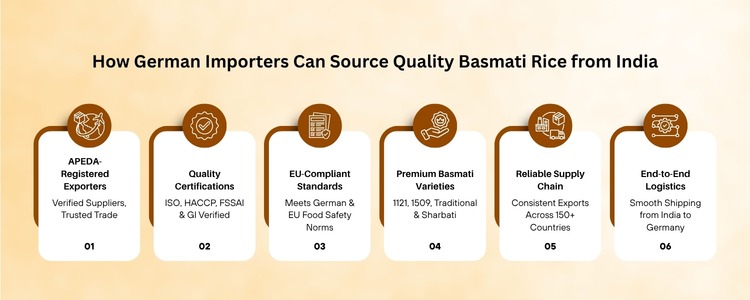
If you want your sourcing to work out, start with exporters you can trust. German buyers should stick with APEDA-registered companies, they need legit export licenses, proper processing facilities, and a real track record handling foreign orders. Don’t just rely on their brochures, dig into certifications, customer feedback, and any independent reviews you can find. It helps to look at their actual shipment volumes and check if they already supply clients in Europe. Exporters who know the EU landscape generally handle the rules better and deliver quality that’s steady, shipment after shipment.
- Step 2: Check for Quality & Certifications
Checking quality isn’t some box you tick, it’s essential. Ask for paperwork showing ISO certifications, HACCP systems, FSSAI clearance, and proof of GI authenticity. Get lab reports that detail pesticide residues, moisture levels, grain specs, the percentage of broken grains, and overall purity. Reliable exporters happily hand over their latest test records and provide traceability. Thorough quality checks protect you from import hassles, customs holdups, and the risk of having your product bounced from the German market.
- Step 3: Abide by German-customised Preferences
If you’re aiming for success, you need to know the market’s tastes. German buyers tend to prefer 1121 Steam Basmati and 1121 Sella Basmati rice because they cook well and look good. Packaging varies, a supermarket might want 1 kg packs, while foodservice buyers go for bigger bags. Private-label deals are pretty common, too. Make sure your labeling is spot-on for Germany and the EU: declare ingredients, show nutrition info, include storage instructions, and use multiple languages if needed.
- Step 4: Obligate National & International laws
Importing food across borders isn’t simple. Importers need to hit every EU food safety standard, customs rule, and phytosanitary regulation. Key paperwork includes your invoices, packing lists, origin certificates, phytosanitary docs, lab reports, plus shipping documents. Exporters in India also need to follow DGFT rules and APEDA guidelines. Staying ahead of regulations means you avoid costly customs surprises and keep your supply chain running smoothly.
- Step 5: Pre & Post Logistics
Good logistics are what keep sourcing profitable. Get those container bookings going early, especially during busy export seasons. The main Indian ports connect regularly with Hamburg and Bremerhaven, so transit’s usually reliable. Don’t forget to review your warehousing, inventory systems, and regional distribution. After-sales matters just as much, experienced exporters have clear ways to handle quality issues, shipment tracking, and fast responses. That way, problems get solved quickly and your business keeps moving.
Conclusion
If you’re a German importer looking for a reliable basmati rice supplier, Inductus Global has you covered. We handle everything, from checking suppliers upfront to making sure your rice arrives on time and meets all the right standards. Our team takes the hassle out of importing, so you can focus on your business. Ready to talk about your basmati rice needs? Reach out to us today.

Pratibha Soni
I write where strategy meets storytelling. As a passionate writer and literary enthusiast, I craft business-focused content that transforms trading insights into compelling narratives. Drawn to global business ecosystems, I enjoy turning research, innovation, and ideas into content that informs, connects, and inspires. With an analytical mind and a creative soul, I bring curiosity, collaboration, and a sharp eye for detail to every project. Adaptable and growth-driven, I believe the right words do more than communicate; they leave an impression.