

How to Import Soybean Oil from India: Step-by-Step Guide for Buyers
The global market for edible oils is expanding as food companies, wholesalers, retailers, and hospitality institutions look for reliable sources to meet the growing need. Among the most popular edible oils, soybean oil is gaining a lot of popularity due to its versatility, cost-effectiveness, and usability in numerous culinary and industrial practices.
India has established itself as a strong player in the edible oil processing and export market by providing low prices, high-tech refining facilities, and a developed export ecosystem. Importing soybean oil from India allows global clients to create a reliable supply chain by ensuring the quality and cost-efficiency of their product.
Successful procurement is not limited to choosing a supplier. Buyers should familiarize themselves with export procedures, quality standards, paperwork, and logistics prior to placing orders. This guide describes the necessary steps for the procurement of soybean oil from India.
Why Choose Soybean Oil Suppliers from India?
Among the noteworthy features of the food sector in India is its powerful drive in the last 10 years owing to ample funds directed toward refining technology, exporting infrastructure, and quality assurance systems.
The benefits of partnering with reputable suppliers of soybean oil include:
- Affordable pricing for overseas clients
- State-of-the-art processing and packaging facilities
- Adherence to the worldwide standards of food safety
- Variety of packaging solutions for retail and industrial clients
- Smooth logistics in exports via the biggest ports
Many suppliers are capable of producing custom labels for packaging making India an attractive place for sourcing for supermarkets and distributors.
Choosing the right supplier is just the first step toward an effective long-term strategy for importing.
How Can Buyers Identify Reliable Suppliers?
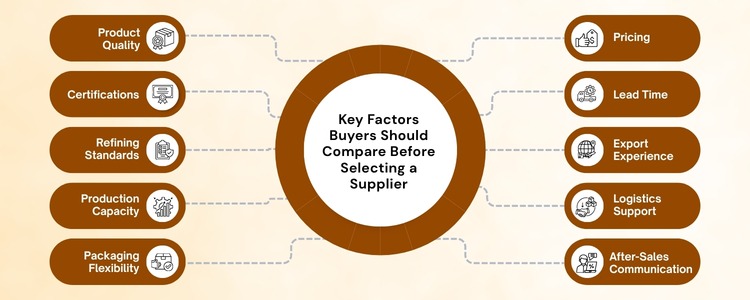
It is necessary to follow a well-structured evaluation process rather than simply relying on online quotes to find a trustworthy supplier.
Consider Export Experience
Clients need to pay attention to suppliers having experience in international trade.
Reputable soybean oil exporters are aware of the regulations that need to be followed in the destination countries and their shipping and customs documentation requirements, which minimizes shipment delays.
The export history indicates the supplier’s ability to keep up with the production schedules.
Verify Certifications
Food safety remains one of the most important aspects of edible oil procurement.
Reliable suppliers should maintain internationally recognised certifications such as:
- ISO quality management standards
- HACCP certification
- FSSC 22000
- Food-grade manufacturing compliance
These certifications indicate that production processes follow recognised quality and hygiene standards.
Evaluate Production Capacity
Before signing a commercial contract, buyers need to check the supplier’s ability to manufacture the order.
The most important factors are:
- The capacity of annual production
- The presence of a refining facility
- The presence of a packaging unit
- The systems of warehousing
Companies engaged in long-term buying need to take into account the capability of the supplier to meet future needs of businesses.
What Type of Soybean Oil Should Buyers Import?
Refined soybean oil is the product of choice for international buyers, as it offers great degrees of versatility and extended shelf life.
Top-notch Refined Soybean Oil Suppliers offer suitable products for the following purposes:
- Cooking at home
- Food production
- Restaurants and catering companies
- Bakery operations
- Snack production
Prior to placing an order, customers should ask for all the necessary details of the products, such as color, moisture content, method of refining, and the necessary shelf life.
Testing results and product samples are taken as a guarantee of credibility before the bulk purchase of refined soybean oil starts.
What Documents Are Required for Importing Soybean Oil?
Sufficient documentation is crucial for successful international trading processes.
Exporters usually prepare the following documents:
- Commercial Invoice
- Packing List
- Bill of Lading
- Certificate of Origin
- Quality Certificate
- Phytosanitary, or food safety documentation in the cases described.
Importers need to check what specific documents are required by customs authorities in the destination country.
Having all the necessary paperwork makes it easier and prevents delays with customs clearance and compliance.
How Does the Import Process Work?
Importing Soybean Oil involves different important stages.
Step 1: Determine Product Specifications
Identify oil grade, packaging type, quantity, and characteristics of destination market.
Step 2: Create a Supplier List
Evaluate various suppliers based on their certifications, export history, prices and their output.
Step 3: Request Samples
Test product quality using laboratory testing or sample before proceeding with bulk order.
Step 4: Negotiate Terms of Sale
Agree on price, payment terms, date of dispatch, and shipping responsibility.
Step 5: Production & Quality Checking
Once production commences buyers use third party inspection agencies to confirm quality before shipment.
Step 6: Shipping
Soybean oil is shipped through international shipping and then customs clearance is done at final port.
What Should Buyers Consider Before Placing Bulk Orders?
Bulk purchasing necessitates thorough consideration of more than just product cost.
Options for Packaging
Suppliers usually provide:
- Retail Bottles
- Jerry Cans
- Drum
- Flexitanks
- Containers in bulk
The packaging must fit the distribution system and available storage facilities of the buyer.
Storage and Shelf Life
Having proper storage conditions can help maintain the quality of oil during the process of transportation and storage.
It is a good idea for importers to check required storage temperature and shelf life specifications before shipping the product.
Logistics Planning
The total costs of buying the product are affected by shipping schedules, freight costs, insurance, as well as customs procedures.
Experienced providers can help improve reliability of the supply chain.
When purchasing soybean oil, some buyers compare it to other products, such as bulk sunflower oil, but buyers need to make their buying decisions based on market demand, the type of use of the product, and pricing.
What Trends Will Influence Soybean Oil Imports in 2026?
The global edible oil trade is undergoing changes as there are new consumer demand trends and regulatory rules. There are a few trends that will shape the methods of purchase.
More Attention to Food Safety
The suppliers want the product to be traceable and to have several quality controls applied in the whole supply chain.
Green Production
The companies that use environmentally friendly production technologies are more attractive to buyers on the global scale.
Private Label Development
Retailers are developing more private-label edible oil products, making it possible for them to establish new bulk supply agreements.
Digital Procurement
Digital documentation and supplier verification are helping to expedite international purchases.
Conclusion

The process of importing soybean oil from India offers wholesalers, retailers and food producers different chances of finding significant and reliable supply partners who can offer good prices. However, successful sourcing can only be done through careful assessment of potential suppliers, strict quality control, complete documentation, and efficient logistical planning.
By cooperating with reliable Soybean Oil Suppliers, buyers can create stable procurement and ensure stable supply of products. Since the demand for edible oils keeps growing all over the world, finding the right partner for sourcing soybean oil seems to be very important in establishing a strong and competitive supply chain.

Diptanshu
Leading research and marketing at Inductus Global, Diptanshu drives the company’s vision to transcend traditional trading through thought leadership in import-export. He spearheads a research-driven approach that prioritizes quality over price arbitrage, positioning Inductus as a strategic sourcing partner rather than a transactional intermediary. His work spans market intelligence, supply chain innovation, and trade dynamics, while playing a key role in sales and business development.