

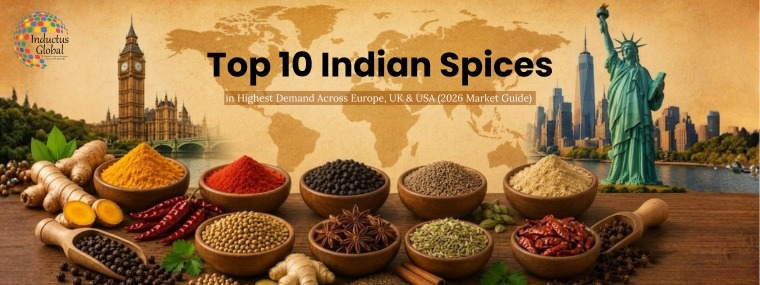
Top 10 Indian Spices in Highest Demand Across Europe, UK & USA (2026 Market Guide)
India the, “Land of Spices”
Follow the aroma of pepper, cardamom, turmeric, and chilli across history and you will find the foundations of global trade itself. Long before modern supply chains, Indian spices exporters shaped maritime routes, connected continents, and built commercial empires.
Today, India remains more than a spice-producing nation; it is the world’s original spice economy, supported by diverse agro-climatic zones, extensive coastlines, deep-rooted farming expertise, and export infrastructure developed over centuries. That legacy continues at scale. In FY2024-25, India exported a record 17.99 lakh tonnes of spices, becoming the most demanded Indian spice supplier.
What sets Indian Spices apart?
When it comes to serious spice importing, buyers aren’t just looking at where Indian spices come from, they’re digging deeper. They care about the essential oil content, the makeup of aromatic compounds, curcumin and piperine levels, color, and how well flavors hold up during processing. Indian spices really stand out because of their extreme flavors, unique regional varieties with GI tags, and well-established traceability.
So when a business sources Malabar pepper, Alleppey turmeric, or Guntur chilli, they know they’re getting consistent quality. These spices meet export standards, come with proper testing and certification, and now benefit from more advanced supply-chain tracking systems. In tough markets where everyone’s fighting for an edge, all of this backs up why Indian spices often fetch higher prices than cheaper options from other regions.
2026 Market Guide: Time to Select Indian Spice Exporters
For global buyers, 2026 isn’t just another year on the sourcing calendar; it’s a real chance to secure a reliable supply. Supply chains are still shifting after the pandemic, and importers want partners they can trust. At the same time, there’s a big push for clean-label foods and nutraceuticals, and food safety standards keep getting tougher. That means traceability and compliance aren’t optional anymore; you need spice suppliers who deliver on both.
This shift is already showing up in the numbers. India set a new record with $4.72 billion in spice exports for FY25, and in just the first four months of FY26, shipped another $1.6 billion. Clearly, international demand isn’t slowing down. But the market’s a moving target. Cardamom prices swing wildly, climate issues are hitting growers in other countries, and buyers everywhere want premium-grade spices. This leaves supply gaps, and smart importers don’t wait around. They’re locking in long-term deals now to stay ahead of shortages and keep their shelves stocked.
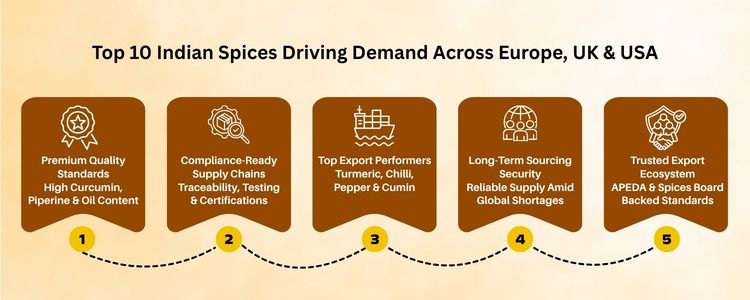
Meeting the Global Spice Demand: EUROPE, UK & USA
Europe, the UK, and the USA often get lumped together, but they don’t shop the same way. In Europe, buyers really want clean-label foods, strong sustainability claims, and they don’t mess around when it comes to EU Maximum Residue Limits. They expect suppliers to show exactly how they test products and trace where everything comes from.
The UK’s gone through some big changes since Brexit. Importers are still adjusting how they source, and you see more ethnic food, ready-to-cook meals, and high-end spices popping up in everyday supermarkets.
Over in the US, the big trend is health. More people buy spices for wellness and functional benefits, not just for cooking. You see them showing up in supplements, drinks, and all kinds of natural health products. There’s also a lot more pressure now around pesticides and ethylene oxide rules worldwide, and it’s changed how the industry operates. By 2026, companies need to be just as sharp about compliance as they are about taste.
Top 10 Spices that Dominate the Global Charts
Turmeric ‘Haldi’
Turmeric continues to dominate wellness, pharmaceutical, nutraceutical, and functional-food markets. Buyers increasingly negotiate based on curcumin percentage rather than price alone. India’s turmeric exports surged significantly in FY25 as global demand for natural anti-inflammatory ingredients accelerated.
Red Chilli ‘Lal Mirch’
Indian chilli is a portfolio category rather than a single product. Guntur, Salem Gundu, Kashmiri, and Dhani varieties serve different buyer needs. ASTA color value and SHU heat ratings drive procurement decisions. Chilli remains India’s largest spice export category by value.
Black Pepper ‘Kaali Mirch’
Often called the “Black Gold of India,” Malabar pepper enjoys global recognition. High piperine content, strong aroma, and premium origin branding make Indian Black pepper particularly attractive for food processors and gourmet retailers.
Cumin Seeds ‘Jeera’
Sourced primarily from Gujarat and Rajasthan, cumin benefits from growing demand in health-focused products. US supplement manufacturers increasingly position cumin for digestive and gut-health applications. India remains the dominant global supplier.
Green Cardamom ‘Elaayechi’
Among the world’s most valuable spices by weight, green cardamom serves premium tea, bakery, confectionery, and culinary markets. Supply volatility and growing global demand have strengthened buyer interest in long-term sourcing relationships.
Coriander Seeds ‘Dhaniya Beej’
Export demand spans two major segments: whole-seed buyers and powder processors. Coriander’s culinary versatility, combined with growing consumer interest in digestive wellness, continues to support international demand.
Fennel Seeds ‘Saunf’
Fennel’s unique advantage lies in cross-industry demand. It serves food manufacturers, herbal tea brands, pharmaceutical companies, and oral-care product manufacturers, creating multiple revenue streams for importers and distributors.
Dried Ginger ‘Sonth’
Used across Indian, American, Italian, and continental food applications, dried ginger experiences seasonal demand spikes in colder countries. Beverage, bakery, and wellness-product manufacturers remain major import drivers.
Cinnamon ‘Dalchini’
Demand continues rising across detox beverages, herbal teas, bakery products, and wellness formulations. Buyers increasingly distinguish between Ceylon and Cassia grades, making specification clarity critical during sourcing negotiations.
Clove ‘Laung’
Clove serves food, pharmaceutical, and oral-health industries simultaneously. High eugenol content remains a primary procurement criterion for manufacturers seeking medicinal and dental-care applications alongside flavor enhancement.
From Handpicked Exporters to Global Grocery Stores
What starts from sun-burnt farms journeys its way up to the shelves of global vendors, handpicked to hectic supply chains, every grain tells a story. Once harvested, they’re cleaned, graded, sorted, and checked for moisture. Samples head to the lab for testing, and exporters pay close attention; there’s residue analysis, microbiological checks, and certification tailored to each market destination before anything ships out.
Next, the spices make their way through containerized logistics, reaching importers, processors, distributors, big food manufacturers, and retail chains across Europe, the UK, and the US. Groups like APEDA and the Spices Board of India are always working to boost export standards.
Conclusion: Premium Spices & Smoother Logistics
In 2026, affordability is no more the criterion which is prioritised by global consumers, Indian spice suppliers have recognised the rhythm of demands, from reliability, compliance to steady supply, we have it all covered. India’s record-breaking $4.72 billion in spice exports speaks volumes.
But what stands out more is just how much trust international buyers now put in products from India. With exports hitting 1.799 million tonnes in FY25 and the pace holding strong into FY26, India isn’t just in the game; it’s leading it.
If you’re a buyer in Europe, the UK, or the US, you’re not asking if Indian spices are popular anymore. That’s a given. What really matters is which exporters can actually deliver: top-notch quality, all the right paperwork, strict residue compliance, and logistics that leave nothing to chance.
The best importers in 2026 won’t just be picking up spices off the market. They’ll be developing full-blown partnerships, ones grounded in premium quality and supply chains they know will deliver, every time.

Pratibha Soni
I write where strategy meets storytelling. As a passionate writer and literary enthusiast, I craft business-focused content that transforms trading insights into compelling narratives. Drawn to global business ecosystems, I enjoy turning research, innovation, and ideas into content that informs, connects, and inspires. With an analytical mind and a creative soul, I bring curiosity, collaboration, and a sharp eye for detail to every project. Adaptable and growth-driven, I believe the right words do more than communicate; they leave an impression.






2 Replies to “Top 10 Indian Spices in Highest Demand Across Europe, UK & USA (2026 Market Guide)”
Wholesale Basmati Rice Suppliers for Supermarkets
24 Aug 2026[…] FY 2025-26, according to Spices Board data. The United States alone imported $711 million worth of Indian spices in FY 2024-25, up 15% year-on-year. For Indian exporters specifically, the opportunity is […]
Top Spice Exporters from India | Trusted Global Suppliers
24 Aug 2026[…] FY 2025-26, according to Spices Board data. The United States alone imported $711 million worth of Indian spices in FY 2024-25, up 15% year-on-year. For Indian exporters specifically, the opportunity is […]