

Sourcing Agent vs. Direct Procurement: Which Saves More Money for Importers in 2026?
Introduction
A U.S.-based home décor startup lost almost $18,000 on just one shipment because it picked a supplier without doing its homework. On the flip side, a retailer in Europe went from moving just two containers to twenty in less than a year, all because they teamed up with a local sourcing agent.
Stories like this are popping up everywhere, especially as India grabs the spotlight as a top sourcing hub. Manufacturing in India is booming in 2026, and more businesses are jumping in. But one question keeps coming up: Do you work with a sourcing agent, or go straight to suppliers yourself? At the end of the day, which route really cuts costs?
Why Choose INDIAN Sourcing Agents or Procurement in 2026?
India isn’t just another manufacturing option anymore; it’s quickly becoming a go-to sourcing hub for buyers worldwide. The China+1 strategy continues to push companies to look beyond China, and India’s Production Linked Incentive programs are accelerating growth in electronics, engineering goods, textiles, and consumer products.
MSME exports are rising, logistics networks are improving, and there’s real progress in trade deals with the UK and EU, opening even more doors. Pair all that with GST-driven market formalization and new trade corridors, and 2026 shapes up to be a unique opportunity for importers. If you want competitive costs, dependable production, and a solid, future-proof supply chain, India is where you need to look.
Who are Sourcing Agents?
A sourcing agent does a lot more than just connect buyers and suppliers. One day, they’re haggling over fabric prices in Surat; the next, they’re checking the quality of textiles in Tirupur, chasing factories in Ludhiana to fix delays, and wrestling with export paperwork in Mumbai.
They fill so many roles like negotiator, translator, fixer, and even a cultural bridge, and make it possible for overseas buyers to actually get things done in India’s messy manufacturing maze. Usually, they earn a commission, ranging from 5 to 15 percent of the order value, or charge a flat retainer. Industries like textiles, apparel, handicrafts, furniture, engineering products, and consumer goods lean on these agents for their know-how and tight supplier networks.
What is Direct Procurement?
Direct procurement gives full control of supplier relationships to the importer. Buyers find their own manufacturers, set their own prices, manage their own minimum order quantities, handle their own contracts, and manage their own logistics and any other production problems. This method is becoming easier to implement.
However, this method only works for larger companies and entrepreneurs who are willing to actively manage suppliers. The benefit is that this method eliminates the cost of going through a middleman, but this requires a lot more work and risk management on their part.
Comparative Analysis
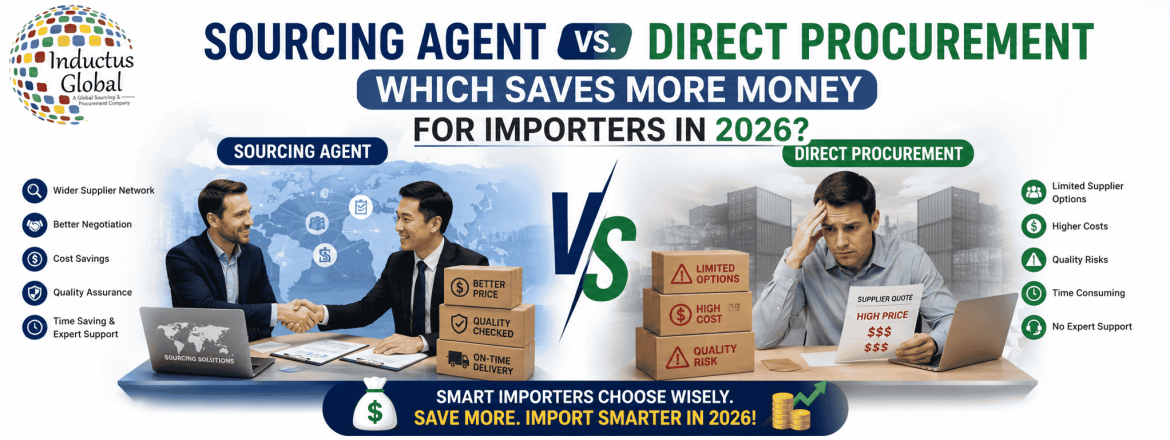
- Financial Friendliness: Direct sourcing seems cheaper since there’s no agent commission. However, importers often overlook hidden expenses like validation of suppliers, traveling, wasted trips from bad samples, legal issues, poor quality, and delays. For an order below $50,000, it’s actually more affordable to use a sourcing agent due to the mistake cost. For large orders that are a consistent line order, the direct sourcing will save money on total procurement costs.
- Dominant Controlling: Using a sourcing agent means you get more power in the market and more local influence. Yet, you are adding another level to the buying and factory process. You might not get to see the full negotiations between the sourcing agent and the suppliers, meaning procurement is not always the best method for your needs. However, when you are in control, you are the only one responsible for the consequences. If there are problems with the products, delays, or the suppliers don’t get paid, you are on your own to figure it out.
- Relation with Supplier: In many manufacturing areas, trust vs contracts is the name of the game. A sourcing agent who you can trust opens doors where others have previously failed because of how fast they can build relationships with suppliers. On the other hand, direct buyers can take months or years to build the trust needed with suppliers. Trust can be over-relied on, though. If the sourcing agent decides they no longer want to work with you for whatever reason, it can leave you with no suppliers and no means to get supplies. Supplier relationships become a big strategic concern when working without an agent.
- Quality control: Product Sourcing agents who have been in the business a while usually have a good system of vetted suppliers and are able to check on the product at different points in the cycle. They can spot trouble before it becomes too much of a hassle. Direct buyers working without an agent typically have to rely on the suppliers to tell them what they need to hear. This can be a big risk with suppliers. Even with a third party to check on suppliers, it is a hassle pulling the supplier to take corrective measures compared to working with an agent who is already on the ground.
- Time Efficiency: Time is money in global trade. Product Sourcing agents can accelerate supplier discovery, sample development, production follow-ups, and issue resolution because they operate within the same geography and time zone as manufacturers. Direct procurement frequently involves communication delays, language misunderstandings, and slower troubleshooting. While direct relationships may become highly efficient over time, sourcing agents generally provide faster execution during supplier onboarding and early-stage procurement.
Common Challenges & Risks
Both approaches come with risks. Some sourcing agents chase bigger commissions and forget about the buyer’s needs. Others take secret kickbacks or lie about what a factory can actually do. You still hear stories about ghost factories and subcontracting that nobody authorized.
Going direct isn’t safe either. Fraudulent suppliers, fake certificates, shipping headaches, and endless fights to get your money back, they’re all out there. One of the most common headaches is that the Importers send deposits to a factory that looks real, and then the delays start, or the product quality crashes.
The best way to protect yourself: dig deep into your suppliers before you commit, sign contracts that actually hold weight, bring in third-party auditors, make sure you’re dealing with a real factory, and lay out exactly what you want for quality before anything happens on the production line.
What to and When to Choose?
The decision is simpler than many buyers think. If reducing risk and accelerating market entry are your priorities, a product sourcing agent often delivers greater value. If procurement is a core competency and order volumes justify investment, direct sourcing can unlock higher long-term savings.
Choose a Sourcing Agent | Choose Direct Procurement |
New to Indian sourcing | Have experienced procurement staff |
Orders below $50,000 | High-volume repeat purchases |
Limited local market knowledge | Existing supplier relationships |
Complex or fragmented industries | Strategic long-term partnerships |
Need rapid supplier identification | Strong internal quality-control systems |

Conclusion
Sourcing agents or direct procurement? It’s not about picking one as the “best”, it’s about finding what works for your business right now. India’s manufacturing sector is booming in 2026, but just getting a good price isn’t enough; executing well matters just as much.
Seasoned importers usually start with sourcing agents to make things easier, then switch to direct supplier relationships once they’re buying more and know the ropes. One cannot blindly stick to a single method but can surely “trial and test” and customise according to the business needs, and map a strategy that mitigates every possible damage and risk.

Pratibha Soni
I write where strategy meets storytelling. As a passionate writer and literary enthusiast, I craft business-focused content that transforms trading insights into compelling narratives. Drawn to global business ecosystems, I enjoy turning research, innovation, and ideas into content that informs, connects, and inspires. With an analytical mind and a creative soul, I bring curiosity, collaboration, and a sharp eye for detail to every project. Adaptable and growth-driven, I believe the right words do more than communicate; they leave an impression.