

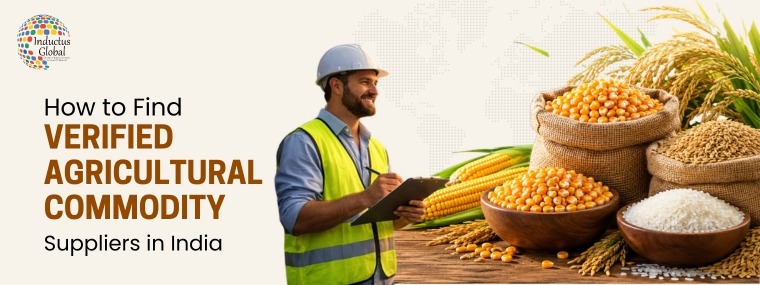
How to Find Verified Agricultural Commodity Suppliers in India Guide
India is a major supplier of grains, pulses, oilseeds, spices, fruits, vegetables and other commodities to the global market. International buyers benefit from the country’s extensive network of suppliers, well-established processing facilities, and variety of products on offer. However, buyers need to ensure that the business they select is legitimate, that the product meets their required standards and that the supplier will be able to consistently deliver the order.
A systematic approach will help international buyers in sourcing agricultural commodities from India. Here are seven essential steps for finding and evaluating agricultural suppliers in India.
Why India is Attractive to Global Agricultural Buyers
India has a diverse market of agricultural producers, processors and exporters ready to deliver a wide range of products to meet the needs of global buyers. International buyers can choose from suppliers offering a variety of end-use destinations, such as food manufacturers, wholesalers, retailers and suppliers of animal feed.
While the range of available commodities is extensive, it is important to keep in mind that a supplier experienced in trading grains may not have the same proficiency level in fresh produce, and a company exporting processed products may have different quality expectations than one trading in raw materials. Therefore, international buyers should begin with determining product specifications and order requirements rather than looking at agricultural sourcing as a one-size-fits-all approach.
1. Define Specifications and Order Requirements
Prior to contacting a supplier, buyers should compile a complete purchasing brief that will ensure they can compare quotations against common criteria and avoid misunderstandings upon delivery of goods. The brief should indicate the type of grain, pulse, oilseed or other commodity, quality level, variety, projected order quantity, packaging requirements and delivery schedule. It is also important to determine product-specific quality requirements, such as moisture content, granularity, size, impurities, presence of foreign matter, residue levels and other relevant criteria.
For fresh produce, buyers should pay particular attention to maturity level, appearance, temperatures, and remaining shelf life. When purchasing grains or pulses, specification sheets may indicate the acceptable broken percentage, moisture level and cleanliness. Equally importantly, importers must clarify local market requirements prior to requesting a quotation. A product available on the local market may be subject to import restrictions or documentary requirements in the buyer’s country.
A clear specification sheet will help establish a reference point with a supplier, and will serve as the basis for inspection and delivery control.
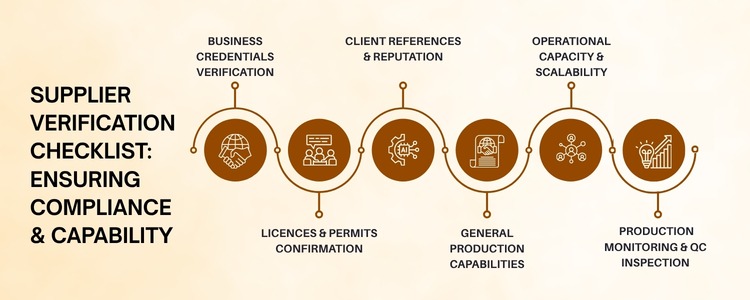
2. Verify Business Details and Capabilities
A professional-looking supplier website, product catalog or quotation is a useful starting point, but international buyers should take additional steps to determine that the business is legitimate and that the supplier can fulfill the order.
Buyers should conduct research on the company, checking its business licenses, experience, references, if available, and relevant documentation relating to its area of specialization. Tax, export and food safety documentation, where relevant, may also be requested, depending on the transaction value and terms.
It is important to understand the company’s supply chain, such as whether it operates its own processing facilities or works with growers or other trading companies in sourcing products. All are legitimate sourcing channels, but this information will help determine delivery capabilities and level of control over the supply chain.
Companies sourcing agricultural commodities should be able to demonstrate the origin of their goods, quality control procedures and preparation processes prior to delivery.
Where appropriate, buyers should conduct a factory visit or inspection, particularly where large-volume or high-value transactions are planned. Requesting references from international buyers and checking them is another important step in verifying a supplier’s track record. These steps will help identify potential issues prior to making a financial commitment.
3. Clarify Quality and Traceability
Buyers should request samples and product specifications, as well as supporting laboratory or inspection reports, prior to placing a substantial order with a new supplier.
For grains, pulses, oilseeds and other dry commodities, inspection reports may cover moisture content, overall purity, presence of foreign matter or insects, and other relevant criteria. For fresh produce, buyers should assess appearance, maturity level, adherence to food safety guidelines, and temperature requirements, among other criteria. Independent laboratory testing, if budget allows, can help ensure quality control.
Traceability is a particularly important consideration for food commodities. Suppliers should be able to provide details on the origin of goods, processing and packing facilities, batch numbers and inspection reports, where relevant. It is advisable to retain samples and inspection reports for future comparative analysis in case of discrepancies in subsequent shipments.
4. Compare Quotations and Calculate the Landed Cost
The lowest selling price may not always be the most cost-effective option, particularly when transportation, documentation and other expenses are taken into account.
A realistic assessment of the cost should include the following:
- The price of the commodity and its packaging
- Inland transportation and export costs
- Freight and insurance (if applicable)
- Customs duties, taxes and inspections
- Port handling, warehousing and delivery
- Banking costs and currency conversion fees
Itemized quotations will help compare the offers of different suppliers. It is important to request identical product specifications and delivery terms when seeking quotations, and to compare them on an equal footing. If Incoterms such as FOB or CIF apply, the buyer should clarify what costs fall under the responsibility of the seller.
Seasonality can also have an impact on price differences, as well as domestic supply-demand balances. Buyers should clarify the validity period of an offer and whether the supplier can reserve the allocated quantity. For perishable commodities, buyers should also calculate the additional costs of rejection, spoilage or shipment delays. A slightly higher selling price may be more cost-effective if it includes more favorable delivery or packing terms.
5. Ensure Proper Documentation and Compliance
Documentation requirements will vary depending on the product and the destination country. International buyers should consult customs brokers and relevant local officials before making a purchase, particularly where food commodities are concerned.
In general, commercial documents for international shipments of agricultural commodities typically include an invoice, a packing list, and a bill of lading or other transportation documents. Additional documents may include a certificate of origin, phytosanitary certificate, health certificate, inspection reports, and laboratory analyses, depending on the product and the destination country.
Importers should clarify with the supplier who is responsible for what documents and ensure that the description of goods on the invoice matches the actual contents of the shipment. The quantity of goods, weight, batch numbers, and consignee details should also be identical across all documents.
Fresh commodities often require additional inspections, certification, or quarantine procedures. It is important to ensure these are in place prior to dispatch rather than upon arrival at the destination port.
Proper documentation helps avoid unnecessary storage costs and legal disputes between the buyer, seller and shipping company.
6. Confirm Packaging, Shipping and Delivery Terms
The ability of a supplier to deliver the goods in good order is as important as the selling price. International buyers should ask detailed questions about the packing and transportation arrangement prior to finalizing an order.
For dry commodities, appropriate packing is essential to avoiding damage during transit. Fresh commodities may require temperature-controlled trucks or specialized packing to avoid bruising during transit. Packing should also meet the requirements of the destination country.
Buyers should also clarify how far in advance an order should be placed to allow sufficient time for filling and shipping, and whether a given order volume can be shipped in one lot or requires multiple shipments.
Prior to the expected date of arrival, importers should ensure sufficient warehouse space is available and customs and delivery documents are in order. Proper planning will help avoid additional costs due to storage or delivery delays.
7. Establish an Ongoing Relationship
Building a successful supplier-buyer relationship goes beyond placing a single order. It is important to evaluate performance and provide feedback following an order. Buyers should ensure that they have received the correct quantity and quality of goods, and that documentation is complete and correct. Discrepancies should be reported in accordance with the supplier’s claims procedure.
Importers should maintain regular contact with a supplier on the subject of seasonal availability, delivery expectations and future ordering. Vegetables and fruits, in particular, have specific seasonal requirements that can impact the quantity of goods available upon arrival. In addition, buyers should consider qualifying more than one supplier in order to obtain competitive quotations and avoid disruptions due to seasonal shortages or delays.
The most successful supplier-buyer relationships are characterized by an open exchange of information, consistent product specifications and the ability to jointly resolve any issues that arise.
1. How can international buyers verify an Indian agricultural supplier?
Buyers should check a supplier’s credentials, including relevant licenses and documentation, and assess its area of specialization and references, if available.
2. Which agricultural commodities can buyers source from India?
Depending on availability and local export regulations, buyers can source grains, pulses, oilseeds, spices, fruits, vegetables and other commodities.
3. Should buyers request samples before placing an order?
Yes, samples can help ensure the suitability of a given product, while specifications and independent inspection reports will help buyers feel confident about bulk purchases.
4. Which documentation is commonly required for agricultural exports?
Common documentary requirements include commercial invoices, packing lists and transportation documents. Additional documents may apply, depending on the product and the destination.
5. How can buyers reduce the risk of receiving poor-quality goods?
Buyers should clarify quality specifications, request samples, and ensure there is traceability in case of disputes.
6. How can importers build lasting supplier relationships?
Importers should use standardized contracts, provide feedback on order performance and communicate delivery estimates to ensure seamless future cooperation.

Diptanshu
Leading research and marketing at Inductus Global, Diptanshu drives the company’s vision to transcend traditional trading through thought leadership in import-export. He spearheads a research-driven approach that prioritizes quality over price arbitrage, positioning Inductus as a strategic sourcing partner rather than a transactional intermediary. His work spans market intelligence, supply chain innovation, and trade dynamics, while playing a key role in sales and business development.