

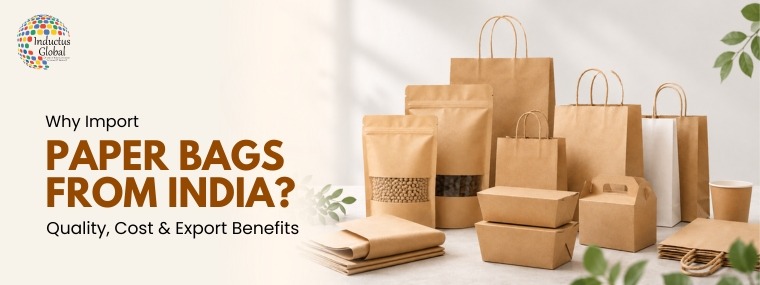
Why Import Paper Bags from India? Quality, Cost & Export Benefits
Paper bags have become an important part of packaging procurement as businesses reassess material choices, customer expectations and environmental commitments. Retailers, food businesses, fashion brands and distributors are increasingly evaluating paper-based alternatives for shopping bags, takeaway packaging, promotional merchandise and product presentation.
For international buyers, India offers a broad manufacturing base, access to different paper grades and the ability to produce bags in varied sizes, finishes and designs. Yet a successful sourcing decision involves more than finding a low quotation. Material strength, printing quality, production capacity, shipping costs and destination-market regulations all influence the final commercial outcome.
Understanding these factors can help importers determine whether Indian manufacturers are the right fit for their packaging requirements.
Why India is an Attractive Paper Bag Sourcing Market
India’s packaging industry serves a wide range of domestic sectors, including retail, food processing, textiles, hospitality and e-commerce. This demand supports manufacturers producing everything from simple kraft shopping bags to printed paper packaging for premium retail brands.
For international buyers, the variety of manufacturing options is a practical advantage. Standard products may be available for routine purchasing, while specialised manufacturers can produce bags with custom dimensions, handles, printing and finishes.
Businesses considering a wholesale paper bag purchase should assess whether a supplier’s product range, production capacity and export experience align with their requirements. A manufacturer suited to small retail bags may not necessarily be equipped to handle large industrial orders.
Product Quality and Material Selection
Paper bag quality begins with the choice of paper. Kraft paper is commonly used because of its strength and suitability for several packaging applications. Other paper grades may be appropriate where appearance, print quality or a particular finish is more important.
Buyers should specify the material grade, GSM, bag dimensions, handle type, load-bearing requirements and printing details before requesting quotations.
For heavier products, the paper’s strength and the construction of the bag become particularly important. Reinforced bases, suitable handles and appropriate adhesive application can improve performance during handling.
Food-related applications require additional attention. Buyers should establish whether the bag will come into direct contact with food and confirm the relevant material-safety requirements. Grease resistance or moisture protection may also be necessary for certain products.
A sample approved before production provides a useful benchmark for checking consistency across the finished order.
Competitive Pricing and Bulk Purchasing
Cost is a major consideration in international procurement, but the lowest unit price does not always represent the best commercial deal.
Indian manufacturers may offer competitive quotations depending on paper grade, production scale, printing requirements and order volume. However, buyers should compare equivalent specifications rather than treating all paper bags as interchangeable products.
Important cost factors include material consumption, handle construction, printing colours, finishing, packaging, inland transportation and international freight.
Minimum order quantities also matter. Custom printing and specialised dimensions may require larger orders to make production economical. Buyers should clarify tooling charges, setup costs and quotation validity before placing an order.
A landed-cost calculation should include freight, insurance where applicable, customs duties, port charges and final delivery expenses.
Customisation and Brand Presentation
Paper bags often serve as a visible extension of a brand. Their colour, finish, handle design and printing can influence how customers perceive a product or retail business.
Many paper bag suppliers offer options such as logo printing, custom dimensions, twisted-paper handles, flat handles, reinforced bases and different finishes. The availability of these features depends on the manufacturer’s equipment and production capabilities.
Buyers should provide approved artwork, dimensions, colour references and packaging instructions before mass production begins.
For premium retail products, print consistency and surface finish may be especially important. For grocery or takeaway applications, durability and practical handling may take priority over decorative features.
Requesting a production sample or printed proof can help prevent costly errors in a large order.
Sustainability and Changing Packaging Preferences
Environmental considerations are influencing packaging decisions across several international markets. Paper bags are often preferred by businesses seeking fibre-based packaging, particularly where customers expect alternatives to conventional plastic shopping bags.
However, paper packaging should not automatically be described as environmentally superior in every situation. Its overall impact depends on factors such as paper sourcing, manufacturing processes, transportation, reuse and local recycling infrastructure.
Coatings, laminations, inks and adhesives can also affect recyclability. Buyers should therefore ask for clear information about material composition and any sustainability certifications or supporting documentation.
For importers selling into regulated markets, packaging choices should reflect applicable rules rather than relying solely on general environmental claims.
Export Experience and Documentation
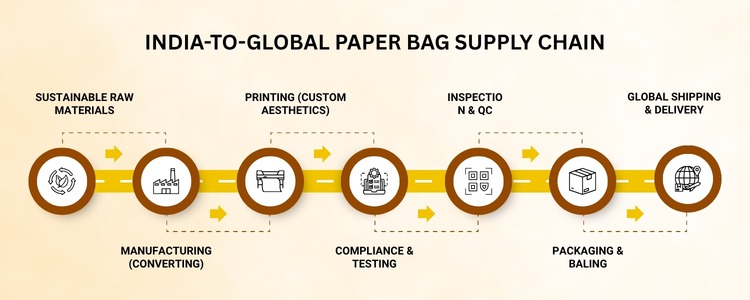
International trade requires accurate paperwork and a supplier familiar with export procedures. Depending on the destination and transaction, documentation may include a commercial invoice, packing list, certificate of origin and bill of lading.
Additional documents may be necessary under the buyer’s contractual requirements or destination-country regulations. For food-contact packaging, relevant declarations or testing records may also be required.
When evaluating paper bags exporters, buyers should examine their experience with overseas shipments, familiarity with shipping terms and ability to prepare accurate documentation.
Clear communication about product descriptions, quantities, carton weights and shipping schedules can help reduce delays during customs clearance.
Packaging, Shipping and Lead Times
Paper bags are relatively lightweight, but their folded or stacked dimensions can occupy considerable space during transportation. Consequently, carton design and packing density can have a meaningful effect on freight costs.
Buyers should establish the number of bags per carton, carton dimensions, total shipment volume and palletisation requirements before finalising the order.
Production lead times should also be confirmed in writing. Custom printing, raw-material procurement and peak-season demand can extend manufacturing schedules.
Importers with seasonal sales or promotional campaigns should place orders early enough to allow for production, inspection, shipping and potential customs delays.
How to Evaluate a Reliable Indian Supplier
Supplier selection should combine commercial checks with a practical assessment of manufacturing capability.
Buyers should review business credentials, production facilities, quality-control procedures, customer references and previous export experience. They should also establish whether the supplier manufactures bags directly or relies on subcontractors.
A trial order can help assess material quality, printing accuracy, packaging, delivery performance and communication before larger commitments are made.
For recurring purchases, buyers should agree on written specifications, acceptable tolerances, inspection procedures and a process for addressing defective products.
A supplier that communicates clearly and maintains consistent standards can offer greater long-term value than one competing on price alone.
The Commercial Case for Importing from India
The case for sourcing paper bags from India rests on a combination of manufacturing variety, customisation options and the possibility of competitive pricing. The advantages will depend on the product specification, order size, shipping route and supplier’s capabilities.
For businesses planning to import paper bags from india, the most effective approach is to define requirements first, compare technically equivalent quotations and verify quality before committing to substantial volumes.
Importers should also consider how the packaging will perform in actual use. A bag that looks attractive but fails under normal carrying conditions can result in damaged products, customer complaints and additional costs.
The objective is to find a supplier capable of balancing quality, price, reliable delivery and compliance with the buyer’s market requirements.
Conclusion
India can be a useful sourcing destination for international businesses seeking paper bags for retail, food service, gifting and commercial packaging. However, successful procurement depends on careful supplier evaluation rather than price comparisons alone.
Buyers should establish clear specifications, request samples, assess export readiness, confirm destination-market requirements and calculate the full landed cost. Packaging efficiency, production lead times and material consistency should also form part of the decision.
A well-managed first order can provide the basis for a dependable supply relationship, helping buyers meet their packaging needs while maintaining commercial and quality standards.
1. Why should international buyers import paper bags from India?
India offers a broad manufacturing base, several paper grades and customisation options. Suitability depends on the buyer’s specifications, order volume, shipping costs and supplier capabilities.
2. What types of paper bags can buyers source from India?
Depending on the manufacturer, buyers may source kraft shopping bags, retail bags, food-service bags, takeaway packaging, promotional bags and customised printed bags.
3. Can Indian manufacturers produce customised paper bags?
Yes. Many manufacturers offer customised sizes, branding, colours, handle types and finishes. Buyers should confirm minimum order quantities and production lead times.
4. What documents are required to import paper bags?
Common documents may include a commercial invoice, packing list, certificate of origin and bill of lading. Requirements vary by destination and product application.
5. How should buyers choose a reliable paper bag exporter?
Review business credentials, manufacturing capacity, export experience, quality systems, customer references and documentation practices. A trial order can help verify performance before larger purchases.
6. How can buyers check paper bag quality?
Buyers should assess paper grade, GSM, dimensions, handle strength, base construction, printing and load-bearing performance. Samples should be approved before mass production.

Diptanshu
Leading research and marketing at Inductus Global, Diptanshu drives the company’s vision to transcend traditional trading through thought leadership in import-export. He spearheads a research-driven approach that prioritizes quality over price arbitrage, positioning Inductus as a strategic sourcing partner rather than a transactional intermediary. His work spans market intelligence, supply chain innovation, and trade dynamics, while playing a key role in sales and business development.