

Complete Guide to Import Construction Materials from India
Over the years, India has established itself as one of the leading suppliers of construction materials in the global supply chain. Indian suppliers offer many construction materials at lower prices than competitors in other parts of the world. For international buyers, there are many advantages and many challenges when sourcing construction materials from India.
The construction materials market in India is very broad and well-established. The Indian construction materials market is equally strong for both domestic and international customers. There are numerous types of construction products exported from India, including cement, ceramic tiles, sanitary ware, steel, granite, and engineered wood products.
Understanding India’s Construction Export Landscape
One of the many reasons why India has such a competitive international manufacturing environment is the country’s manufacturing ecosystem, which brings together traditional crafts and modern industrial/technical processes (the best of both worlds). In addition, the government has enacted many policies that encourage and incentivize exporters, thus boosting the competitiveness of Indian suppliers on the global stage.
As you begin to investigate how to purchase construction materials from India, the first thing to understand is that the country is geographically divided into various regions. Each region has its respective specialties. For example, Morbi is home to the ceramics industry and is one of the leading ceramic-producing regions in India; on the other hand, Rajasthan is widely known as one of the primary producers and exporters of natural stone products.
Identifying the Right Construction Material Supplier
Finding an acceptable supplier should form part of an effective import plan; this can be a very challenging task due to the fragmented nature of the marketplace from small manufacturers to large exporters.
Key criteria by which to evaluate Suppliers:
- Certifications/Compliance: Suppliers must provide proof their products comply with the applicable regulations, so look for evidence of ISO or CE certification, as an indication they produce products to international minimum standards.
- Production Capacity: Suppliers must be able to demonstrate that they can produce the quantity required on a consistent basis.
- Experience: Suppliers with experience exporting will be more adept at understanding world-wide compliance requirements and the logistics involved in moving cargo between countries.
- References: When possible, ask for written testimony or examples of prior sales from other countries.
When possible, conduct a virtual or physical inspection of the supplier’s facilities. A third-party inspection agency may provide independently verified evidence of a supplier’s ability to meet your needs.
Product Categories and Export Potential
India has an extensive variety of construction material that can be exported worldwide. Being aware of product types can assist you in developing your sourcing strategy to meet your project needs.
Export Types
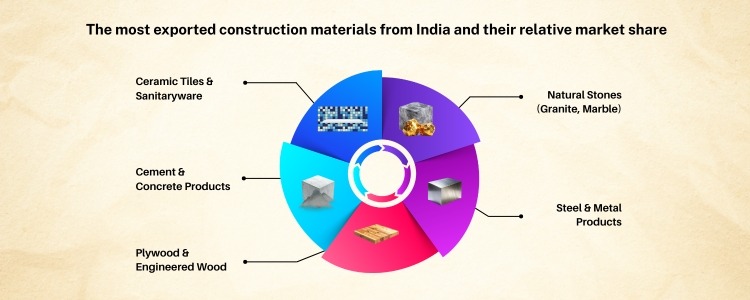
- Ceramic Tile and Bathroom Ceramics – Products exported in volumes due to their price point and the variety of designs available through various manufacturers in India.
- Bathroom Ceramics – An ever-growing market segment, many companies have purchased products from Indian manufacturers as their demand for bathroom products continues to increase.
- Plywood and Engineered Wood Products – India’s emergence as a significant supply base has made it a viable option for those looking to purchase plywood products from India.
- Natural Stone Products – Quarrying granite and marble in India has made these products well-known and well-accepted worldwide.
- Steel and Cement Products – India provides a wide variety of manufactured steel and cement products in bulk quantities to meet infrastructure project needs on a global basis.
There are unique compliance requirements and packaging standards associated with all of these categories, and you should familiarize yourself with those requirements prior to placing orders.
Pricing, Negotiation, and Cost Structures
Cost efficiency is one of the primary reasons buyers turn to India. However, pricing should be evaluated holistically rather than focusing solely on unit cost.
Components of Total Cost
- Product Cost (FOB/CIF)
- Shipping and Freight Charges
- Custom Duties and Taxes
- Insurance Costs
- Handling and Warehousing Fees
Negotiation is a common practice in Indian business culture. Buyers should aim for long-term partnerships rather than one-off transactions to secure better pricing and priority production slots.
India Construction Material Export Documentation
Buyers preferentially select India when seeking cost efficiency, but it is important to look at prices as a component that should be evaluated as part of total cost, not just unit price.
Total cost includes the following factors:
- Product cost (FOB or CIF)
- Shipping and freight charges.
- Custom duties and taxes.
- Insurance costs.
- Handling and warehousing fees.
Buyers doing business in India should also take into account that Indian businesses love to negotiate. To ultimately get the best pricing as well as priority production timing, buyers should focus on building a long-term partnership with suppliers versus simply doing transactional business.
Another factor to consider when working with Indian suppliers is documentation. The process of export and import relies on the use of accurate and complete documentation to clear customs and comply with international trade regulations in a timely manner.
Some of the required documents necessary for exportation from India:
- Commercial invoice
- Packing list
- Bill of lading
- Certificate of origin
- (If required) Inspection certificates
- Export license (when applicable)
Being educated on what documents your supplier needs for construction material being exported to your country from India can save significant time and money in the event of delays at a port. Most suppliers will assist you with providing the necessary documents; however it is imperative to independently verify that the information they provide is accurate.
Logistics and Shipping Considerations
Logistics play an important role when it comes to shipping items, as they will greatly influence the costs of delivery and how long it takes to get the items delivered. Most of India’s major ports (Mumbai, Chennai and Mundra etc.) will be responsible for exporting construction materials.
The following are some examples of logistics that influence the shipment:
- Modes of Transport: The most common mode of transport is sea freight for bulk shipments.
- Shipping Container Types: Depending on the material; buyers may need dry containers, flat racks or open-topped containers.
- Transit Times: Speed of transit (usually takes anywhere from 2 weeks to 6 weeks depending on destination).
- Freight Forwarders: Collaborating with freight forwarders and experienced logistics providers will help to make sure all things run smoothly.
Timely planning and early bookings for shipments will help relieve delays especially during peak shipping seasons.
Quality Control and Inspection Mechanisms
Quality assurance will always be important when sourcing products internationally. It is imperative to have quality assurance processes in place to avoid a potentially-expensive dispute due to poor quality caused by lack of quality controls.
Best Quality Assurance Practices
- Pre-shipment Inspection – Third party inspection.
- Sample Approval – Samples requested prior to orders for bulk production.
- Production Monitoring – Receiving updates during the production stage.
- Compliance Check – Making sure the materials purchased comply with the standards of the country of the buyer.
Investing in a quality assurance program will increase your costs at the beginning of the program but will significantly reduce your risk in the long term.
Legal and Regulatory Compliance
When importing construction supplies, you must comply with both Indian regulations for exporting and laws of the country you want to import to. There are several areas to look out for when importing construction supplies: Import Duty and Tariff Laws, Environmental Legislation, Safety Laws, and Product Certification.
Before importing construction supplies, be sure to check with a customs broker or an attorney for complete compliance with U.S. Customs regulations. If you do not comply with all import requirements, your shipment could be denied entry or you could incur a heavy fine.
Building Long-Term Supplier Relationships
Building good relationships with your suppliers will help you get better prices for supplies, provide you with priority service and improve the quality of product over time. Here are some ways to help you build good relationships with your suppliers: Honest & Transparent Communication, Pay Your Bills on Time, Provide Clear Specifications, Provide Feedback For Continuous Improvement.
Many of the largest Indian construction material companies are committed to building long-term relationships with their suppliers and will work with you to customize their materials for your project.

Risk Management and Challenges
Importing from India has many benefits, but it also presents challenges. The following challenges may arise when importing from India: quality; shipping delays; currency fluctuations; and regulatory changes. Mitigation strategies for these challenges may include using multiple suppliers, establishing contracts with clear terms, and hedging against currency risk using forward contracts.
Future Outlook of Construction Material Imports from India
Construction materials represent one of India’s best export opportunities, and this industry will continue to expand due to increases in infrastructure development and advances in manufacturing technology.
Eco-friendly products are also gaining importance in these new sustainability-focused global markets; both will provide buyers with advantages within these trends.

Diptanshu
Leading research and marketing at Inductus Global, Diptanshu drives the company’s vision to transcend traditional trading through thought leadership in import-export. He spearheads a research-driven approach that prioritizes quality over price arbitrage, positioning Inductus as a strategic sourcing partner rather than a transactional intermediary. His work spans market intelligence, supply chain innovation, and trade dynamics, while playing a key role in sales and business development.