

How to Choose the Right Procurement Company: The 7-Point Checklist Every Buyer Should Use
Introduction
Global supply chains can be overwhelming for buyers in choosing the right partner. The procurement market is a crowded place of companies, all claiming better pricing, stronger supplier networks, and seamless execution. But still, many organizations face challenges of high costs, supplier risks, and inconsistent outcomes after outsourcing.
The bottom line is simple: decisions made without a structured evaluation process are often costly mistakes. By being disciplined, buyers are able to distinguish between marketing and actual capability. This 7-point checklist provides a practical framework for finding a procurement partner that matches your business objectives and sourcing strategy.
What Makes Procurement Companies Justified in Market?
A lot of companies wonder if they really need to outsource procurement. It’s not a one-size-fits-all answer; it comes down to how complex your needs are, the size of your operations, and how ambitious your growth plans look.
A good procurement partner already has the supplier relationships, industry know-how, compliance processes, and bargaining power most businesses simply can’t match on their own. The right provider helps you run more smoothly, manage risk better, and scale up efficiently, freeing up your team to focus on bigger-picture goals instead of getting bogged down in day-to-day procurement headaches.
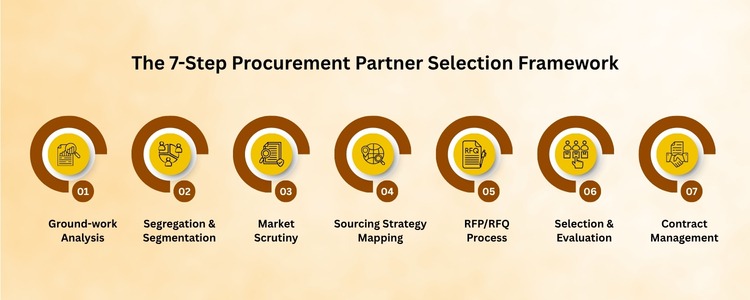
How to Choose Right Procurement Company for you: 7 Checklist Pointers to Abide By
1. Groundwork Analysis:
Begin with an internal assessment, then look for a procurement services company. Look at spending categories, supplier dependencies, procurement bottlenecks, team capabilities and budget constraints. Identify areas of inefficiency and functions requiring external support. This groundwork sets a clear sense of goals and expectations. Without an understanding of your own procurement environment, it’s more blind guess work than a strategic business decision to assess potential partners.
2. Segregation & Segmentation:
The first step to effective procurement is categorization. Split out direct spend vs. indirect spend. Split out strategic sourcing requirements vs. routine purchasing activities. A company that produces products from raw materials has a very different set of challenges than managing software licenses or facility services. Clearly define these categories before engaging providers offering end-to-end procurement services. Better segmentation leads to better supplier strategies and more focused conversations with potential procurement partners.
3. Market Scrutiny:
Research isn’t just about skimming websites or sitting through sales pitches. Take a closer look, find out which procurement firms actually know your industry inside and out. Dig into their client success stories. Confirm their certifications. See how far their operations really reach. Industry know-how usually matters more than a big name or fancy branding. For instance, a company that nails manufacturing procurement probably won’t cut it for healthcare or retail. Look for partners with real experience, operational strength, and clear results, not just a shiny reputation.
4. Mapping Sourcing Strategy:
Let your sourcing strategy drive how you pick partners. Don’t flip it, it’s easy to get tempted by what a vendor offers, but you need to start with your own needs. Are you sticking with single-source suppliers, looking for a diverse network, focusing locally, or going global? Pin that down first. Then dig into whether a provider’s methods fit what you want.
The best procurement firms show how their approach really backs up your bigger goals. If you lay out your sourcing plans upfront, you and your partner can quickly spot whether you’re on the same page and steer clear of headaches down the road.
5.RFP/RFQ Process:
The Request for Proposal or Request for Quotation is where buyers really dig in and evaluate suppliers. It’s not just about the numbers or basic service info, this is where you lay out exactly what you expect when it comes to service levels, tech capabilities, how issues get escalated, reporting, even supplier diversity.
These specifics show what vendors are really like, not just what they promise in meetings. A solid RFP means every supplier responds to the same standards, making it much easier to compare apples to apples. On the flip side, a sloppy RFP leads to confusion, bad matches, and missed expectations down the road.
6. Right Selection on Evaluation:
After you get the proposals, use a weighted evaluation so you’re not just looking at the numbers. Check how competitive the pricing is, but dig deeper, look at each partner’s expertise in your category, whether their culture fits yours, how well their tech will mesh with your systems, and how they handle growth. Don’t forget client references. Price alone isn’t the answer. You want value that lasts, not just a quick win. Taking the time to weigh all these factors means you set up procurement for real, long-term success.
7. Contract & Relationship Management:
When you sign a contract, you’re really just getting started, this isn’t the finish line for choosing a partner. The agreement needs to spell out things like how you’ll measure performance, who’s in charge of what, when you’ll check in on progress, how you can walk away if things go south, and what happens with confidential info and intellectual property.
If you’re bringing on a procurement services provider to handle everything end-to-end, you can’t just set it and forget it. Keep the relationship active: hold regular reviews, track performance closely, and deal with issues before they grow. The best procurement partnerships thrive on open communication and shared responsibility, not autopilot.
What to do after choosing the right Procurement Company?
A lot of buyers put all their energy into picking the right system but forget how crucial it is to roll it out smoothly. Onboarding isn’t just a box to check; it needs real integration with your current setup, buy-in from key people, clear ways to communicate, and a plan for sharing data that actually works.
Make sure everyone knows what’s expected in those first ninety days, along with the milestones you’ll use to track progress. This early stage is all about learning and adjusting, not expecting everything to work flawlessly from day one. Capture early wins, spot where things snag, and make it easy for folks to speak up about issues. Companies that take charge of onboarding don’t just meet their procurement goals, they reach them faster and get more value than those who sit back and hope everything works out.
Calculating Pros & Cons
With productive advantages, there are always risks involved; thus, scrutinising far-fetched results remains core to Outsourcing Procurement. On thorough experience of trade practices, these are ‘watchout’ for Pros & Cons-
- Con- Challenges in Multi-lingual transactions, done internationally.
- Con- Too heavy reliance on Third-party, non-certified Vendors.
- Con- Inadequate or Incomplete Knowledge Transfer Between Parties.
- Pro- Access to Advanced Sourcing Technology, AI-Automated trade tools.
- Pro- Enhanced negotiation leverage and freedom of Customisation to the buyer.
- Pro- Heightened regulatory compliance expertise, providing better authenticity.
Honestly, to mitigate Cons and Maximise Pros key is evaluating these factors within your specific business context; a benefit for one organization may represent a limitation for another. Objective assessment ensures informed decision-making rather than assumptions driven by trends.

Conclusion
Sourcing with the desirable procurement services company with customisable freedom is something that every buyer wants, and that requires a well-structured, disciplined approach. From assessing one’s requirements and market research to searching, implementing, and executing the insights to connect with a reliable sourcing partner for long-term supply.
Sourcing alignment, evaluation, and relationship management, every stage influences long-term success, depending on such factors. Businesses that follow this seven-point checklist position themselves for stronger supplier performance, better cost control, and reduced procurement risk. Thus, one should start acting upon this checklist for smoother and more satisfactory results.

Pratibha Soni
I write where strategy meets storytelling. As a passionate writer and literary enthusiast, I craft business-focused content that transforms trading insights into compelling narratives. Drawn to global business ecosystems, I enjoy turning research, innovation, and ideas into content that informs, connects, and inspires. With an analytical mind and a creative soul, I bring curiosity, collaboration, and a sharp eye for detail to every project. Adaptable and growth-driven, I believe the right words do more than communicate; they leave an impression.