

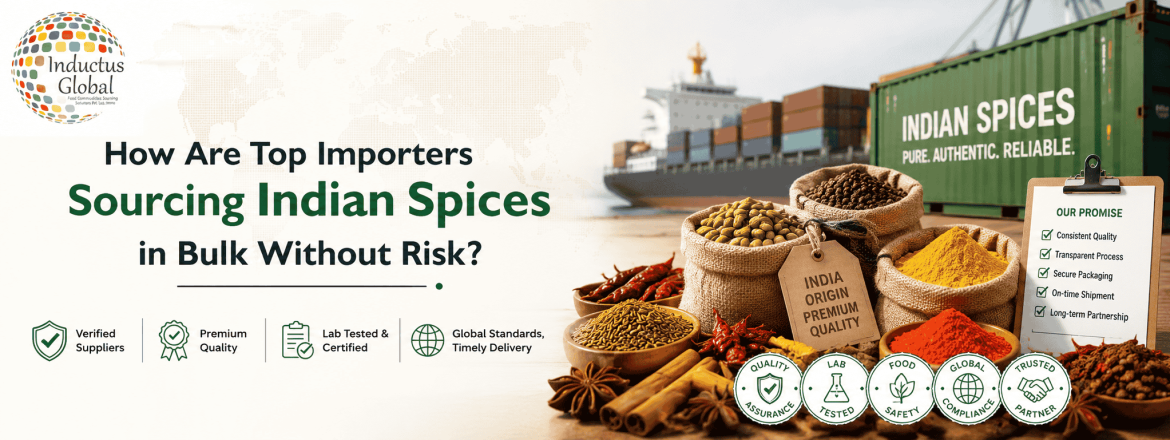
How Are Top Importers Sourcing Indian Spices in Bulk Without Risk?
Introduction
The Global market, forever evolving, has found its roots deep in trading faculties of time, from ancient silk exporting to aromatic, authentic spices. Markets have acquired a taste for consistency in flavor, color, aroma, purity, and exquisiteness.
The global spice trade isn’t what it used to be. These days, it’s a complex game where profit depends on quality, traceability, compliance, and supply continuity. Importers serving food manufacturers, retail chains, restaurants, seasoning brands, and FMCG giants can’t settle for just cheap raw materials anymore; it’s time for a game-changer and risk-free procurement; it’s time to choose Indian Spices exporters.
Global Spice Trade: Emergence of Indian Spice Exporters
India leads the way as a major supplier of authentic spices with an estimated market value of US$4.72 billion. No other country supplies such a huge range of spices to more than 180 countries. Think about bold red chillies powering global food processing, or premium turmeric prized for both cooking and health products. Indian spices are now vital in supply chains across the world.
Of course, buying in bulk comes with baggage. Quality jumps around, adulteration is a real threat, logistics get messy, and meeting regulations can turn into a headache. That’s why the best buyers team up with trustworthy Indian spice exporters, partners who offer transparency, rock-solid quality control, and hands-on supply chain support. For top importers, being able to source genuine, risk-free Indian spices is now a serious edge.
What makes Indian Spices stand out from others
It’s not just the sheer volume. India’s muscle in the spice market comes from unique factors, distributed diverse geography, traditional cultivation techniques, the right climate, and favourable land dedicated to growing spices bursting with distinctive flavors and aromas.
Take Indian red chillies. Guntur and Byadgi have become global icons for their deep color, bold heat, and signature aroma. You’ll find their chillies in everything: Mexican sauces, American seasonings, Middle Eastern spice blends, and all sorts of Asian food products.
Turmeric tells another story. Indian farmers grow high-curcumin varieties that boost both color and nutrition, think Lakadong turmeric from Meghalaya and Salem turmeric from Tamil Nadu. These stand out for purity and health benefits. As the world chases natural coloring, nutraceuticals, and functional foods, demand for Indian turmeric keeps climbing. This gives way to Red Chilli and Turmeric exporters from India.
And it doesn’t stop there. Several spices like Malabar Pepper, Alleppey Green Cardamom, Byadgi Chilli, and Erode Turmeric carry Geographical Indication (GI) tags. That special status speaks to their origin and quality, making them even more sought after.
Indian spices have jumped into kitchens everywhere. Italian manufacturers blend Indian chilli and pepper into their sauces. Middle Eastern dishes lean heavily on turmeric, cumin, and chilli mixes. In Southeast Asia, Indian spices end up in curry pastes, seasonings, and quick-serve products. With this kind of global reach, it’s clear why India is the first choice for importers who value consistency and scale.
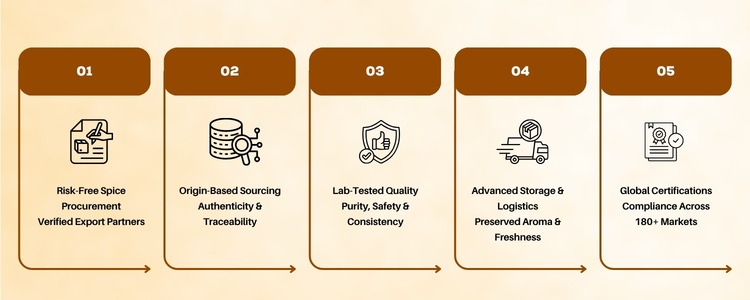
How to avoid Risks in Bulk Trading of Indian Spices
- Due-Deligence while Sourcing:
Risk management starts before you even make a deal. Smart importers don’t just talk price, they dig deep. They check the supplier’s export track record, production capabilities, infrastructure, client feedback, and overall reputation in the market.
Trustworthy Indian spice exporters are open with their paperwork, set clear product specs, and have proven international trade experience. If you’re considering a long-term contract, you need to review shipment consistency, see how often customers stick around, and look into compliance history. These days, top global buyers routinely do supplier audits and even virtual facility tours to see how things really work.
- Quality Assurance & Testing:
Getting a shipment rejected or facing customer complaints because of low quality isn’t just a hassle; it’s expensive and can hurt your reputation. That’s why strict quality checks are non-negotiable.
Serious importers demand lab tests for moisture, microbiology, pesticide residue, aflatoxin, color, and active ingredient levels. For turmeric, you want to know the curcumin content. For chilli, the ASTA color and pungency matter for buyers. Reliable Indian spice suppliers check quality at every step, from buying raw materials to processing, packaging, and right before shipping, so each batch you get meets the mark.
- Storage & Logistics Facility:
Even the best spice can lose value fast if it’s not stored or shipped right. Things like temperature swings, moisture, contamination, or cheap packaging can damage the goods on their way to you.
Top exporters don’t cut corners on logistics. They use hygienic warehouses, controlled environments, upgraded packaging, and modern inventory controls.
Vacuum-sealed bags, food-grade containers, and moisture barriers all help keep aroma, color, and shelf life intact. Importers are looking for suppliers who can handle logistics end-to-end. When the exporter controls the process, you’re less likely to face transit problems or delays.
- Uncompromised Pricing:
Chasing the cheapest quote is risky, especially in the international spice trade. Rock-bottom prices usually mean corners are being cut, on quality, supply reliability, or even basic business operations.
Savvy buyers care about the full landed cost, not just the sticker price. Quality, rejected shipments, freight, consistent inventory, and dependable suppliers all affect your profits in the long run.
Established exporters and turmeric suppliers know this, so they offer prices that balance quality with competitiveness. It keeps both sides safe from sudden supply shocks or wild price swings, and helps you plan your sourcing with confidence.
- Market Trends & Certifications:
Regulations change all the time, and in the spice business, compliance is a must. If you’re sourcing in bulk, you have to stay current on things like maximum residue limits, food safety rules, sustainability, and labeling requirements wherever you sell.
Exporters with ISO, HACCP, BRCGS, FSSC 22000, Halal, Kosher, or Organic certifications immediately stand out. These credentials mean they follow international food safety and quality standards, so you can trust their products. Buyers are also demanding more traceability, ethical sourcing, and sustainable practices. If you partner with certified Indian spice exporters, it’s easier to meet retailer demands and keep up with what consumers want in global markets.
Conclusion
Bulk imports can be hectic for business owners, while trying to figure out the right choices, one can easily get swayed to shape it more strategically. One needs insights and risk management. It’s a strategic move that can shape your product’s quality, your brand’s reputation, and your bottom line.
By carefully checking vet suppliers, running strict quality checks, setting up traceability, staying on top of compliance, and having solid logistics in place. With demand for authentic spices booming worldwide, teaming up with Indian spice exporters is the best way to get the reliability, transparency, and consistency you need to grow your business.

Diptanshu
Leading research and marketing at Inductus Global, Diptanshu drives the company’s vision to transcend traditional trading through thought leadership in import-export. He spearheads a research-driven approach that prioritizes quality over price arbitrage, positioning Inductus as a strategic sourcing partner rather than a transactional intermediary. His work spans market intelligence, supply chain innovation, and trade dynamics, while playing a key role in sales and business development.