

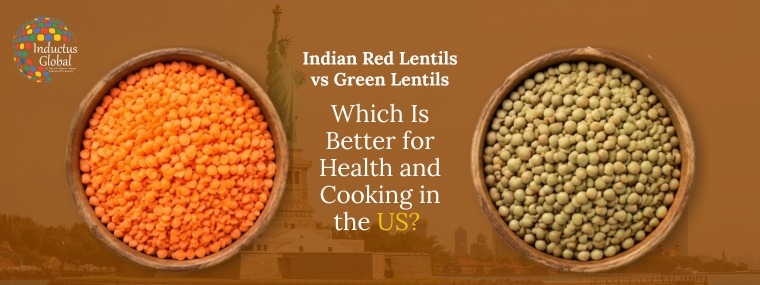
Indian Red Lentils vs Green Lentils: Which Is Better for Health and Cooking in the US?
Introduction
Two bowls, two colors, one question: which lentil actually wins? For many American consumers and food businesses, the choice between Indian Red Lentils and Green Lentils goes far beyond appearance. While both belong to the pulse family, they differ significantly in cooking performance, nutritional profile, texture, and market demand.
For home cooks, the decision often comes down to flavor, convenience, and health goals. For importers, distributors, and food manufacturers, factors such as shelf stability, processing quality, and sourcing reliability play an equally important role.
Understanding these differences is essential whether you’re preparing a weeknight meal or evaluating a bulk shipment. So, which lentil deserves a place in American kitchens and supply chains? The answer is more nuanced than most people expect.
India’s Diverse Lentils Market
India occupies a unique position in the global pulses industry. As one of the world’s largest producers and consumers of pulses, the country has developed a highly diversified lentil ecosystem supported by generations of farming expertise.
Different regions offer different varieties. Masoor or red lentils are widely grown in central and northern India, while green pulse varieties are cultivated in a number of other agricultural belts with appropriate soil conditions and seasonal rainfall patterns. These climatic advantages help India to maintain the production of different categories of pulses year after year.
In particular, India’s long supply chain makes its lentil sector very attractive to international buyers. The ecosystem provides scale and specialization, from smallholder farms to modern processing plants and export ports. Export grade lentils are cleaned, sorted, graded, polished, and packed for shipment.
This infrastructure has allowed Red Lentil exports from India to USA for international buyers to purchase large quantities. The main exporters of pulses are paying greater attention to traceability, quality assurance and compliance standards to meet the expectations of markets. For many overseas buyers, India’s lentil market is not just a source, but a sourcing destination.
Red Lentils vs. Green Lentils
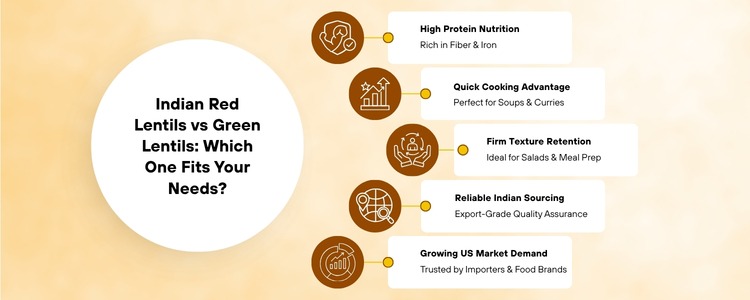
The comparison between red and green lentils begins with nutrition but certainly doesn’t end there. Both varieties are packed with plant-based protein, dietary fiber and essential minerals. Red lentils are commonly selected for their iron content and easy digestibility, making them a favorite among health-conscious consumers looking for nutrient-dense meals. Green lentils, meanwhile, are noted for their good fiber content and their slow digestion, which can help to provide a steady release of energy.
From a culinary perspective, the differences are even more remarkable. Red lentils cook quickly and naturally break down to a creamy consistency. They are great for soups, purees, curries and protein-rich meal solutions. Their short cooking time fits in perfectly with the increasing need for convenient and healthy food choices in the US market.
Green lentils are something else. They hold their shape when cooked and have a firmer texture. That makes them popular in salads, grain bowls, meal-prep recipes and slow-cooked dishes that thrive on texture.
But if texture is the test, who really wins?
The answer is very much dependent on the application. A food manufacturer developing a ready-to-eat soup may select red lentils for consistency and processing efficiency. A meal-kit company catering to premium salad eaters might opt for green lentils for structure and presentation.
Storage attributes affect buying decisions as well. Green lentils have good storage stability for shape and appearance, while red lentils are more versatile and quick cooking in processing. The more important these factors become, especially when assessing opportunities for large-scale procurement and international trade.
Which Pulses do USA Importers choose for Health Benefits & Cooking?
For commercial buyers, lentil selection is driven by far more than nutrition alone. Today’s Pulses Importers in the USA, suppliers are assessed based on consistency of grading, moisture control, foreign-matter removal, broken-grain percentages and compliance with FDA and USDA import requirements. A few cents is often less important than reliability and repeatability.
Red lentils have become a pretty big deal in the American health-food market in the past few years. Their fast cooking property, versatility, and suitability for plant-based dishes are in line with contemporary consumer tastes. For these reasons, food manufacturers, retail brands, and ready-meal producers are increasingly turning to red lentils. At the same time, green lentils continue to hold a stable position in organic retail channels, natural-food stores, and salad-focused product categories. Their texture and visual appeal make them a preferred ingredient for premium meal offerings.
Many Red Lentils Exporters In USA, sourcing from international suppliers, now prioritize dependable partnerships rather than pursuing the lowest-cost option. Supply-chain disruptions over recent years have highlighted the value of consistent shipments, quality assurance, and transparent sourcing practices. As consumer demand for plant-based proteins continues to grow, importers are increasingly looking toward reliable Indian suppliers capable of delivering both product quality and supply continuity.

Conclusion
Nobody wins with Indian red lentils vs green lentils. Both are excellent sources of plant-based nutrition for health, with their own benefits. When cooking, red lentils are ideal for quick creamy dishes, and green lentils for texture. Trade: Best choice based on end use, market demand, and source.
If you are a US importer, distributor, wholesaler, or food manufacturer seeking reliable Indian Red Lentils or Green Lentils sources, it’s time to find reliable sources. Get export quotes, shipping terms, product specifications, or sample consignments. As demand for healthy, sustainable pulses grows around the world, India is a reliable partner in feeding markets with reliable lentil exports.

Pratibha Soni
I write where strategy meets storytelling. As a passionate writer and literary enthusiast, I craft business-focused content that transforms trading insights into compelling narratives. Drawn to global business ecosystems, I enjoy turning research, innovation, and ideas into content that informs, connects, and inspires. With an analytical mind and a creative soul, I bring curiosity, collaboration, and a sharp eye for detail to every project. Adaptable and growth-driven, I believe the right words do more than communicate; they leave an impression.






One Reply to “ Indian Red Lentils vs Green Lentils: Which is Better for Health and Cooking in the US?”
India's Robusta Edge: Indian Coffee Beans for Italian Importers
14 Sep 2026[…] process of red lentil export from India to UAE starts with requirement compilation on the part of the […]