

FMCG Product Suppliers in India: How Global Buyers Can Source Quality Products
India’s fast-moving consumer goods (FMCG) sector has become an important sourcing destination for international businesses seeking packaged food, staples, snacks, beverages and other everyday consumer products. A large domestic market, established manufacturing networks and a broad agricultural base give overseas buyers access to a diverse range of food categories.
For importers, however, the challenge is not simply finding a supplier offering competitive prices. Product consistency, food safety, shelf life, packaging standards and export documentation all influence whether a sourcing arrangement remains commercially viable over time.
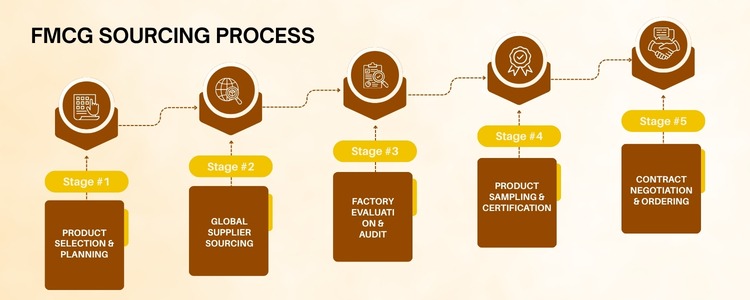
Choosing reliable FMCG Product suppliers therefore requires a structured approach. International buyers must evaluate the product, verify the company, understand destination-market regulations and calculate the full cost of importing goods. The following guide explains how businesses can source food products from India with greater confidence.
Why International Buyers Source FMCG Food Products from India
India’s food industry covers a wide range of categories, including rice, pulses, edible oils, spices, processed foods, confectionery and packaged snacks. This diversity allows importers to consolidate purchasing requirements across several product lines, depending on supplier capabilities and minimum order quantities.
The country’s manufacturing and agricultural networks also serve businesses with different purchasing needs, from regional distributors to large retail chains. Private-label production may be available for selected categories, giving importers an opportunity to develop products under their own brands.
Nevertheless, supplier capabilities differ considerably. Buyers should evaluate each company according to its product range, production capacity, quality systems and experience with international trade rather than assuming that every Indian manufacturer offers the same standards.
1. Define Your Product Requirements and Target Market
Before contacting suppliers, identify the products your customers are likely to purchase and the regulations governing their sale. A detailed purchasing brief reduces confusion during negotiations and helps suppliers provide comparable quotations.
Start by specifying:
- Product category: Decide whether you need staples, packaged snacks, spices, edible oils or other food products.
- Quality requirements: Define ingredients, product grades, permitted additives and relevant quality parameters.
- Packaging: Identify pack sizes, packaging materials, labelling requirements and private-label preferences.
- Shelf life: Establish minimum remaining shelf life at the time of shipment or arrival.
- Order volume: Estimate initial quantities and potential repeat orders.
- Destination requirements: Check applicable food safety, labelling and import rules.
Buyers should also assess local demand, competitor pricing and consumer preferences before committing to a large order. A product that performs well in India may require different packaging, labelling or positioning in another country.
2. Verify the Supplier's Credentials and Capabilities
Supplier verification is essential when the buyer and seller operate in different jurisdictions. A professional website and an attractive quotation are useful starting points, but they do not establish a company’s reliability.
Ask for business registration details, relevant food-safety licences, export experience and references where available. Depending on the product and market, buyers may need to verify certifications or registrations against the requirements of the destination country.
Examine whether the supplier manufactures the goods directly, sources them from other producers or operates as a trading company. Each arrangement can be commercially suitable, but buyers should understand who controls production and quality.
For larger orders, consider a factory visit, video inspection or independent verification. Review the supplier’s capacity to fulfil the required volume without compromising quality or delivery schedules.
A dependable supplier should be willing to discuss production timelines, quality checks, complaint procedures and the documents that will accompany the shipment.
3. Check Product Quality and Food Safety
Quality assessment should begin before the purchase order is confirmed. Request product samples, technical specifications and relevant test reports. Where appropriate, arrange independent laboratory testing to verify product characteristics and safety parameters.
For packaged food, checks may include ingredients, nutritional information, allergens, microbial limits and permitted additives. Requirements vary by category, so the inspection plan should reflect the actual product and destination market.
Packaging deserves equal attention. Damaged seals, unsuitable materials or inadequate protection can affect food safety and shelf life during transportation. Confirm that packaging is suitable for the expected journey, climate and storage conditions.
Buyers should also establish written acceptance criteria. These may cover appearance, taste, weight, moisture, labelling accuracy and remaining shelf life, depending on the product.
For repeat orders, retain an approved reference sample and compare subsequent consignments against the agreed specification. This helps prevent gradual changes in quality from affecting customer satisfaction.
4. Compare Prices and Calculate the Landed Cost
The lowest unit price does not necessarily deliver the best commercial outcome. Importers should calculate the full landed cost before comparing supplier offers.
A complete cost assessment may include:
- Product price and packaging.
- Inland transport and export handling.
- Freight and cargo insurance.
- Customs duties, taxes and inspection charges.
- Port handling, warehousing and final delivery.
- Currency conversion and banking fees.
Request itemised quotations and compare offers using consistent product specifications, quantities and delivery terms. If Incoterms such as FOB or CIF are used, confirm which costs and responsibilities fall to each party.
Buyers should also check minimum order quantities, payment conditions, quotation validity and the supplier’s policy on price changes. For products with limited shelf life, slow-moving inventory can create additional costs through storage, discounting or wastage.
A realistic landed-cost calculation helps importers protect margins while avoiding decisions based solely on the initial quotation.
5. Confirm Export Documentation and Import Compliance
Food imports are subject to requirements that vary by country and product category. Before confirming an order, consult the relevant authorities or a qualified customs broker to establish which registrations, permits and certificates are required.
Common commercial shipping documents include the invoice, packing list and bill of lading or other transport document. Depending on the product and destination, additional records may include certificates of origin, health certificates, laboratory reports or phytosanitary documents.
Labelling requirements can be particularly important for packaged food. Authorities may prescribe rules for ingredients, allergens, nutrition information, net weight, date marking, country of origin and language.
Ask the supplier to confirm which documents it will provide and which responsibilities remain with the importer. Check that product descriptions, quantities, batch details and weights match across the documentation.
Completing these checks before dispatch can reduce customs delays, storage charges and the risk of goods being held at the destination port.
6. Plan Shipping, Storage and Distribution
Once product specifications and compliance requirements are settled, buyers should agree on a realistic shipment schedule. Confirm the loading point, destination port, packaging configuration, transport responsibilities and expected transit time.
Temperature, humidity and handling conditions can affect certain food categories. Products requiring special storage conditions should be transported using suitable equipment and procedures. Even shelf-stable goods need protection against moisture, contamination and physical damage.
Importers should also plan warehouse capacity and delivery arrangements before the shipment arrives. Unexpected storage costs can erode margins, particularly when large orders arrive before distribution channels are ready.
In some markets, established FMCG Distributors can help importers manage regional coverage, inventory movement and relationships with retailers. Their role should be assessed against the business model, expected volumes and local market requirements.
7. Build a Long-Term Supplier Relationship
A successful first shipment is a useful start, but repeat performance is what determines the value of a sourcing relationship. After delivery, assess whether the supplier met the agreed specifications, shipment schedule and documentation requirements.
Record any discrepancies and resolve them through the procedure established in the contract. Review the supplier periodically, particularly when order volumes increase or new products are introduced.
Businesses working with FMCG Exporters should also agree on forecasts, lead times and arrangements for handling unexpected demand. Better communication can improve production planning and reduce last-minute purchasing pressure.
A diversified supplier base may provide additional flexibility, especially for products with seasonal demand or variable availability. The objective is not simply to find the cheapest source, but to build a purchasing system that balances quality, cost and continuity.

1. Why do global buyers source food products from India?
India offers a broad range of food categories, established manufacturing networks and suppliers serving different international markets.
2. How can importers verify an Indian food supplier?
Review business credentials, relevant licences, export experience, quality procedures, references and production capabilities.
3. What affects the total cost of importing FMCG food products?
Product price, packaging, freight, insurance, duties, taxes, inspection, warehousing and local delivery all contribute to landed cost.
4. Which documents are commonly required for food imports?
Common documents include commercial invoices, packing lists and transport documents. Additional certificates depend on the product and destination.
5. How can importers reduce food safety risks?
Set clear specifications, review test reports, check relevant certifications and arrange independent inspections when appropriate.
6. What should businesses prioritise when selecting a supplier?
Evaluate product quality, regulatory compliance, pricing transparency, production capacity, delivery reliability and communication.

Diptanshu
Leading research and marketing at Inductus Global, Diptanshu drives the company’s vision to transcend traditional trading through thought leadership in import-export. He spearheads a research-driven approach that prioritizes quality over price arbitrage, positioning Inductus as a strategic sourcing partner rather than a transactional intermediary. His work spans market intelligence, supply chain innovation, and trade dynamics, while playing a key role in sales and business development.