


How to Import Packaged Food Items into the USA: A Step-by-Step Guide for 2026
The United States is still one of the largest importers of food worldwide, with more than 20% of the food imported into the U.S. coming from Mexico, creating an economic opportunity for global exporters of agricultural products as well as retail distributors. Global food brands are adding new varieties of food products to supermarket shelves in the United States, no matter if it’s a snack, beverage, refrigerated meal, or something in between.
However, companies that want to export packaged food products to the United States must comply with multiple regulatory requirements, safety regulations, and documentation requirements. Therefore, there must be communication and coordination among manufacturers, regulatory agencies, logistics providers, and import companies. As of 2026 for companies wanting to access the U.S. food market, knowing the rules of regulations and all the logistics will be imperative.
The guideline below contains most of the main steps and considerations that need to be taken into account to successfully import packaged food items into the U.S.
What Are the Key Regulations for Packaged Food Items Entering the USA?
Strict federal regulations that help protect public health and ensure product safety regulate food imports into the United States. Importers are subject to various regulatory agencies, including the relevant food safety authorities and customs agencies.
FDA food import regulations create one of the key areas of regulation of food products as they enter the country. This provides a framework whereby the FDA ensures that foreign sourced food products meet the same safety standards that would be required of food produced in the United States. The FDA food import regulations focus on (but are not limited to) the following
- Safety and traceability of ingredients
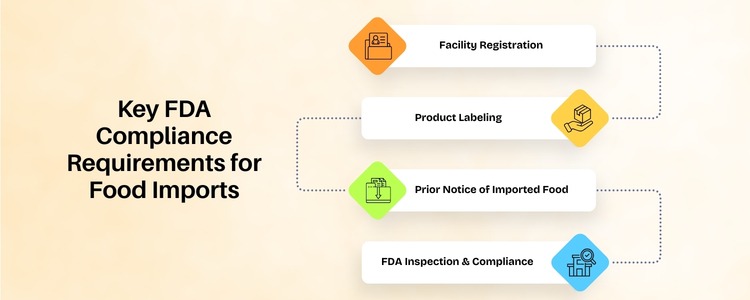
- Labeling requirements
- Registration of facilities
- Sanitary conditions for food manufacturing
Noncompliance with these rules can result in rejection of the shipment, fines, or product recalls.
Why is FDA Facility Registration Necessary?
Manufacturers are required to register with the Food and Drug Administration (FDA) prior to exporting food products to the United States. This includes both domestic and foreign food production facilities that will be providing, processing, or packing food products for the United States.
Packaging facilities will enable regulators to audit food supply chains and to conduct inspections, as they may be needed in the future.
If an importer works with a non-domestic food facility, it is their responsibility to confirm that their suppliers have registered the food facility. If a supplier does not have a registered place of business, the importer risks that the product will be rejected upon entry at a United States port.
To register a facility, a supplier completes the registration process, wherein they complete a registration form that contains the following information:
– Company and facility information
– Product categories manufactured
– Provide contact information for completing the registration
– Identify all products that are being exported
– Provide potential allergens for each product
– Country of origin for packaged foods exported to the United States
-Renewed registrations must be submitted on a recurring basis
What Are the Labeling Requirements for Imported Food?
Adequate and correct food label compliance is an important aspect of customs compliance for companies exporting products to the United States. There are very specific and detailed requirements for food labeling in the United States and how to comply with those labeling requirements.
Labeling examples include:
– Nutritional Information
– Ingredient List
– Identify All Animal Product Ingredients
– Country of Origin for All Packaged Foods
In order to comply with the labeling rules, labels must be in English, meet the requirements of United States regulatory agencies for labeling submission and have a specific and adequate label format. A product will be delayed at customs if there is any discrepancy with the label in relation to the regulations. Importers must therefore make sure that all products being shipped have their packaging in compliance with the United States food import requirements before products are shipped. Retailers will commonly work with packaging design agencies and regulatory compliance experts to work through the complete accuracy of labels for the products being manufactured, manufactured, and exported.
How Do Importers Handle Prior Notice Requirements?
Another crucial regulatory requirement is the need to submit prior notice to US authorities prior to the arrival of shipments of food at the border. This notice allows regulatory agencies to review incoming shipments and determine if further inspection is needed.
Prior notice submissions include the following:
– Description of the product
– Amount of goods being shipped
– Manufacturer’s information
– Expectation of where and when the goods will arrive
If no prior notice is provided, shipments may be delayed or denied access into the United States.
For companies who are preparing to import packaged food into the USA, being aware of and following this requirement will help prevent costly delays in transporting goods
What Documentation is Required for Food Imports?
Food imports require several important forms of documentation. Generally speaking, you’ll need:
– Commercial invoice
– Packing list
– Bill of lading or air waybill
– Certificate of origin
– Importer of record information
Customs may also request product testing results or ingredient certifications, depending on the type of food being imported.
Importers must keep accurate records for all shipments. These records could be used by a regulatory agency to audit shipments or to investigate product traceability.
How Does the Customs Clearance Process Work?
Before entering the U.S. market, all shipments to the United States must go through a complex custom clearance process. This process begins with a physical examination of shipment documentation and detailed verification of product declarations by U.S. custom officials. Additionally, in some cases, food safety officials may need to inspect specific shipments.
The agency responsible for checking food safety can:
- Ensure that labels comply with the law
- Physically inspect the goods for safety
- Take samples from each shipment for laboratory testing
If a shipment passes all regulatory standards, it will be released for further distribution into the United States. Conversely, if a shipment fails an aspect of regulation, it can be retained, returned to its country of origin, or destroyed.
What Logistics Considerations Should Importers Plan For?
In the success of importing food products, logistics planning is a critical component. Unlike most consumer products that are not affected by time or short shelf life, food products may be subject to a high degree of spoilage if they are not properly handled during transit.
Importers should consider:
- Temperature-controlled transportation options for temperature-sensitive food
- Reliable associated truck line that have experience in shipping food
- Efficient warehousing solutions for direct storage of all food
- Inventory management based on the shelf lives of the respective products
Structured logistics to minimize product loss and provide timely distribution of food products to retailers
What Common Challenges Do Food Importers Face?
There are many challenges Food Importers face during the operation phase even when they are well prepared. Below are four of the most typical examples:
- Regulatory Delays – The lack of proper documents or regulatory changes can delay the clearance of shipments.
- Labeling Issues – If there is an error on nutrient content or a lack of an allergen warning, the shipment can be rejected.
- Supplier Compliance Issues – If an overseas manufacturer has not complied with regulatory requirements, the Food Importer could be subjected to either delays in shipment and/or fines.
- Disruptions to Logistics – Shipments that are delayed in transit or have congestion at ports will impact delivery timelines and the freshness of food products.
By anticipating these common challenges prior to their occurrence, businesses can position themselves better to effectively mitigate the risks associated with identifying these occurrences.
What Trends Will Influence Food Imports in 2026?
The world food business has undergone rapid change; many emerging trends will shape how Americans import food in the future.
Increasing Interest in Worldwide Flavours
More Americans have developed a taste for international foods, which has resulted in increased interest in specialist imported foods.
Improved Food Traceability Systems
Government regulators (USDA and FDA) are developing new electronic systems to allow us to see where our food has come from at any point in its journey from farm to retailer.
Rigorous Sustainability Standards
Retailers are increasingly pushing for more environmentally friendly food packaging and more ethically sourced food products.
Thus, importers that align their source strategy with these growing needs are likely to be successful in the growing US market for food imports.
Conclusion
Bringing food into the USA from abroad presents an excellent chance for foreign food suppliers and distributors. The import process can be very beneficial, but it requires careful consideration during the importation phases, diligent adherence to the U.S. Food Safety Regulations, and solid working partnerships throughout the logistics chain.
The companies that have a good understanding of the necessary documentation, the required regulatory requirements and the means of managing the logistics to bring products into the United States, have a much better chance of successfully navigating the complicated U.S. food importation system.
By utilising proper procedures and establishing good relationships with suppliers, imported packaged food products of the highest quality can be properly launched into one of the world’s largest and most competitive food exporting markets.
Frequently Asked Questions (FAQ)
Sourcing services companies are professional firms that assist businesses with supplier relationship management, with an emphasis on efficiency and compliance, enjoying a long-term relationship and collaboration.
Agents usually manage single transactions, whereas sourcing companies create a working relationship with suppliers by employing a complete supplier relationship management process with strategic oversight.
Because trust and compliance help assure quality, minimize risk, and ensure delivery performance.
Technology provides transparency, risk monitoring, and automates and enables collaboration between buyers and suppliers across borders.
Sourcing services firms help mediate disputes, enforce contractual obligations and formalize a corrective actions plan, whilst assuring business continuity.
No. Small and medium-sized enterprises will also leverage the knowledge of sourcing services companies and access to their network to connect to global suppliers without excess overhead.