


Rising Costs, Delays & Shortages: The Real Impact of Middle East War on Global Procurement
The current conflict in the Middle East (2026) is further highlighting how interconnected the global economy has become. What may seem like a regional geopolitical issue is in fact a global economic incident affecting many different areas including Global Procurement, which is located at the core of manufacturing, trade and commerce.
As conflict intensifies, companies worldwide face greater cost increases, delays in shipments as well as significant shortages of materials. The range of industries impacted by this is vast, from automobile to electronic, pharmaceutical to consumer goods. In this article we will examine how the conflict in the Middle East is changing procurement strategies, as well as what this means for businesses that operate in these uncertain times.
The Strategic Role of the Middle East in Global Trade
The Middle East is more than just a geopolitical hotspot; it is also a key artery through which global commerce flows. Since many maritime shipping lanes (like the Strait of Hormuz) handle a large volume of oil shipped around the world, any disruption in the Middle East will have an immediate global impact.
Due to increased military action and insecurity in the region throughout the year 2026, the cost of insuring cargo vessels traveling through these waterways has risen dramatically . In addition to increased cost of insurance, shipping firms are rerouting vessels via much longer, less efficient routes. Both of these variables have created additional time and costs for the procurement cycle, and much more complicated planning process than previously experienced.
Rising Costs: A Direct Blow to Procurement Budgets
The most immediate result of conflict comes from the massive rise in costs—particularly in terms of energy prices due to supply limitations—and therefore the direct impact on transportation (shipping) costs and manufacturing costs.
Procurement teams have many different layers of increasing costs associated with the conflict, including:
- Significant increases in freight costs because of longer shipping routes;
- Increased fuel costs affecting transportation logistics;
- Increased insurance premiums paid for goods in transit;
- Increased volatility of currency impacting import costs.
For companies operating at low margins, the cost pressures imposed by the conflict result in difficult business decisions about whether to absorb or pass on these increased costs to consumers.
Delays Disrupting Business Continuity
Delays have become a common occurrence as we move into 2026 because ports near the conflict are implementing tight security procedures, resulting in congestion and slower processing times.
Shipping timelines have also become unreliable. What was once an item delivered in weeks, could now take months or even longer due to shipping delays. As a result of these shipping timelines changing so drastically, production planning, retail inventory and retailer deliveries to customers will also be adversely affected.
The largest impact will be on industries that rely on just-in-time delivery. One minor delay could stop a production line and create huge costs to the company.
Shortages Across Critical Industries
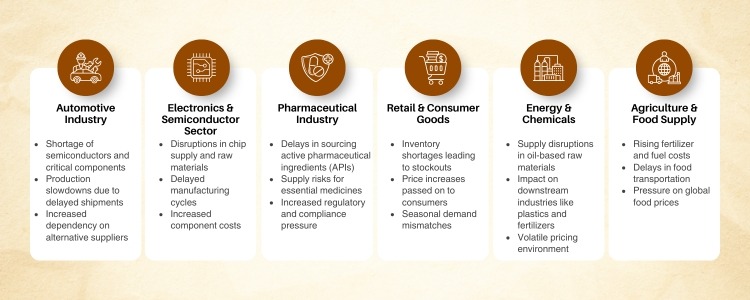
The combination of increased cost, in addition to shipping delays, has created shortages in almost all industries. Not only does this create difficulties with the operation of companies, it is affecting the price of products in the market as well as determining consumer behaviour.
The following are the key industries today that are experiencing shortages:
Automotive: Limited electronic components available
Pharmaceuticals: Delay in sourcing active ingredients
Electronics: Supply chain disruptions in semi conductors
Retail: Reduced inventory levels and out of stock situations
These shortages are not only operational problems, but they are also creating market price adjustments as well as impacts on consumer purchasing behaviour.
Strain on Global Procurement Strategies
Companies are being forced to revisit their Global Procurement strategies due to the current economic turmoil. Cost effectiveness has been the priority of most traditional procurement models; however, now it’s about building resilient and flexible procurement models.
More and more businesses are looking to widen out their supply base to lessen their reliance on one area of the world. This however, has been difficult as establishing a relationship with reliable suppliers, creating and maintaining a quality standard, and managing logistics across a multitude of areas can be very difficult and costly.
Additionally, with the fast changing pace in which business is taking place today, the pressure is on Procurement teams to make fast, educated decisions with only minimal information available.
The Role of Procurement Companies and Services
With the obstacles that businesses are now facing, Procurement Companies and specialized Procurement services are assisting companies through the process by providing their support and expertise in supplier identification, risk management and logistics support.
Unfortunately, these companies are also struggling. There are fewer suppliers, prices are uncertain and logistics problems are creating many issues for them as well. So, to resolve many of these obstacles, businesses are seeking partners with strong regional ties and sophisticated analytics capabilities.
Challenges in Product Sourcing and Supplier Networks
Sourcing for products has become incredibly difficult in 2026. There are people that are trying to source products from suppliers that are located in affected geographical regions, but either cannot produce or are experiencing operational disruptions themselves.
There’s been an increase in the number of companies sourcing products from alternative markets within Southeast Asia, Africa, and Latin America; while these regions present opportunities, they also come with substantial barriers to entry such as regulatory issues, inadequate infrastructure, and longer lead times when it comes to shipping product.
All of this creates pressure on contractors to provide reliable solutions in an unpredictable environment. The demand for transparency, real-time communication about progress, and planning for contingencies has never been greater in our business community.
Technology as a Mitigation Tool
Companies are using technology more and more to deal with the disruptions they’re experiencing. Technology allows businesses to have better visibility throughout their procurement process, thus allowing them to make more effective decisions.
The key technologies that companies have been implementing in their procurement processes include:
*Real-time visibility into your shipments.
*Predictive analytics for demand forecasting.
*Risk Assessment platforms.
*Automated Procurement Systems.
Each company has been responding differently to their needs for these types of solutions; however, the technology available to them is allowing companies to better manage disruptions as they occur.
Long-Term Implications for Procurement
The repercussions of the Middle Eastern conflict could reach beyond 2026 as businesses continue to shift toward resilient procurement models, often at a higher cost. Some long-term trends are increasing the focus on sourcing products in regional areas, investing more in inventory buffers (e.g., additional safety stock), and increasing supplier diversification. In addition, increased adoption of digital procurement solutions will be another area of focus for the future.
Domestic manufacturing is also being promoted by many governments as a way to reduce reliance on imported goods.
Conclusion
In the wake of the Middle East conflict, many businesses are facing a variety of challenges related to their procurement systems. Rising prices, ongoing delays, and severe shortages are more than just short-term disruptions they are signs of a changing global environment.
For businesses, the key to overcoming these challenges will be their ability to create resilient, flexible, and technology-enabled procurement systems in order to succeed in the future.
Frequently Asked Questions (FAQ)
Sourcing services companies are professional firms that assist businesses with supplier relationship management, with an emphasis on efficiency and compliance, enjoying a long-term relationship and collaboration.
Agents usually manage single transactions, whereas sourcing companies create a working relationship with suppliers by employing a complete supplier relationship management process with strategic oversight.
Because trust and compliance help assure quality, minimize risk, and ensure delivery performance.
Technology provides transparency, risk monitoring, and automates and enables collaboration between buyers and suppliers across borders.
Sourcing services firms help mediate disputes, enforce contractual obligations and formalize a corrective actions plan, whilst assuring business continuity.
No. Small and medium-sized enterprises will also leverage the knowledge of sourcing services companies and access to their network to connect to global suppliers without excess overhead.