

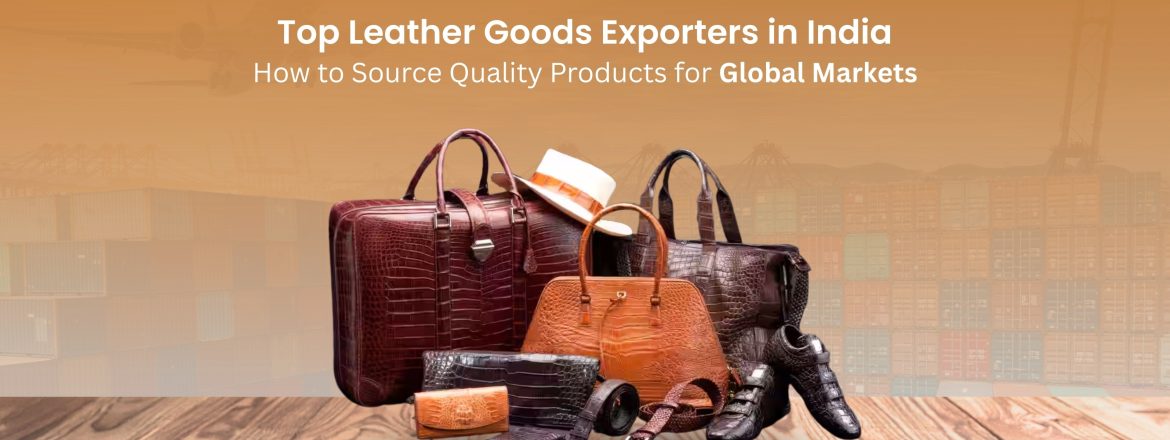
Top Leather Goods Exporters in India: How to Source Quality Products for Global Markets
With an established reputation in the global leather manufacturing industry for many years, India is the preferred choice of international buyers when sourcing leather products due to their well-established export infrastructure, craftsmanship and reasonable rates. Manufacturers in India provide leather goods from exquisite handmade bags and purses to high-quality men’s wallets to retailers, distributors and fashion design companies internationally. For global companies looking for reliable suppliers, doing business with knowledgeable leather goods exporters (manufacturers) in India will provide operational efficiencies and product variety to your retail supply chain.
However, doing business with leather goods exporters in India requires the buyer to carefully select suppliers based on the supplier’s ability to meet all the international manufacturing & quality control standards required by the buyer’s international customers. Understanding how the export process works is extremely important for buyers because it helps them to create a stable supply chain for their business while ensuring that the product(s) to be transported comply with all international market standards and expectations.
Why Are Leather Goods Exporters in India Trusted Worldwide?
For decades, India’s leather industry has grown due to the development of strong manufacturing clusters and the backing of the government for export initiatives.
There are multiple reasons that support the global reputation of Indian Leather Goods Exporters.
India has a world-class, skilled labour force who are experienced with traditional leather production and its related arts. Artisans in many of the manufacturing hubs possess the expertise needed to stitch, finish, and design leather items.
The leather industry in India has a broad supplier network that produces goods on a large scale for the international market; therefore, exporters can fulfill large orders of goods with consistent quality.
India’s cost of production is also competitive, making it possible for exporters to provide international purchasers with an attractive price for their products while maintaining the same level of material quality.
These attributes make India a preferred location for those companies that purchase leather products.
Which Cities in India Lead Leather Exports?
The leather industry in India is made up of multiple industrial clusters with characteristics tailored to producing specific items.
Kanpur
For decades, Kanpur has been one of India’s largest producers of leather goods, with many manufacturers producing both leather footwear and belts as well as industrial leather items for many businesses and other producers.
Chennai
Chennai and its surrounding areas are classified as one of the largest exporters of leather goods in India. Footwear and fashion accessories are the primary segments of focus for the Chennai area.
Kolkata
Kolkata has an excellent reputation as a large city filled with skilled craftspeople who build quality leather bags, wallets, and fashion goods. These goods are sold by manufacturers to businesses and retailers in Europe and North America.
Delhi NCR
Manufacturers in the Delhi area are primarily producing fashion-related and custom leather products for companies all over the world.
Many of these retailers source their need for leather goods in India from the four cities listed above.
How Can Global Buyers Identify Reliable Exporters?
Choosing an appropriate supplier will require much more than looking at product catalogues. Companies need to perform thorough evaluations of the manufacturing abilities of the supplier as well as their level of experience in exporting the type of product needed.
Check Export Certifications
Most good exporters will have certifications to show that they have met the requirements of export laws established by foreign countries. Some examples of these are export registrations, quality management certifications and environmental certifications. These types of certifications indicate to the buyer that the exporter will be following the appropriate practices and guidelines for producing and exporting the type of product required.
Evaluate the Type of Products Specialised In
Exporters who have expertise in exporting specific categories of products (e.g. handbags, fashion accessories or wallets) are much more likely to produce high-quality products than exporters who do not have specialised expertise. Therefore, if an international buyer is looking for premium quality wallets, they may be better off choosing an Indian exporter of leather wallets that focuses only on the manufacture of leather wallets.
Assess Production Capabilities
Buyers who are doing business with suppliers on a global scale should verify that suppliers have the ability to deliver an adequate supply of product in sufficient quantities without delays. Suppliers with an organised production facility, skilled labour and automated production machinery generally will have the production capacity to produce large quantities, including multiple shipments of product when necessary. This consideration will be vital for brands entering into new retail market segments, where production capacity will be critical to the success of that product in the market.
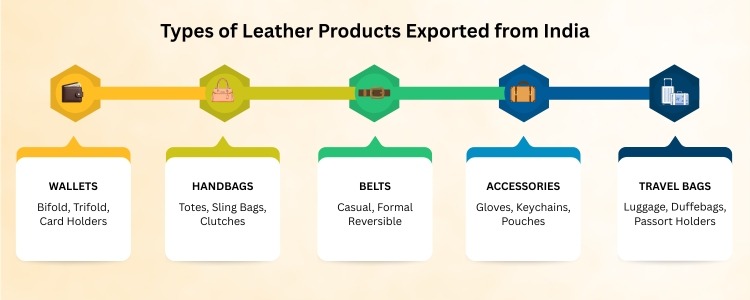
What Quality Standards Should Buyers Consider?
To meet international market demands, products made from leather must adhere to stringent quality standards and requirements.
Prior to entering into agreements with suppliers, buyers should take into account various factors including:
* Material Quality – The grade of leather used in making the product is a key contributor to the quality, appearance, and overall value of the finished product.
* Craftsmanship and Finishing – The stitching, cutting, and finishing of a product must be completed correctly; otherwise there is a potential for an effect on the perceived quality of the final product.
* Compliance with International Standards – Many countries have specific legal requirements that prohibit importing products if they do not comply with certain environmental/safety policies when produced or sold after being produced.
The use of regular quality checks and also providing sample approvals can assist buyers with maintaining consistent quality within their products at each stage of production.
What Role Do Product Customisation and Branding Play?
Numerous international retailers do not simply buy off-the-shelf leather products but choose instead to partner with export companies to produce custom-designed items suitable for their brand identity.
Common customisation options include:
– Private label branding
– Custom packaging
– Unique colour options
– Logo embossing
Exporters with established design teams can provide buyers with assistance to build product assortments that reflect global fashion trends.
Retailers often work with leather accessory exporters from India to design exclusive product lines targeted at specific markets.
Customisation offers businesses the ability to differentiate their products within a highly competitive retail market.
How Should Buyers Manage Logistics and Shipping?
Export logistics is another important component of the international trade of leather products.
Exporters and buyers must work collaboratively to ensure that shipments are scheduled appropriately, all required documentation is completed, and that all customs procedures are followed.
The most common documents required for export of leather products include:
– Commercial invoice
– Packing list
– Certificate of Origin
– Bill of lading
Exporters will typically partner with freight forwarders and logistics providers to coordinate and expedite the movement of international shipments.
When planning a large bulk purchase of leather products, buyers should also consider the shipping timelines and storage requirements necessary to properly manage these purchases
What Trends Are Shaping India’s Leather Export Industry?
The worldwide leather market has undergone rapid change, while Indian exporters have adjusted to new consumer trends. In regards to sustainable production, more international buyers demand their suppliers to employ methods that are environmentally sustainable.
Luxurious retailers are purchasing high-quality leather goods that are focused on the craftsmanship and artistic design of these goods. Brands are ordering smaller and more frequent quantities of goods with the intent to benefit from rapid shifts in fashion. Exporters that adapt to these trends will gain increased exposure/visibility among international buyers.
Conclusion
With its advanced manufacturing processes, skilled labor force, and competitive prices, India’s leather industry is a dominant supplier for the global fashion and retail industries. Due to these advantages, there are many opportunities for international buyers who want high quality leather goods.
To source successful products from India, buyers must execute careful supplier evaluations and quality checks in addition to working with buyers on logistics and other aspects of cooperation.
By forming long-term cooperative relationships with reputable leather exporters, buyers can create dependable supply chains that provide consistent product availability and assist them in expanding their global reach. As brands develop high-quality leather goods for the global marketplace, India will be a country of choice with both traditional craftsmanship and state-of-the-art industrial production.

Diptanshu
Leading research and marketing at Inductus Global, Diptanshu drives the company’s vision to transcend traditional trading through thought leadership in import-export. He spearheads a research-driven approach that prioritizes quality over price arbitrage, positioning Inductus as a strategic sourcing partner rather than a transactional intermediary. His work spans market intelligence, supply chain innovation, and trade dynamics, while playing a key role in sales and business development.