

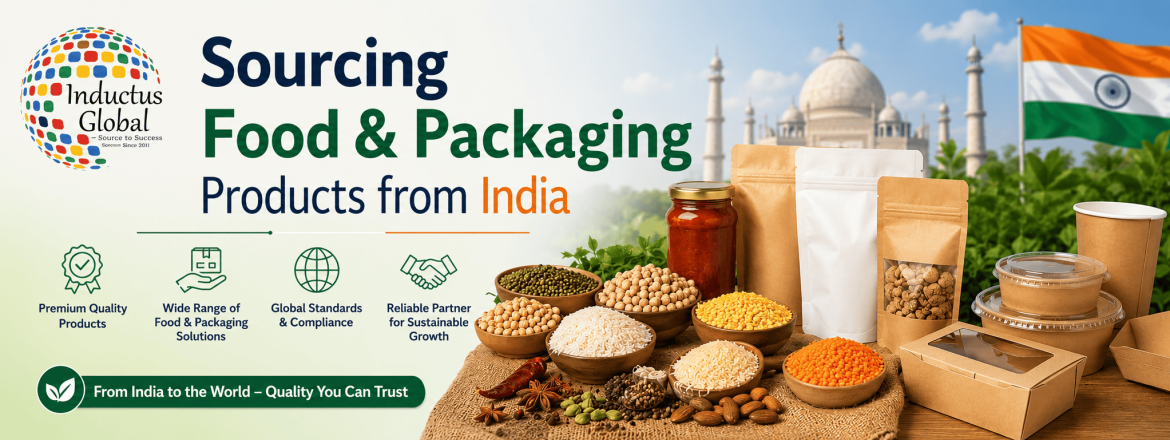
Why Middle East and European Importers Prefer Sourcing Food & Packaging Products from India
India has been recognized by the world’s buying community as one of the foremost sources for food and packaging products. In Europe and the Middle East since 2010, importers have increasingly relied on Indian food suppliers and packaging manufacturers for reliable and high-quality sources of goods that can accommodate their growing demand for quality products at a reasonable price.
The choice to use India as a supplier is not coincidental; rather, it is based primarily on several different types of logistics, regulations, and economics provided to the international market by India. From price competition to ongoing changes in compliance standards, India has firmly established itself as an excellent international trade partner.
Food Suppliers: Strength of India’s Agro-Based Export Ecosystem
India’s wide-ranging agricultural resources provide the foundation for India’s export capability. India is among the largest exporters of grains, spices, fruits and processed foods in the world. This wide-ranging portfolio of products provides global buyers with an abundance of options when buying from India.
Food suppliers in India provide all different types of food products, including:
- Dried pulses, dry rice or cooked rice, and dry cereal
- Dried spices along with sauces and other seasoning products
- Packaged food items such as prepared meals or snack items
- Frozen and ready-to-eat food items
Also, because of India’s availability of wholesale food items sold in bulk, retailers will find a great deal of opportunity to purchase consistent volumes of product from India.
India’s export promotion councils (government-supported) and policy frameworks not only enhance the credibility of the product sellers but also make for a much more seamless transaction experience for buyers located further away from India.
Cost Efficiency and Competitive Pricing Advantage
A key reason that many importers choose to import goods from India is the price advantage that the country offers. Price differences are fairly large compared to other countries, such as those in Western Europe, and even some Asian countries, but still offer a competitive price point without greatly diminishing the quality of the products being imported.
There are many different reasons why India has such a strong price advantage:
- Low cost of labour
- Large quantities of raw materials available for production
- Economies of scale through bulk production
When researching options for purchasing wholesale food products, it is common for businesses to compare potential sources and determine if India offers the best combination of price and quality.
However, many experienced buyers include quality assurance as a part of their evaluation process. As India has raised its manufacturing standards over time, it is now seen as having a firm grasp on meeting both price and quality, making it an increasingly popular source for importing.
Packaging Products: Growing Demand and Innovation
In addition to imported food products, the demand for high-quality packaging products has also increased along with the increase in global trade. Packaging manufacturers in India have taken note of this demand and have expanded their capabilities to produce both traditional and modern packaging products.
Food packaging manufacturers produce many different types of food packaging products, such as:
- Flexible food packaging products
- Corrugated boxes
- Vacuum-sealed packaging products
- Eco-friendly packaging products
Packaging manufacturers are increasing their investments in technology for improving durability, shelf-life and visual appeal. Packaging is also a critical component in the export of food products, which is why manufacturers focus so much of their attention on packaging to ensure that the integrity of the food is preserved.
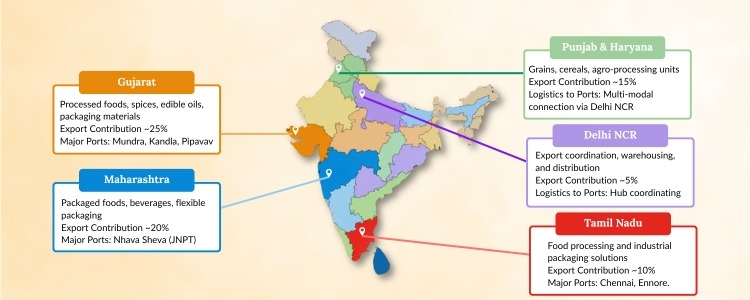
Shift Towards Sustainable Packaging Products
European and Middle Eastern consumers have increasingly focused on sustainability when purchasing goods. Regulatory guidelines in Europe and the Middle East are pushing companies to source products in an environmentally responsible manner.
Indian manufacturers are beginning to develop and manufacture products using sustainable packaging materials. Examples of this include:
- Biodegradable material
- Recyclable packaging
- Reduced plastic options
This shift to sustainability aligns with global efforts for sustainability, which makes India a more attractive sourcing location. Ultimately, buyers of eco-friendly goods will find Indian suppliers meeting these expectations more and more.
Quality Standards and Regulatory Compliance
For European and Middle East markets, purchasing decisions now incorporate sustainability as an essential factor. Increasingly stricter regulation of environmentally friendly sourcing by authorities in these areas has raised the standards for sustainably sourced products. India has made strides in this regard by providing producers with sustainable packaging options such as:
- Biodegradable substances
- Recyclable packaging methods
- Reduced plastic alternatives.
With these changes being made, India’s attractiveness as a sourcing location increases due to aligning with worldwide sustainability efforts, and more and more buyers looking for eco-friendly products will find suppliers in India to be viable options.
Strategic Geographic Advantage
The Europe & Middle East are focusing their buyer decision on sustainability as part of their criteria for purchase. Authorities from these regions are increasing the standards for products that have been sourced sustainably through legislation to create a greater demand for sustainably sourced goods. India has worked to create innovative sustainable packaging materials for its producers through:
- Biodegradable materials
- Methods for recycling packaging
- Alternatives to the use of plastics
As a result of these innovations, India will continue to draw in buyers looking to place orders for products that can be sourced sustainably, and that align themselves with the worldwide sustainability movement; therefore, Indian suppliers will continue to be attractive with increasing numbers of buyers searching for products produced in a sustainable manner.
Customization and Flexibility in Supply
Flexibility is a major reason why businesses prefer to work with Indian suppliers. Manufacturers and exporters will usually agree to customise any aspect of a product, including how it is made, packaged and branded.
Flexible suppliers are particularly useful for private label brands, retail chains, and food service business.
The ability to customise a product according to market needs increases India’s ability to compete in the global marketplace.
Challenges and Risk Considerations
Although there are many positives about sourcing from India, there are also a number of challenges.
Common issues faced by importers include:
- Variability of quality from suppliers
- Differences in communication between the buyer and supplier
- Delays due to the production or logistics process
To overcome these types of challenges, an importer can do the following:
- Thoroughly verify a supplier before purchasing from them
- Request product samples from a supplier to evaluate their quality
- Clearly outline the terms of your contract with the supplier
- Use a third-party inspection service to assess the quality of goods being purchased if necessary
A systematic approach to sourcing can reduce potential purchase problems and provide you with good, consistent quality.
Evolving Trade Relationships and Market Trends
As trade ties between India and both the Middle East and Europe continue to evolve and grow stronger, so do both the number and types of bilateral agreements and trade facilitation measures which will augment the export potential.
Several trends are occurring and providing positive signs for the future of India’s export sector, especially with regards to food and packaging. A few of these trends include:
- The demand for processed and ready-to-eat foods is growing rapidly.
- The use of sustainable packaging continues to be a top priority for consumers and manufacturers alike.
- Private label growth is expected to continue to rise throughout the retail grocery industry.
The trends noted above indicate that there will be a bright future for India’s export industry, particularly within the food and packaging sectors.
Conclusion
Middle Eastern and European importers have increasingly chosen to partner with Indian suppliers for many reasons, including cost efficiencies, diversity of product offerings, and improving quality standards. These two factors, combined with the ability of Indian Food Suppliers to meet both consistent supply and advanced packaging capabilities, have established India as a trusted partner in the global marketplace.
Although challenges exist when doing business in India, careful planning and supplier selection can mitigate the impact of these challenges. For those seeking long-term sourcing solutions, India offers a balanced price and capacity opportunity.

Diptanshu
Leading research and marketing at Inductus Global, Diptanshu drives the company’s vision to transcend traditional trading through thought leadership in import-export. He spearheads a research-driven approach that prioritizes quality over price arbitrage, positioning Inductus as a strategic sourcing partner rather than a transactional intermediary. His work spans market intelligence, supply chain innovation, and trade dynamics, while playing a key role in sales and business development.