

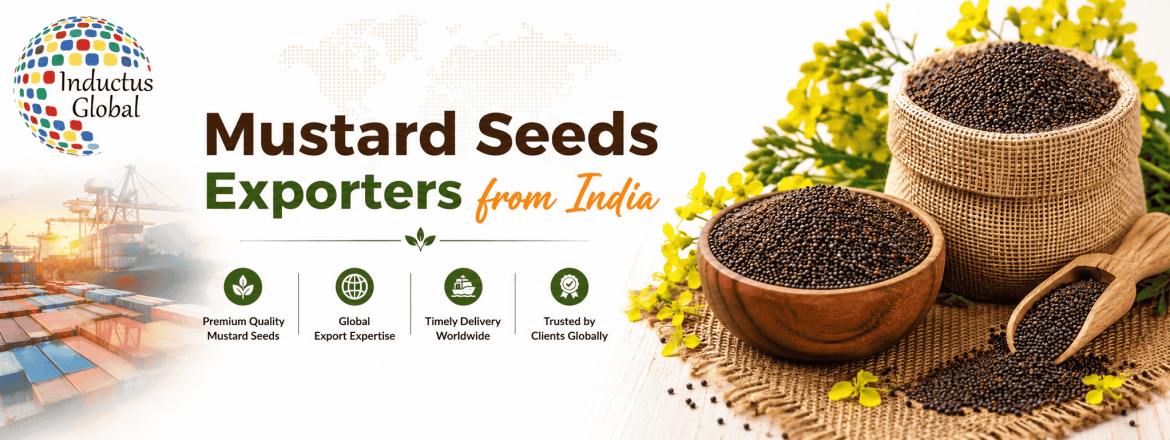
Why Global Importers Choose Mustard Seeds Exporters from India
Introduction
“Mustard is one of the great flavor builders of the world.”
— Chef Wolfgang Puck
Mustard seeds are a staple in kitchens everywhere, but India stands out as the go-to source for top-notch varieties. Whether it’s the yellow, brown, or black mustard, each brings its own punch, some mild and nutty, others sharp and aromatic. Indian farmers know their craft, and the country’s farming traditions go way back, which gives their seeds a reputation that buyers trust.
From the sun-drenched fields in Rajasthan and Uttar Pradesh to busy factories shipping worldwide, mustard seeds exporters from India thrive. You’ll find these seeds in everything: condiments, spice mixes, pickles, oils, and specialty products.
Their bold flavor and versatile uses have hooked food companies everywhere, and demand just keeps climbing. With natural ingredients becoming more popular globally, India stays in the lead, reliably supplying Asian, European, North American, and Middle Eastern markets with quality and volume.
India’s Hallmark: Premium Mustard Seeds Export Market
India’s mustard seed industry really stands out in multiple sectors. It’s where age-old farming meets modern processing and smart export strategies. Mustard has been part of Indian food, medicine, and daily life for generations, so it’s no surprise the industry is thriving internationally.
One can find three main types of mustard seeds cultivated in India: Brown Mustard (Brassica juncea), Yellow Mustard (Sinapis alba), and Black Mustard (Brassica nigra). Each one fits into a different global need, whether it’s in food manufacturing, spice blends, or oil extraction.
Indian seeds turn up everywhere: European sauces, American food seasonings, Japanese fermented dishes, Middle Eastern spice blends and pickles, Asian curries, and marinades. They’re also used for both cold-pressed and refined oils, plus a whole lineup of Ayurvedic and herbal products.
But India’s reach goes beyond just food. Mustard seeds from India are packed with essential oils and nutrients, making them hot commodities in the pharmaceutical, nutraceutical, and wellness markets. Here’s what really sets India apart: scale, tradition, and a solid export backbone. Farmers have spent lifetimes perfecting their techniques, and exporters haven’t cut corners on quality, such as cleaning, grading, and packaging.
That’s why Indian mustard seeds have a reputation for purity, consistent flavor, and impressive oil yields. Global buyers keep coming back, knowing they’ll get dependable supply and quality every time. If you’re looking for a reliable partner in mustard, India’s got you covered.
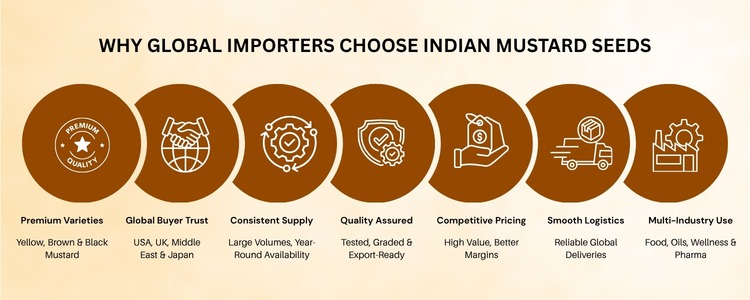
Why Importers Trust Indian Mustard Seeds?
Global buyers keep turning to Indian mustard seed exporters, and honestly, it’s the best one can get in markets. The combination of quality, scale, price, and reliability isn’t something you find everywhere.
- India is one of the world’s largest mustard seed producers. Farms spread across Rajasthan, Haryana, Uttar Pradesh, Madhya Pradesh, and Gujarat crank out massive volumes, so exporters can handle big international orders without breaking a sweat. Importers get the advantage of steady supply all year, export-ready stockpiles, consistent procurement, and less risk of running into supply hiccups.
- Indian mustard seeds are on shopping lists all over the world. The United States needs them for sauces, spice blends, and processed foods. Over in the UK, food makers need especially in condiments and pickles and have built up strong relationships with Indian exporters and count on them for quality. The Gulf countries’ growing markets and food factories rely on India for their expanding needs. Buyers in Japan don’t mess around when it comes to purity or traceability, and Indian suppliers keep meeting their high standards.
- Price is another big draw. Indian exporters offer solid value per ton, cheaper procurement, flexible shipment sizes, and no cut corners on quality. That lets buyers boost their margins without sacrificing product standards. On top of all that, the export infrastructure is legitimate. Top exporters use advanced cleaning, sorting, grading, and packaging, every shipment lines up with buyer specs and international regulations.
As natural ingredients, ethnic food, plant-based options, and cold-pressed oils go mainstream, the appetite for Indian mustard seeds stretches further every year. So, if you’re looking for a reliable partner to secure your supply, India’s still a smart move.
Where Standards Meet Logistics: Overview of Mustard Seeds Trade
Successful mustard seed trading isn’t just about harvesting the crop. International buyers look for suppliers who can demonstrate solid quality assurance, reliable logistics, strong compliance practices, and a supply chain that can withstand disruptions. Mustard Seeds exporters of India qualify:
- Reliable Supplier Networks
Take established exporters like Inductus Global, they connect buyers around the world with carefully chosen farms and processors. The result is consistency and reliability at every step, from the field to the buyer’s door.
- Rigorous Quality Control
Major exporters don’t cut corners. They run pre-shipment checks, send samples to labs, monitor moisture, eliminate foreign particles, grade by size and purity, and keep close tabs on every batch. These steps aren’t just to pretend they’re how exporters stick to international quality standards.
- Smart Logistics
India has a serious edge on tech/IT-driven logistics systems. With major ports and a well-developed export system, shipments move efficiently to North America, Europe, Asia, the Middle East, just about anywhere global buyers need them.
- Competitive Pricing
The Indian agricultural system keeps production costs low. That lets exporters deliver high-grade mustard seeds at prices that stand up against competitors worldwide.
- Pitfalls & Risks involved in Mustard Seed Trade
Importers don’t always have an easy ride. They run into uneven quality, supply gaps, paperwork slowdowns, delivery hiccups, and the risk that products might not meet local rules.
- How Skilled Exporters Solve These Problems
- The pros keep risk in check through certified supply networks, clear quality checks, transparent paperwork, real-time updates on shipments, smart inventory planning, and responsive customer service.
Lately, industry reports back up what buyers are noticing. India is now a leading source for mustard seeds, thanks to tougher quality control, better shipping options, and growing global demand. For companies looking for value and dependability, India is a smart choice.
Conclusion
In the current scenario, the Global mustard seed market leans heavily toward Indian mustard seed exporters who know how to grow top-quality seeds, can deliver reliably, and compete on both quality and price. They start with great seed varieties and strong farming networks.
Their processing tech is modern, their logistics run smoothly, and, just as important, they’ve earned a reputation for being dependable. That’s why you’ll find Indian mustard seeds with major food manufacturers in the U.S., condiment companies in the U.K., processors in Japan, and distributors all over the Middle East. Buyers aren’t just saving money, they’re also gaining real value through consistent quality and reliable service.
A reliable sourcing partner, who can handle large volumes, never cuts corners on quality, and exhaustively understands the mustard seed business, a company like Inductus Global gives you a reliable route into one of the world’s strongest agricultural export markets. It’s about more than just supply, it’s about building a partnership you can trust.

Pratibha Soni
I write where strategy meets storytelling. As a passionate writer and literary enthusiast, I craft business-focused content that transforms trading insights into compelling narratives. Drawn to global business ecosystems, I enjoy turning research, innovation, and ideas into content that informs, connects, and inspires. With an analytical mind and a creative soul, I bring curiosity, collaboration, and a sharp eye for detail to every project. Adaptable and growth-driven, I believe the right words do more than communicate; they leave an impression.