

Apparel Sourcing for UK Importers: A Step-by-Step Procurement Guide
Into the India’s Apparel Market 2026
The Indian apparel industry has come a long way from its original tag as a manufacturer. By 2026, it will be one of the most influential apparel ecosystems in the world. This can be attributed to the huge base of textiles, advanced production infrastructure, and massive investments in automation and sustainable manufacturing.
The move India has made has gone beyond competition with Global markets for cost alone, India has shifted its priority to innovation, compliance, and supply chain resilience.
A notable trend is the increasing use of digital manufacturing technologies and traceability systems in export-oriented factories. At the same time, global brands that want to find alternatives to the concentrated sourcing hubs are extending their procurement from India. This change is not random, it shows trust in India’s capability to provide quality, scale, and flexibility
Why should you Choose Apparel Sourcing from India?
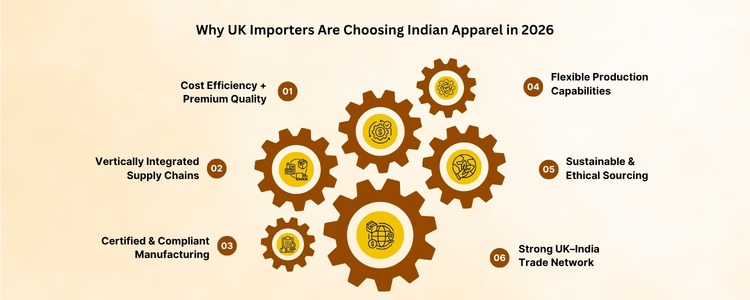
The old notion that India’s strength lies only in cheap labor ignores the fact that the country’s apparel sector is fairly sophisticated. The real strength of India is to achieve the balance between cost efficiency, quality, scalability and compliance.
It has large economies of scale thanks to its vertically integrated supply chain, from fiber and fabric production to garment making. Second, a highly skilled workforce is essential for both technical production and design innovation. Thirdly, more and more exporters fulfill international standards and have certifications like GOTS, BSCI and SEDEX that give confidence to international buyers.
India also offers great diversity in production, from fast-fashion collections and knitwear to premium cotton apparel and specialized garments. India often gives more sourcing flexibility than Vietnam’s capacity constraints or Bangladesh’s narrower product focus. With incorporation of water-efficient facilitation, renewable energy processing, and ethical sourcing, it further hastens the appeal. UK wholesale retailers use these advantages mitigating risks and accelerating the market supply chain process.
UK: Leading Global Importer of Indian Apparel
The relationship between the UK and India’s apparel sectors is underpinned by decades of commercial trust, cultural familiarity and established logistics networks. Indian-made garments, especially cotton apparel, knitwear, home textiles and ethnic fashion, have long been popular with British consumers.
Brexit has driven a push to diversify trade and UK firms are bolstering sourcing ties with trusted overseas partners. Given its manufacturing capacity, regulatory alignment and large exporter base, India is a natural choice.
The key import hubs in the UK continue to distribute Indian apparel throughout the country, to retailers from high-street chains to niche fashion brands. UK buyers are looking for more than just competitive pricing. Sustainability credentials, product customization, shorter production cycles and transparent sourcing practices are increasingly becoming decisive procurement criteria.
This growing demand demonstrates a strategic interdependence rather than a temporary trade trend. UK importers entering the market today are joining a mature and resilient sourcing network developed over generations.
Step-by-Step Procurement Guide for Apparel Sourcing from India to UK
Step 1 : Prep & Strategy
Clarity is the key to successful sourcing. Determine your main objective: cost savings, high quality, sustainability, shorter lead times or diversification of products. Assess your current supply chain maturity and identify gaps. Importers that develop measurable sourcing goals prior to engaging with suppliers, consistently have better procurement results.
Step 2: Identification & Vetting of Suppliers
You need to find suppliers. Not just doing searches on the web. Use trade associations, sourcing platforms, industry exhibitions and apparel trade fairs. Check factory capabilities, export history and certifications like GOTS, BSCI, SEDEX etc. Ask yourself: Are you selecting a strategic partner or a vendor? Red flags include inconsistent communication, limited documentation and unrealistic pricing.
Step 3: Negotiation and Adherence
Price is just one element of successful negotiations. Consider minimum order quantities, payment terms, delivery schedules, quality guarantees, and compliance requirements. Also, the impact of currency fluctuations on profitability, and the value of a potential hedging strategy. Long-term partnerships prove to be more valuable than transactional purchasing arrangements, as experienced importers know.
Step 4: Quality Control & Logistics
Ensure quality control throughout production, not just before shipping. Third-party inspections, pre-production samples and factory audits reduce costly surprises. When organizing logistics, weigh the cost-effectiveness of sea freight against the speed advantages of air freight. Most sourcing failures are caused by underestimating customs procedures, inaccurate paperwork or unreasonably short lead times.
Step 5: Managing Relationships & Scaling
The big importers develop relationships with suppliers after contracts are signed. Transparent communication, collaborative forecasting and shared growth objectives form the foundation of reliability. One UK apparel buyer says the company experienced a big cut in sourcing disruptions after it moved away from multiple short-term suppliers to a smaller group of trusted manufacturing partners.
Risk & Challenges Involved
Sourcing apparel from India definitely comes with its share of opportunities, but you can’t ignore the risks. Quality can be unpredictable, so you need tight pre-production checks, clear contracts, and regular inspections to keep things on track. Currency swings are another headache, smart financial planning and rock-solid payment terms are a must.
Then there’s logistics a lot of times ports get jammed up, customs can drag things out, and shipments hit snags. Having backup plans and spreading shipments across different schedules helps you stay flexible. On top of that, intellectual property needs protection, so get those confidentiality agreements in place and lean on legal safeguards.
Labor practices and sustainability are under a microscope these days. You have to audit suppliers regularly and make sure they’re playing by the rules. All these challenges are very real, but none of them are deal-breakers. The ones who manage and mitigate risks by learning from them are in better luck than the ones who repeat negligence.

Conclusion: Time to Choose Indian Apparel
India’s apparel industry provides a powerful combination of scale, quality, innovation and sustainability for UK importers. The UK’s historic sourcing partnership with India is testament to the strength of an ecosystem built on trust, infrastructure and commercial alignment.
There is great value in a proper sourcing process and it helps reduce risks in the operation. The sourcing process involves the entire process from developing sourcing strategies, qualifying suppliers, to ensuring quality levels and managing supplier relationships.
The market window is also shifting rapidly. With more global buyers sourcing more in India, competition is heating up for high-performing manufacturing partners. Why wait on the sidelines while your competitors are building stronger Indian partnerships!

Pratibha Soni
I write where strategy meets storytelling. As a passionate writer and literary enthusiast, I craft business-focused content that transforms trading insights into compelling narratives. Drawn to global business ecosystems, I enjoy turning research, innovation, and ideas into content that informs, connects, and inspires. With an analytical mind and a creative soul, I bring curiosity, collaboration, and a sharp eye for detail to every project. Adaptable and growth-driven, I believe the right words do more than communicate; they leave an impression.