

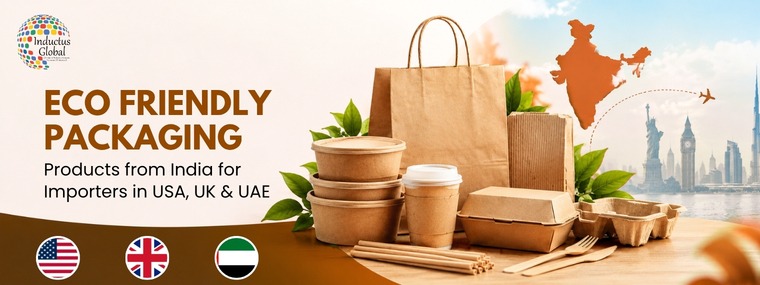
Eco Friendly Packaging Products from India for Importers in USA, UK & UAE
The challenges of importing packaging product are becoming more relevant as businesses seek to reduce waste, ensure product safety during transit, and adhere to the principles of ecological sustainability. The conundrum of finding the right balance between eco-friendliness and reliability is particularly acute for importers in the United States, United Kingdom, and United Arab Emirates.
India has developed a sophisticated packaging manufacturing ecosystem that produces paper bags, corrugated boxes, moulded-pulp packaging, reusable bags, and other products. This diversity can be beneficial to foreign buyers looking to find the right packaging format for their needs.
However, buyers should be aware that not all ecological products are universal solutions. The material characteristics, end-of-life, and product protection capabilities must be analysed in detail before large-scale purchases.
Understanding Why International Buyers are Interested in Indian Packaging Products
India’s packaging industry covers a wide range of sectors, from food processing and retail to pharmaceuticals and agriculture. It has the infrastructure to meet the needs of different industries and produce a wide range of products.
The variety is further expanded by the presence of manufacturers offering different levels of customization and price ranges. Thus, the foreign buyer can choose between paper bags, corrugated cardboard boxes, paper-based packaging material, reusable bags made of textile fabric, and other options.
However, it is essential to understand that different manufacturers have varying competencies. Thus, a company that produces paper bags may not have the expertise to engineer specialized food packaging. Each prospective buyer should develop a list of requirements and cross-check it against the capabilities of potential manufacturers.
Diverse Eco-friendly Packaging Materials and Formats
The term Eco Friendly Packaging Products covers a wide range of materials and formats. Thus, paper and kraft packaging includes bags and boxes made of different types of paper, cardboard, and wrapping paper. Corrugated cardboard boxes are a separate category that offers excellent protection.
Moulded-pulp packaging is another popular option made from recycled paper products. Reusable fabric bags made of cotton are usually used for retail and promotional purposes. Some biodegradable or compostable materials are also produced in India. However, buyers should be aware that different types of compostability require different conditions to be met.
Thus, the choice of material and format should be based on the specific needs of the product and the local recycling infrastructure in the target country.
Key Considerations for USA Buyers
American importers should carefully review the requirements for their packaging products. Thus, food packaging usually has more stringent requirements than retail or shipping bags. In addition, there are specific regulations governing retail and shipping packaging.
Therefore, buyers should obtain the necessary specifications and supporting documents from manufacturers. Claims such as biodegradability, compostability, or recyclability should always be supported by relevant documentation.
In addition, the packaging’s performance during transit is critical. Thus, an importer should always check if the chosen material can withstand the stresses associated with transportation and storage. A failed package during transit leads to product loss and defeats the purpose of eco-friendly packaging.
Key Considerations for UK Buyers
The importance of reducing waste makes UK an interesting market for eco-friendly packaging buyers. However, there are specific nuances associated with importing into the United Kingdom. Thus, paper-based packaging made of virgin fibers can be a good option for the British market.
However, the presence of recycling infrastructure means that buyers should also pay attention to recyclability. Therefore, paper-based packaging should not be glued or coated with non-recyclable materials.
As in the United States, UK buyers should also double-check the validity of any sustainability-related claims made by manufacturers. For example, a company selling compostable packaging should be able to demonstrate and document the specific composting process required for its products.
Many UK-based companies also have specific requirements for retail and food packaging. Therefore, it is essential to pay attention to the details of the target market and not make unsubstantiated assumptions about the capabilities of a particular material.
Key Considerations for UAE Importers
The UAE is a crucial market for many international companies, including packaging manufacturers and suppliers. The demand comes from different sectors, including retail, hospitality, food, and logistics. Therefore, importers should consider the local climate and its impact on different materials.
For example, extreme temperatures and humidity can affect paper-based packaging, adhesive properties, and compostable materials. At the same time, local authorities have specific regulations regarding single-use packaging. Therefore, it is essential to research import regulations and restrictions for the target market in detail. The requirements may vary for different product categories as well as emirates.
For distributors aiming to cover multiple markets, finding a packaging option that meets the needs of all would be ideal. However, such a solution should be based on extensive research rather than assumptions about universal requirements.
Assessing Potential Packaging Suppliers
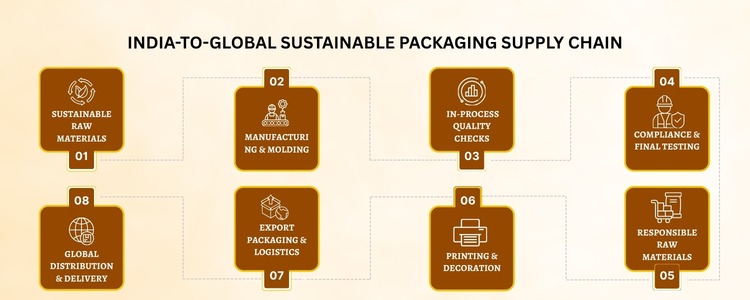
A potential supplier’s capabilities should be carefully reviewed before placing an order. Thus, an importer should not limit their research to the contents of a company’s website. It is essential to analyse a manufacturer’s production capabilities, materials, quality control procedures, and export experience. In addition, buyers should verify the accuracy of the information provided and ask for supporting documentation.
The following questions should be part of a buyer’s assessment:
- What materials and product formats does the company offer?
- What product specifications and test results can the company provide?
- What is the company’s minimum order size?
- How does the company ensure product quality and consistency?
- Can the company meet the specified delivery schedule?
- Does the company have experience working with the target market?
Factory visits, third-party audits, and references from other buyers can help verify a foreign manufacturer’s credentials. For first-time orders, requesting a sample or trial shipment is a good idea.
Product Customization Options, Pricing, and Bulk Purchase Terms
Most packaging products require customization in accordance with the requirements of the importing company. Thus, domestic manufacturers can offer a wide range of options, from printed paper bags to custom packaging solutions. However, customization usually comes at a price, and buyers should be aware of the nuances of production. Thus, print options, finishing, tooling, and minimum order sizes should be considered before finalizing the order.
It is also essential to understand the financial implications of a purchase. Thus, an importer should always calculate the total cost of a purchase, including the cost of transportation and any additional costs. Carriers play a critical role in determining the final price of an order. Therefore, buyers should carefully review the terms of delivery, payment, duties, and any other expenses.
When purchasing in bulk, an importer should also pay attention to the validity of prices. Most manufacturers offer special pricing for regular customers. Therefore, a slight increase in the selling price may be justified if a buyer can rely on a consistent supply of high quality material. Similarly, an importer should take into account the risk of delivery delays or product defects.
Verifying Eco-friendly Product Claims
The characteristics of eco-friendly packaging often depend on the specifics of its use. Thus, paper bags can be a sustainable solution, but only if they are used repeatedly and not unnecessarily. The same goes for reusable bags, which require proper care to be used multiple times. In addition, it is essential to pay attention to the disposal conditions, which are particularly relevant for biodegradable or compostable materials.
Therefore, it is essential to obtain documentation from the manufacturer that confirms the sustainability claims. Thus, buyers should request information about the recyclability of paper-based materials, as well as the presence of relevant certifications. In addition, such documents should include test results demonstrating the company’s ability to meet specific requirements.
It is also necessary to consider the extent to which a particular type of packaging can reduce waste. Thus, it is essential to pay attention to the protection level, which is especially important for fragile or perishable goods. The integrity of the product is a critical factor in sustainability, as compromised packaging reduces the value of the shipment and requires the importer to bear the costs of returns and damage.
Developing a Sustainable Buyer-Supplier Relationship
A long-term relationship with a supplier requires a clear understanding of the details of ordering and a thorough analysis of the documents provided. Thus, an importer should always receive and approve samples of a product before full-scale production begins. In addition, a buyer should clarify the conditions for returning, replacing, and accepting defective products. At the same time, manufacturers should inform foreign buyers about any changes to raw materials, production capabilities, or shipping terms. This is even more relevant in the context of India’s packaging manufacturers, who operate in a competitive market.
For buyers looking to use customized packaging material, it may also be helpful to provide specific instructions and save approved samples for future reference.
Conclusion
India has a diverse packaging industry with many manufacturers offering a wide range of products. However, the choice of a particular supplier always depends on the specific needs of a buyer. Eco-friendly packaging products are not always appropriate substitutes for traditional materials. Thus, an importer should pay attention to the characteristics of a product, its intended use, and the requirements for its end-of-life.
In addition, it is essential to study local legislation and determine the most appropriate type of packaging for a specific market. Sustainable packaging materials should also be evaluated in terms of cost-effectiveness. Thus, a particular type of paper bag may seem like an environmentally friendly option, but its cost and performance during transit will be much worse than a cardboard box.
A sample order and detailed quality assurance documentation can be an excellent way to find a reliable supplier. This is even more important when purchasing large quantities, as well as when looking for a long-term packaging supplier.
1. What eco-friendly packaging products can be sourced from India?
Common options include kraft paper bags, corrugated cartons, moulded-pulp inserts, reusable fabric bags and selected compostable packaging products. Availability depends on the manufacturer’s capabilities.
2. Are Indian eco-friendly packaging products suitable for the USA?
They can be, provided the products meet the applicable US requirements for their intended use. Importers should verify material safety, relevant documentation and any food-contact requirements.
3. What should UK buyers check before importing sustainable packaging?
Buyers should examine material composition, recyclability, applicable packaging-waste obligations and the evidence supporting environmental claims. Current requirements should be verified before ordering.
4. What packaging factors matter for UAE buyers?
Buyers should consider heat, humidity, storage conditions, product protection and applicable import rules. Packaging intended for multiple markets should be checked against each market’s requirements.
5. Can Indian manufacturers customize eco-friendly packaging?
Yes. Depending on their capabilities, manufacturers may customize dimensions, printing, materials, handles, inserts and packaging formats. Minimum order quantities and additional lead times may apply..
6. Should buyers request samples before placing a bulk order?
Yes. Samples allow buyers to assess material quality, dimensions, printing and durability. Testing may also be necessary for food-contact applications or products requiring specific environmental performance.

Diptanshu
Leading research and marketing at Inductus Global, Diptanshu drives the company’s vision to transcend traditional trading through thought leadership in import-export. He spearheads a research-driven approach that prioritizes quality over price arbitrage, positioning Inductus as a strategic sourcing partner rather than a transactional intermediary. His work spans market intelligence, supply chain innovation, and trade dynamics, while playing a key role in sales and business development.