


How to Reduce Procurement Costs Using
Smart Vendor Strategies
The growth of competitive international marketplaces has introduced new elements to the procurement function. Procurement has always been considered an expense to be minimized, but today, procurement professionals and business executives are under increasing pressure to extract maximum value from every dollar spent on procurement. The most efficient means of achieving this is through using intelligent vendor sourcing techniques and agile procurement strategies that provide a balance of cost, quality, and reliability.
This article will provide examples of actionable, research-supported recommendations for reducing procurement expenditures while maintaining long-term supplier partnerships and maximizing the agility of operations.
1. Understanding the New Procurement Landscape
The concept of procurement has changed significantly over time. In today’s world, procurement is no longer simply a transactional purchase; it is now a means by which companies create strategic value through the use of procurement strategies. While business processes continue to evolve and become increasingly connected by technology, procurement leaders must continually assess and develop strategies to adapt to new challenges and opportunities that arise due to changes in the way that procurement teams operate.
Procurement teams now rely heavily on data-driven insights to assess supplier performance, negotiate more intelligently, and accurately forecast future market movements due to the development of technological, analytical, and global capabilities.
2. The Role of Smart Vendor Sourcing
Smart vendor sourcing supports cost-effective procurement and consists of finding, evaluating, and establishing partnerships with suppliers that provide not only competitive pricing but also strategic advantages like innovation, agility, and reliability.
With digital tools, companies can analyze supplier data, monitor performance metrics, and identify areas for cost savings. Through careful evaluation of vendor compliance, financial stability, and sustainability practices, procurement executives can mitigate risk and long-term costs.
By creating a structured vendor sourcing model, procurement teams are also able to keep a flexible supplier pool, which is critical in times of market volatility and supply chain disruption.
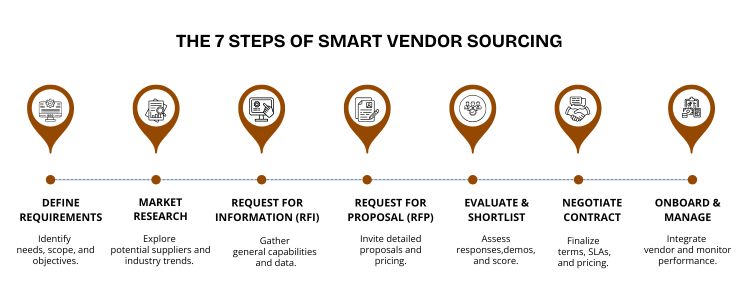
3. Strategic Procurement as a Competitive Advantage
Creating strong procurement strategies can move the function away from a cost center to one of generating value. Strategic procurement takes into account the total cost of ownership (TCO) rather than just the initial price. TCO considers indirect costs associated with the item, such as logistics, maintenance, and after-sales service. For example, a supplier may offer a slightly higher unit cost; however, they could also provide greater reliability, leading to fewer operational disruptions and rework expenses over time.
Companies that align their procurement function with their overall business goals (e.g., sustainability or innovation) will see a tremendous advantage over their competition in terms of profitability and market resiliency.
4. Building Long-Term Vendor Relationships
Trust and collaboration between the parties are more important contributors to cost efficiency than aggressive negotiations. Developing long-lasting vendor relationships creates a mutual understanding and transparency between the organizations.
Additionally, engaging suppliers in the early phases of the product development or production planning processes enables businesses to tap into supplier expertise and technology, which can result in optimized designs and savings on materials.
Establishing strong communication channels will allow both the business and supplier to plan for fluctuations in demand, leading to better forecasting and lower inventory carrying costs.
5. Leveraging Data Analytics and Automation
Data analytics have become increasingly important for finding opportunities to save money through procurement. Advanced analytical tools will allow businesses to evaluate supplier performance, track delivery schedules, and identify pricing inconsistencies.
The use of automation increases the efficiency of the procurement process by eliminating manual involvement in repetitive activities such as creating purchase orders, reconciling invoices, and monitoring contracts. This reduces the cost of administration and increases the accuracy and compliance of procurement processes.
By combining analytics and procurement technologies, an organization is better able to make informed purchasing decisions and negotiate with suppliers effectively.
6. Diversifying Vendor Base through Global Sourcing
The competitiveness of an organization may be limited when restricting procurement to local suppliers exclusively. Global sourcing companies provide broader access to suppliers and additional options, usually at lower costs with greater diversification of risk.
Businesses should take into consideration the geopolitical risks associated with global sourcing (e.g., tariffs) as well as trade tariffs and quality standards when sourcing globally. Conducting adequate due diligence, as well as auditing suppliers, will aid in confirming that cost savings are not at the expense of reliability or ethical standards
7. Integrating Vendor Management for Cost Control
Strong vendor management system allow organizations to effectively track supplier performance, verify compliance as well as enforce contract terms. By maintaining a centralized record of each vendor, companies can analyze their spending patterns and consolidate purchases, allowing them to negotiate for improved pricing with all vendors.
Routine performance evaluations, feedback loops and scorecards help keep suppliers accountable and enable them to stay in alignment with business objectives.
8. The Impact of Logistics and Supply Chains
Cost reduction relies heavily on efficient logistics, inventory and supply chain optimization. Optimizing material transportation, warehousing and inventory management will lower procurement costs significantly.
Working closely with suppliers on demand forecasting and distribution strategies eliminates delivery delays; thereby, reducing excess stock. Companies implementing integrated logistics solutions will experience improved visibility in real-time, accelerating decision-making and enhancing predictability of procurement costs.
9. Outsourcing Procurement Services
The use of professional procurement services firms, for many organizations, can be a useful opportunity to improve business process efficiency and decrease the burden placed on internal departments. These specialist firms offer knowledge in various areas such as market and procurement intelligence, contracting and distribution, and compliance management. The resulting number of organization’s working with these firms has resulted in many cases with clear, measurable savings.
Additionally, 3rd party supply networks and technology platforms provide businesses with access to larger and greater variety of suppliers allowing them to take advantage of economies of scale.
10. Negotiation Tactics That Deliver Sustainable Savings
Negotiation is one of the most powerful tools to enhance supply chain savings, but negotiation is not just about using a strong arm to get the lowest price point. Negotiation can only be effective when you and your supplier have mutual gain from the outcome.
Procurement leaders have access to all the data regarding the supplier’s cost structure (e.g., cost to manufacture), how it relates to other suppliers in the industry (e.g., industry benchmarks) and the supplier’s performance record (e.g., delivery performance, customer satisfaction). With the right information in hand, procurement leaders will be able to negotiate a fair price point and maintain supplier goodwill as well.
11. Emphasizing Sustainability in Procurement
The moral implications of Sustainability Procurement aside, buying from sustainable vendors also makes financial sense. Vendors that follow sustainable business practices generally run their businesses more efficiently (thus consuming fewer resources), and generate less waste as a result. Additionally, partnering with environmentally responsible suppliers improves branding and provides long term assurances of business continuity in a time where companies are facing more extensive government regulation globally.
12. Training Procurement Teams for Future Readines
The success of procurement is driven by the capability of the people who perform it. As organizations become increasingly focused on results, continuously training teams on digital tools, market analysis, and negotiation gives them the ability to identify where savings can be achieved and leverage data to support their decision-making.
When investing in professional development, sourcing organizations can respond more effectively to new and emerging trends, such as the use of artificial intelligence in sourcing platforms and cloud-based applications for supply chain continuity and transparency.
Conclusion : Turning Procurement into a Strategic Lever
Organizations can reduce their procurement costs with innovative vendor management solutions through an integrated approach that leverages data-driven insights (from sourcing), actionable insights (from suppliers), and enhanced supplier collaboration. The most successful organizations will not only provide significant cost savings but will also generate long-term competitive advantages by creating partnerships that allow them to leverage these capabilities.

In a highly competitive marketplace with low profit margins and high customer demand, companies that excel in vendor sourcing and procure in a manner that is responsive to innovative disruptions will have sustainable, profitable business models.
Frequently Asked Questions (FAQ)
Yes. Most cost savings come from better planning, supplier collaboration, and operational efficiency—not from lowering product standards.
Not always, but it offers diversification, competitive pricing, and access to specialised manufacturing, which can collectively reduce costs.
By maintaining clear quality benchmarks, regular audits, and strong communication with suppliers.
Yes. Packaging influences freight charges, product safety, storage costs, and customer perception.
Improving forecasting accuracy and streamlining logistics typically deliver the quickest, most measurable savings.
The manufacturing, retail, pharmaceutical, automotive, and consumer goods industries would be among those that rely most heavily on a company’s good sourcing practices