

Private Label Food Products: The 2026 Sourcing Guide Every Brand Owner Need
The food retail sector is evolving rapidly. Consumers are not just loyal to brands anymore; they place more importance on value, quality of products purchased, and accessibility of the products purchased. Retailers, distributors and entrepreneurs can now create their own brands using private label food products.
Store brands (or “private label”) in all parts of the world have changed from being low-priced substitutes to being direct competitors to established food manufacturers. Private label brands are important contributors to growth of sales in supermarkets within Europe and multiple large retail chains within Asia.
For brand owners and retailers who plan to enter the private label food business in 2026, sourcing is the key to success. Sourcing refers to the process of determining manufacturers, maintaining quality, controlling logistics and developing a supply chain necessary for sustained growth.
This paper sets out the key sourcing principles all brand owners should consider when starting or developing a private label food business
Why Are Private Label Food Products Growing Rapidly?
Today’s private label products are no longer considered generic—they have transformed into a distinct approach to branding by providing unique innovation, higher margins, and improved control over the retailer’s product mix.
The continued growth of private label products can be attributed to specific trends within retail:
1) Retailers now desire to play a larger role in their own product offerings versus relying solely on third-party products, leading many retailers to develop their own private labels as ways to develop customer loyalty.
2) As consumers become more familiar with store brands, they feel more comfortable trying them. Price is the determining factor once they are satisfied with piece packaging, taste and other quality benchmarks.
3) Businesses are using private label to test new product lines such as organic snack foods, plant-based meal options or regional specialty food products.
Therefore, the overall market for private label packaged food continues to expand across multiple channels including traditional grocery retailers, online grocery retailers and specialty food retailers.
How Should Brand Owners Begin Private Label Food Sourcing?
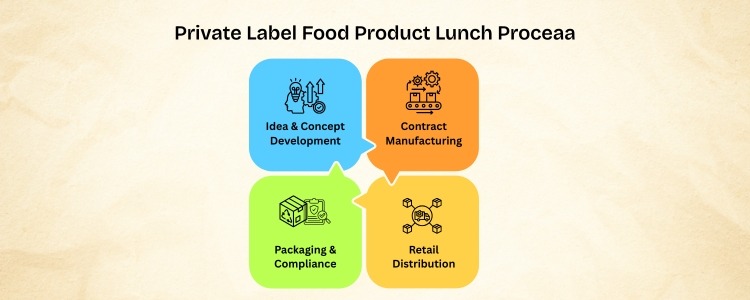
To realize a successful private label food brand, more than product category selection is needed, as there are many steps necessary in successfully completing the sourcing process.
1. Select The Correct Product Category
Before contacting any manufacturers, the business must decide what segment of the food industry they would like to enter. Some of the most popular food categories include:
- Snack foods
- Ready-to-eat meals
- Condiments/Sauces
- Frozen food items
- Health related snack foods
Conducting market research is essential for retailers to gain an understanding about consumer needs, performance of various price points, and competition on store shelves for the category that will be selected. If a clear focus on product category can be established, the sourcing of private label food becomes much easier as many both food suppliers and retailers will be able to derive successful retail sales from private label sales.
2. Locate A Quality & Responsible Private Label Food Manufacturer
The manufacturer forms the foundation of the private label product. A trustworthy private label food manufacturers should have the following requirements:
- Food Safety Certifications
- Production ability/Capacity to Expand (potential for meeting future demand).
- Flexible Packaging Solutions
- Clear Pricing Structure
While the vast majority of retailers will audit manufacturers facilities before committing to a long-term agreement, retailers will want to have assurance that adequate quality control procedures, ingredient sourcing and proper sanitation practices have been established within the manufacturer’s production facility to meet established international compliance guidelines.
In most cases, the relationship between the manufacturer of the product and the retailer will be developed into a multi-year partnership rather than just a short-term financial transaction.
3. Understand Regulatory & Compliance Requirements
Depending on where you are selling your food products, there are many different regulations relating to the manufacture of food, and this means that there are a lot of different compliance requirements companies must comply with when selling food products in multiple countries.
To comply with these regulations, a company must follow:
– Ingredient approvals
– Labeling regulations
– Shelf-life testing
– Packaging regulations
If your product does not comply with these regulations, your company may have to recall its product or will be delayed in their ability to get the product on the market.
Therefore, many companies will use procurement specialists or a Product Sourcing Agent who knows the laws and regulations in multiple countries and will work with both companies to ensure that both have all of the proper documentation and are in compliance with the food laws in all of the countries you are selling to.
What Role Does Branding Play in Private Label Success?
When private labels evolve from simple marketing categories, They do better in the marketplace. Retailers who put money and time into building brands have a greater chance of getting customers to be loyal. Packaging, product names, and storytelling have a larger impact on whether or not a customer buys a product than any other element of retail.
Example: Food retailers are increasingly presenting their private label food brands as premium or specialty items rather than low-cost substitutes.
- Key branding elements:
- A clear identity for the product
- An attractive package design
- Transparency on all ingredients in the product
- Consistency in quality across all products
Consumers care about where their products come from and require transparency on what the product contains. The better a brand communicates this information, the more likely they will outperform the competition.
How Can Retailers Build a Stable Supply Chain?
To support private label success, retailers need to provide stable and reliable supply chains. Retailers must ask their suppliers to produce products in accordance with market demand and minimize any potential inventory shortages.
Some key considerations are:
Diverse suppliers
Using more than one supplier helps reduce the risk associated with the dependence on one source for a product. Many retailers have more than one manufacturer to reduce the risk of disruptions to production.
Demand forecasting
The use of sales data and seasonal data helps retailers estimate product demand using data from suppliers who can properly set production schedules to minimize delays.
Logistics planning
Retailers must have a comprehensive distribution plan for the efficient delivery of food products that have short shelf lives by coordinating transportation, warehousing, and inventory management efforts
What Are the Cost Advantages of Private Label Products?
Despite the numerous advantages that private label items can provide to retailers and brand owners alike (including improved margin management), one of the largest benefits retailers typically see when they have private label goods in their stores is better control over their margins, as retailers do not pay for outside brand marketing costs and therefore save money by making more profit from private label goods than from national brands.
In addition to margin management, there are other financial advantages for retailers when they use private label goods, including:
- a) More flexibility with their pricing strategies;
- b) More direct control over the cost of their packaged goods; and
- c) Being able to modify products based on their customers’ needs.
While it is important to seek out cost savings when using private label goods, the quality of the finished product must never be compromised. If a retailer does not produce a quality private label good, it won’t take long for them to suffer a loss of credibility with customers
What Trends Will Shape Private Label Food Products in 2026?
The private label industry is advancing rapidly, and as such, there are trends that will continue to influence the sourcing strategies of private label items in the future.
There is an increasing trend for consumers to seek healthier food options; low-sugar snacks, protein-dense items and plant-based items are all examples of the current trend of consumers wanting to eat healthier foods.
Retailers are considering using sustainable packaging methods because there is a significant amount of public pressure for companies to become environmentally responsible. There is a huge customer preference for purchasing items with a regional flavor or food tradition. A great deal of customer trust is created when companies label and trace the ingredients in their private label goods clearly. Retailers who are able to quickly adapt to these trends will have a distinct competitive advantage in today’s retail market.
Conclusion
The concept of Private Label Food is no longer just tied to big box retail chains. More and more entrepreneurs, online retailers and specialty food distributors have stepped into the private label food sector.
However, achieving success in the private label food category requires careful sourcing of products from trusted manufacturers, developing strong and lasting relationships with your suppliers, and an understanding of how rapidly changing consumer expectations will impact sales.
Investing time in product research, regulatory compliance and a stable supply chain will help brand owners develop competitive and profitable private label food products that will differentiate themselves from competitors in a saturated market.
As the global food industry continues to move forward with more innovative and diverse retail options, it is likely that private label strategies will play an increasing role in food commerce overall.
Frequently Asked Questions (FAQ)
Sourcing services companies are professional firms that assist businesses with supplier relationship management, with an emphasis on efficiency and compliance, enjoying a long-term relationship and collaboration.
Agents usually manage single transactions, whereas sourcing companies create a working relationship with suppliers by employing a complete supplier relationship management process with strategic oversight.
Because trust and compliance help assure quality, minimize risk, and ensure delivery performance.
Technology provides transparency, risk monitoring, and automates and enables collaboration between buyers and suppliers across borders.
Sourcing services firms help mediate disputes, enforce contractual obligations and formalize a corrective actions plan, whilst assuring business continuity.
No. Small and medium-sized enterprises will also leverage the knowledge of sourcing services companies and access to their network to connect to global suppliers without excess overhead.