

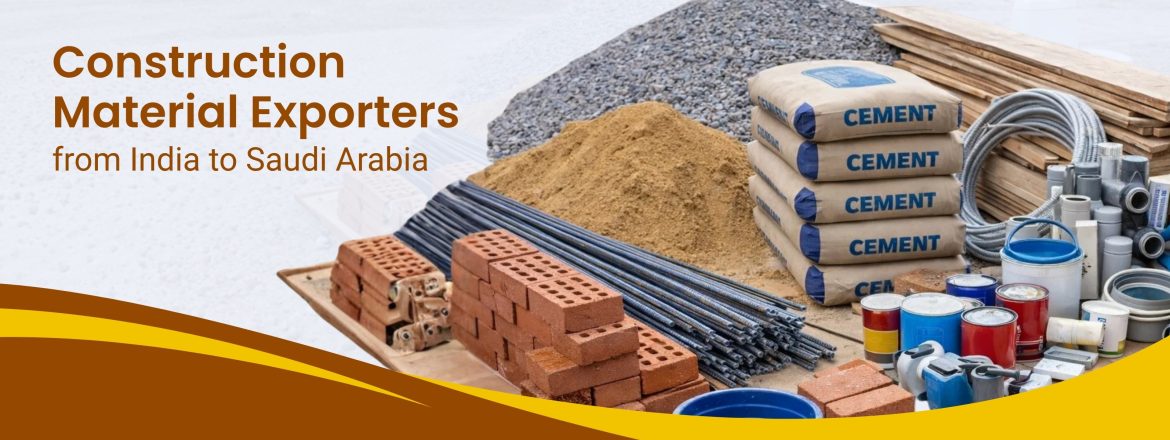
Construction Material Exporters from India to Saudi Arabia
There has been steady improvement to trade between India and the Kingdom of Saudi Arabia over the past ten years; in particular, there has been a substantial increase in the volume of trade between both countries, as they continue to work together towards infrastructure and real estate. As Saudi Arabia continues to develop its ambitious plans for expansion through the 2030 Vision, there is an increasing need for quality and cost-effective construction products. With this increase in demand for construction products there are considerable opportunities for exporters to supply the construction industry in KSA. India’s suppliers are being viewed as major players in the new and changing landscape that is taking place within KSA’s construction industry.
India’s supplier advantages are that it has a large scale of manufacturing, competitive prices, and a variety of products that can be used in either large scale or specialized construction projects. However, if an Indian supplier is interested in supplying KSA there are several areas they need to be aware of: Regulatory framework; logistics planning; and supply capability.
India’s Position in Global Construction Material Trade
India is a large trading centre for construction products, which has been supported by a greater source of industry and raw materials. Various types of construction materials from India can be exported including steel, cement, tiles and ceramics, and prefabricated goods.
For Saudi Arabia, which is still investing money into urban development, tourist infrastructure and industrial cities, India is a trusted source for many products. The close proximity of the two regions provides less shipping time than other global suppliers.
India’s exporters are increasingly aligning their production standards with international standards, helping them to compete in regulated markets such as the Gulf.
Key Construction Materials Exported to Saudi Arabia
India has a large amount of different kinds of products that are shipped out of India (exported) to Saudi Arabia for all different types of construction – residential, commercial and industrial.
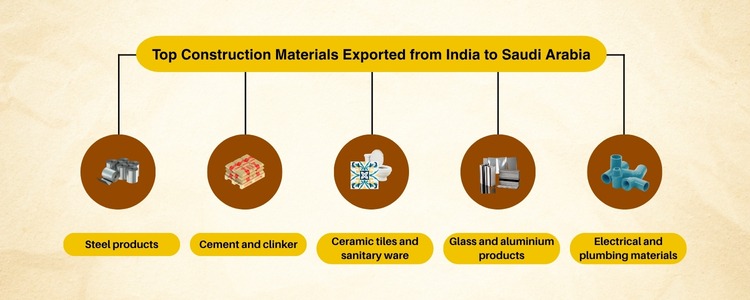
Below are some of the major categories of building materials from India that are being exported to Saudi Arabia.
- Structural Steel and Reinforcement Items
- Cement and Cement Related Products
- Ceramic Tiles and Vitrified Tiles
- Aluminum and Glass Installation Products
- Plumbing Fixtures and Sanitary Products
More and more Indian construction material supply companies are beginning to provide integrated solutions including sourcing construction materials, processing and exporting construction materials.
Specialized Categories of Supply Materials such as Bulk Supplies of Building Materials are extremely important when it comes to major infrastructure projects where costs need to be controlled and where there must be a dependable supply.
Steel and Reinforcement Materials: A Core Export Segment
Steel continues to be one of the most important materials exported in the construction industry. Indian manufacturers have built a reputation that is well-known for their high levels of quality, as well as their adherence to international standards.
TMT steel bars that an exporter can verify are of the utmost importance for providing the reinforcement required to support high-rise buildings, bridges, and industrial buildings. These products are usually preferred due to their strength, long life, and resistance to environmental phenomena.
Saudi Arabia’s continuous growth and expansion of its infrastructure has created substantial ongoing demand for these products, which creates further long-term opportunities for Indian exporters.
Ceramic and Finishing Materials: Growing Demand
Finishing goods make up another important category of export goods. India has quickly emerged as one of the largest tile manufacturers, offering a vast selection of tile styles and prices.
Typically, a ceramic tile exporter in India provides tiles to both mass-market and high-end customers, such as customers who need tiles for their residential and commercial interiors.
The growing need for attractive and durable products to use in the growing Saudi Arabian real estate market has also helped this category grow.
Regulatory Framework and Compliance Requirements
There are strict regulations for exporting construction materials to Saudi Arabia. These regulations are enforced by the Saudi Standards, Metrology and Quality Organization (SASO), which sets the standards.
The main areas in which exporters must comply with SASO regulations are:
- The quality and safety of construction materials
- Obtaining certification through SASO requirements
- The conformity assessment of construction materials through approved bodies
- Proper labelling and documentation of construction materials
In addition to complying with the SASO standards, exporters must also meet the environmental and technical requirements for construction materials in Saudi Arabia. If an exporter fails to comply with the SASO standards, this can result in delays, extra charges, and/or the rejection of construction materials at a port.
Logistics and Supply Chain Considerations
One of the keys to successfully exporting construction materials from India to Saudi Arabia is to plan for efficient logistics. Construction materials are large and heavy, which means they require meticulous planning.
There are several factors to consider as part of the logistics planning process to successfully export from India to Saudi Arabia:
- The mode of shipping is by sea freight, which is the cheapest form of shipping.
- The Indian ports of Mumbai, Mundra, and Chennai service Saudi Ports regularly, which makes for more consistent service.
- Construction materials must be packaged securely to avoid damage in transport.
- Proper documentation must be completed so that construction materials clear customs smoothly and easily.
The duration of the transit time between India and Saudi Arabia is relatively short, which adds to the efficiency of the export supply chain.
Pricing and Cost Competitiveness
The advantages of India’s low costs is an important benefit that supports its exporting activity. Low labour rates, supplies of raw materials, and economies of scale result in competitive pricing overall.
However, both exporters and importers will need to evaluate their complete cost structure that includes:
- Manufacturing / processing costs;
- Freight and insurance;
- Customs duties and taxes; and
- The impact of currency fluctuations on transactions.
Typically, using long term contracts and bulk purchasing will provide greater price stability; particularly for large infrastructure development projects.
Challenges in Exporting to Saudi Arabia
Exporters typically face many of these same opportunities, while there can be significant challenges as they attempt to pursue them. These challenges may include:
- Strict regulations;
- Volatile customer demand as it relates to project cycles;
- Increased competition from other exporting nations; and
- Lack of consistent quality amongst shipments.
Exporters must implement strong quality control systems, engage reliable logistics companies, and continually monitor their market environments to overcome these barriers.
Opportunities Under Saudi Vision 2030
Saudi Arabia’s Vision 2030 has opened up many new opportunities for construction. Construction materials will be needed to meet the high demand created by mega projects like NEOM, Red Sea Development, and urban infrastructure upgrades.
Indian exporters should take advantage of this opportunity to participate in these projects based on:
- Competitive prices
- Track record of manufacturing capabilities
- Proximity to geographical location
- Existing trading relationships
The above creates a foundation for long-term growth of exports of construction materials.
Building Long-Term Trade Relationships
Successful export operations are based on building relationships that create trust and consistency. Long-term partnerships between Indian exporters and Saudi importers have several benefits, including:
- Predictable demand and supply cycles
- Better pricing arrangements
- Facilitated communication and coordination
- Joint venture or collaborative opportunities
Ongoing engagement, quality assurance and timely delivery are critical to preserving these relationships.

Conclusion
The export of construction materials from India to Saudi Arabia is a major opportunity for both countries. The construction industry is experiencing strong demand for new infrastructure and the existing supply chain in India is reliable, therefore, the two countries have a strong and growing trade corridor. Success, however, will require detailed planning, regulatory compliance and consistency in quality throughout the delivery of products. Exporters making an investment in these areas can experience the advantages of scale and stability that exist in the Saudi Arabian market.
1. What construction materials are commonly exported from India to Saudi Arabia?
Steel, tiles, cement products, and sanitary materials are among the most commonly exported items.
2.. Why is India a preferred supplier for Saudi Arabia?
India offers competitive pricing, diverse product range, and reliable manufacturing capabilities.
3. What certifications are required for exports to Saudi Arabia?
Products must comply with SASO standards and relevant conformity assessments.
4. What is the most common shipping method?
Sea freight is the preferred option for bulk construction materials.
5. How can exporters ensure compliance with Saudi regulations?
By working with approved certification bodies and maintaining proper documentation.
6. Are there growth opportunities in this sector?
Yes, driven by large-scale infrastructure projects under Vision 2030.

Diptanshu
Leading research and marketing at Inductus Global, Diptanshu drives the company’s vision to transcend traditional trading through thought leadership in import-export. He spearheads a research-driven approach that prioritizes quality over price arbitrage, positioning Inductus as a strategic sourcing partner rather than a transactional intermediary. His work spans market intelligence, supply chain innovation, and trade dynamics, while playing a key role in sales and business development.