

Top Construction Material Exporters from India to USA & UK – 2026 Buyer's Guide
The worldwide construction industry is changing dramatically, with supply chains becoming diverse and price-competitive. In this new environment, Indian exporters of construction materials have become important players in the supply of these products to developed countries such as the United States and the United Kingdom.
India has a strong manufacturing sector at a low price while improving the quality of its products. Therefore, India has become a reliable source for these types of products.
This export guide includes an overview of the Indian export market for construction materials, including the major materials exported, factors affecting the supply chain for these products, and what to consider when sourcing from India in 2026.
Why the USA and UK Are Key Markets for Indian Exporters
The demand for building materials in both the United States and the United Kingdom is stable due to several leading factors, including reconstruction of infrastructure, shortage of housing, and green/environmental construction practices; however, domestic manufacturing is often incapable of meeting this growing demand.
Imports of building materials from India to the United States show continued growth, and American contractors increasingly search for low-cost alternatives without sacrificing quality. UK importers are expanding their sources of supply from India to mitigate supply chain disruptions and lessen rising costs of domestic production.
Key Materials Exported from India
India’s export economy offers various types of commodities used for constructing edifices and for finishing them.
1. Cement and Clinker
India is among the world’s largest manufacturers of cement. In particular, the bulk cement export from India has become an important aspect of large infrastructure projects in both the US and the UK.
There are three key reasons why Indian cement is preferred:
High quality – consistently produced.
Low price – competitive pricing when compared to the cost of comparative products from the US and Europe.
Capacity for bulk – because of India’s well-developed transport infrastructure, Indian companies can supply large quantities of cement in one shipment.
2. Steel and TMT Bars
Steel is one of the most fundamental materials used to build structures. The demand for exporting TMT bars from India to the UK has increased enormously due to the rigorous safety and performance requirements set out in UK construction codes.
3. Ceramic Tiles/Ceramics/Natural Stone
The use of Indian-made ceramic tiles and natural stones (i.e., granite and marble) is widespread in residential and commercial construction projects. With their aesthetic attractiveness combined with cost savings, Indian ceramic tile and natural stone products offer considerable competition in each category.
4. Plastic Components/Polymers
The demand for the export of plastic components used in construction applications has increased significantly, including pipes and fittings, insulation material, and modular building components.
5. Electrical and Plumbing Products
Indian manufacturers are also exporting wiring systems, switch gear, and plumbing fixtures for the comprehensive development of buildings.
Profiles of Leading Exporters
The Indian export market benefits from both large multinational companies and smaller operations that are entrepreneurial in their approach to exporting products. While the major players in the building materials sector are typically involved with industrial cluster activity located primarily in Gujarat, Maharashtra and Tamil Nadu, they share several attributes that make them attractive to global buyers looking for dependable exporters:
- Adherence to best practices and established international standards for exporting products.
- Transportation networks that facilitate quick, efficient delivery of goods and compliance with documentation requirements.
- Customizing product lines to accommodate the specific needs of their global customers.
- Long-term relationships with distributors in North America and Europe.
- Low cost, high-quality products due to a solid reputation for quality and transparency throughout the exporting process.
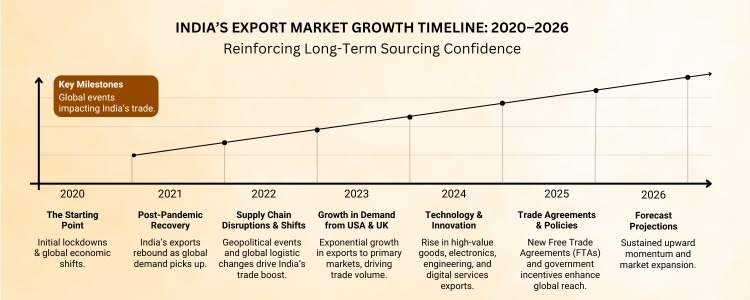
Supply Chain and Logistics Considerations
Efficient logistics play a very important role in the success of export transactions. Many export-oriented companies are taking advantage of strong logistics services to improve their export business because of the construction of large ports on both the west and south coasts of India.
There are several components of an effective export strategy related to logistics:
– Key ports in India include Mundra, Nhava Sheva and Chennai.
– Exports are shipped in two forms: Containerised and Bulk
– Transit times vary between 20 to 35 days, depending on the final destination.
– Shipments can be tracked digitally through technology-based systems.
– International freight forwarders are used to coordinate compliance and ensure timely deliveries to shipment destinations.
Quality Standards and Certifications
When exporting to developed nations (such as the United States and United Kingdom), it is essential to comply with globally recognized regulations and standards/requirements because they are not open to discussion.
When exporting, the following are common types of certifications that will apply:
- ISO quality assurance and quality control standards
- ASTM standards when exporting to the United States
- British Standards (BS) for products to be shipped to the United Kingdom
- Environmental and Sustainability certification.
Typically, international goods/materials are subject to a third party inspection to validate compliance with the standards/requirements set forth above before goods/materials are shipped.
Pricing and Cost Competitiveness
The competitive pricing offered by Indian exporters is a significant competitive advantage. Low labour rates, low material costs, and economy of scale are the driving force of Indian exporters’ competitive pricing advantage.
However, when considering purchasing Indian goods/materials, the buyer should take the following cost and risk factors into consideration:
- Freight/transportation and variable shipping costs
- Import tariffs and taxes
- Currency exchange rate variability; i.e., changes in currency
Before committing to a purchasing decision, a detailed cost study should be conducted to account for each of these cost and risk components associated with receiving goods/materials from India.
Challenges Faced by Exporters
Exporters face many operational hurdles despite advantages to exporting products internationally.
The following are two examples of operational challenges that exporters encounter.
Importer’s regulations create bureaucratic barriers
The most common reasons for this include differences in the regulatory framework in the USA and UK regarding export and import regulations. This creates administrative hurdles for exporters.
Freight shipping increases due to worldwide disruptions to sea freight
Significant disruptions to global shipping via the oceans can negatively impact an exporter’s delivery timelines and overall costs.
Increasing competition from other countries
Exporters are facing more competition from other countries that export to the USA and UK such as China, Turkey and Vietnam. This price and efficiency competition will continue to increase as these countries’ economies continue to grow.
Growing pressure to be environmentally friendly
As innovation and demands for eco-friendly construction materials increase, so will the need for exporters to change the way they produce their products.
Trends Shaping the 2026 Export Landscape
There are many changes happening in the construction export markets due to trends that create an influence on the buyers’ market.
The top trends creating influences on the buyers’ market:
- Increased demand for environmentally friendly/sustainable construction materials.
- Increased use of prefabricated modular building components.
- Increased reliance on digital procurement platforms.
- An increased emphasis on supply chain transparency.
Exporters that align with the above trends will likely have a competitive advantage in the coming years.
Buyer’s Checklist for Sourcing from India
To choose the right exporter, buyers in the US and UK should use a checklist and evaluate the exporter based on:
Validity of certifications and compliance to standards.
- Production capacity and ability to scale.
- Logistics capabilities (timeliness of shipment).
- Product quality (requesting samples, quality report).
- Previous customers and project portfolio.
Having a structured approach will minimize risk and support the development of a long-term reliable relationship.

Conclusion
The growth of construction material exporters from India is an example of how global economic trade dynamics are evolving. India has become a preferred sourcing destination for the USA and UK due to strong manufacturing capacity, competitive pricing and improved quality standards.
As buyers in 2026, they will look for a trade partner that balances cost and quality with a reliable supply chain. Indian exporters who continue to invest in compliance, innovation and logistics will position themselves to further their presence in these two markets.

Diptanshu
Leading research and marketing at Inductus Global, Diptanshu drives the company’s vision to transcend traditional trading through thought leadership in import-export. He spearheads a research-driven approach that prioritizes quality over price arbitrage, positioning Inductus as a strategic sourcing partner rather than a transactional intermediary. His work spans market intelligence, supply chain innovation, and trade dynamics, while playing a key role in sales and business development.