

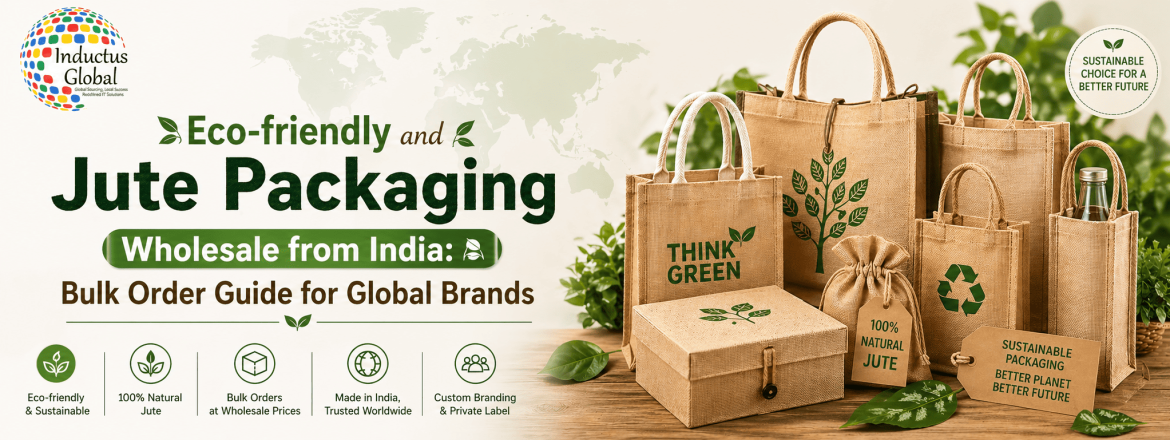
Eco-friendly and Jute Packaging Wholesale from India: Bulk Order Guide for Global Brands
The global market is pushing for sustainable practices, and packaging is thus going through designed changes as opposed to just being improved upon like other areas of manufacturing. As a result, as businesses feel pressured to offer more environmentally conscience alternatives that balance function with responsible sourcing; many are looking to India as a source for jute and eco-friendly packaging solutions due to its abundance of natural fibres like jute, cotton, bamboo etc., and mature manufacturing ecosystem providing scale, economical prices, and choice of materials.
When considering bulk ordering from India, brands should take into consideration all aspects of the process from supplier selection to logistics, compliance etc.
India’s Role in Sustainable Packaging Supply Chains
India’s ability to produce a significant amount of global jute production allows the country to be the natural leader for exporting sustainable packaging solutions. The increase in demand for plastic alternatives also supports increases in exports from India.
Manufacturers have created innovative custom formats for retail and industrial usages creating additional capabilities for manufacturers in India. Brands looking to support their environmental position will see dual value created by ordering from India both economically and reputationally.
Understanding Eco Friendly Packaging Solutions in Global Trade
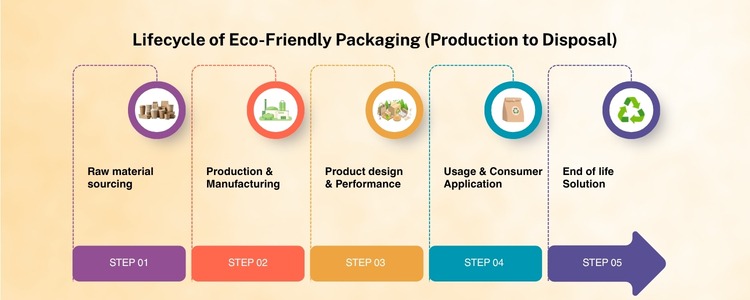
Eco-friendly Packaging Solutions implies the materials and systems used to create the packaging will have little or no environmental effect over their entire life cycle. The characteristics of Eco-friendly packaging include: being biodegradable and/or compostable, recyclable or able to be reused more than once, having a smaller carbon footprint than other packaging types, and, lastly, having minimal use of harmful chemicals.
Manufacturers throughout India are implementing the principles of eco-friendly packaging by utilizing sustainable practices throughout the entire raw material and manufacturing process. Likewise, multinational corporations are using eco-friendly packaging as a competitive advantage; many times, these competitive advantages exist in both high-end products and environmentally conscious consumers.
Jute Packaging: A Natural Advantage for India
Jute bags are excellent choices for sustainable packaging because they can endure heavy items, are inexpensive, and will decompose back into the ground after use.
Jute packaging is used for many types of products, including:
- Retail / shopping bags
- Agricultural sacks/industrial bags
- Promotional & advertising/branding item
- Gifts and lifestyle goods
West Bengal, which is located in eastern India, is the main area of jute production and processing. This geographical advantage provides reliable and consistent access to raw materials as well as competitive pricing.”
Importers benefit from the balance of strength and sustainability that take advantage of both use and branding.
Supplier Ecosystem and Selection Criteria
The supplier landscape in India (for jute bags) includes small artisan suppliers, mid-size manufacturers, and large exporters. Finding the right supplier will help maintain a consistent supply of quality product and support you in meeting bulk demand.
When considering jute packaging manufacturers in India, consider:
- Ability to provide required production
- Export compliance for jute
- Ability to provide custom requirements
- Ability to provide quality assurance; i.e., ISO and other certification.
When looking for environmentally friendly packaging providers, review the following:
- Source of materials used to manufacture
- Sustainability certifications
- Manufacturing standards, such as ISO and other certifications.
Engaging directly with the manufacturers provides better negotiating and customising of their product offerings.
Bulk Order Planning and Procurement Strategy
Bulk sourcing requires a structured approach to avoid inefficiencies and supply disruptions.
Key Steps in Bulk Procurement
In order to avoid inefficiencies and interruptions in supply chain management, bulk sourcing should follow a systematic methodology.
Key Aspects of Bulk Sourcing
Product Specifications
It is important to be specific about the product’s size, material, design and how the product will be used, to clearly set these parameters for the bulk order.
Sampling & Prototyping
It is important to test the quality and durability of an item before placing a large order.
Price Negotiation
An order of bulk products will normally present an opportunity to negotiate for a less expensive price; However, it is very important to be clear on what is included in the price.
Production Timelines
Manufacturing production timelines will need to be aligned with market demand cycles, particularly if there is a shortfall or growing demand.
Contracts
It is important to include contract stipulations for quality standards, delivery timelines and the penalties for not meeting these standards.
The process of working with experienced jute packaging exporters in India can be streamlined for first-time importers.
Logistics and Shipping Considerations
Shipping eco-friendly packaging is complicated due to the volume and the nature of many of the products being shipped.
Key Considerations
- Container optimisation: Maximising the space used in the shipment will minimise freight cost.
- Moisture protection: Jute is a natural fibre and its characteristics will deteriorate if exposed to moisture.
- Shipping method: Most bulk shipments will be sent via ocean freight.
- India has a number of major ports (i.e., Kolkata, Mumbai and Chennai) that offer excellent access to global markets.
Ensuring that proper documentation (invoice(s), packing list and certificate(s) of origin) is done properly will help reduce the time it takes to clear customs.
Cost Dynamics and Pricing Structure
The lower cost of production for many manufacturing industries in India can be attributed to the country’s low labour cost and abundance of raw materials. Variations in the price of manufactured products can be attributed to several factors, including:
For example, when it comes to jute bag manufacturing in India, the price of the finished bags can be affected by the quality of fabric used, the quality of stitching, and the quality of printing techniques.
Although the need for cost-effective manufacturing will continue to be relevant, it will not be the primary consideration in the development of long-term relationships.
Sustainability Compliance and Certifications
Global markets are placing more emphasis on sustainably sourced material, and importers must verify that their suppliers are compliant with the appropriate standards.
Commonly used certifications include:
- ISO Quality Standards
- Organic Certifications
- Fair Trade Compliance
- Environmental Management Certifications
If an importer is working with eco-friendly packaging and wants to export to Europe and North America, they will need to meet all regulations governing environmentally friendly products before shipping. Failure to comply with these regulations may result in shipments being rejected or loss of reputation.
Challenges in Sourcing Eco-Friendly Packaging
Even though there are several benefits, importers may still encounter many hurdles including:
- Inconsistent quality of raw materials
- Lack of standardization from small vendors
- Extended lead time on special order production
- Complying with regulatory requirements across countries/regions.
To overcome these hurdles, importers must develop high-quality, trustworthy relationships with their suppliers, conduct quality control on a continuing basis, and develop contingency plans.
Market Trends and Growth Opportunities
With the global trend toward sustainability increasing, demand for sustainable packaging continues to grow. Current trends include:
- Growth of biodegradable materials used in packaging
- Growing need for reusable packaging types
- Expanding private label and custom branding
- Growing eCommerce packaging solutions
India has the opportunity to pursue growth from these trends as it offers scalable solutions for global companies.

Conclusion
India provides tremendous value to global companies looking for sustainable packaging options. Thanks to our abundant natural resources, vast manufacturing capabilities, and competitive pricing, India is an ideal country to source packaging. Global companies that seek to buy packaging in bulk must plan carefully, evaluate their suppliers thoroughly, and follow quality/compliance guidelines.
Companies that are serious about sustainability should not simply view the purchase of biodegradable or jute products from India as a transactional purchase; rather, they should see it as an investment in the long-term value of their brand.
1. Why is India a leading supplier of jute packaging?
India has abundant jute production and a well-established manufacturing ecosystem.
2. What are the benefits of eco-friendly packaging?
It reduces environmental impact, improves brand perception, and meets regulatory requirements.
3. How can buyers ensure product quality?
Through sampling, third-party inspections, and supplier audits.
4. What is the typical lead time for bulk orders?
It varies but generally ranges from 3 to 8 weeks depending on order size.
5. Are custom designs available in jute packaging?
Yes, most manufacturers offer customisation options.
6. What is the best shipping method for bulk packaging?
Sea freight is the most cost-effective for large volumes.

Diptanshu
Leading research and marketing at Inductus Global, Diptanshu drives the company’s vision to transcend traditional trading through thought leadership in import-export. He spearheads a research-driven approach that prioritizes quality over price arbitrage, positioning Inductus as a strategic sourcing partner rather than a transactional intermediary. His work spans market intelligence, supply chain innovation, and trade dynamics, while playing a key role in sales and business development.