

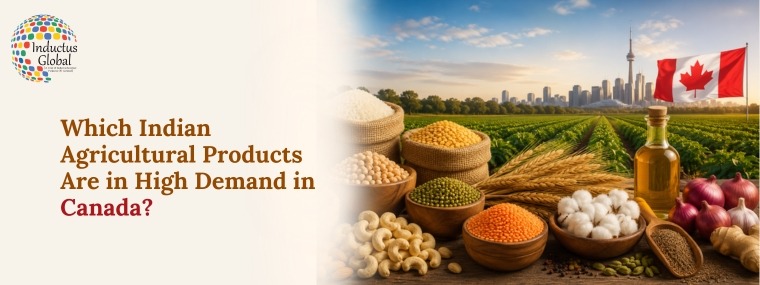
Which Indian Agricultural Products Are in High Demand in Canada?
Canada is swiftly turning into an emerging opportunity for Indian agriculture exports owing to its well-disposed multicultural population, evolving appetites, and rising possibilities for making an order for the best quality imported food from other countries. Over the years, Indian food staples have been successfully penetrated into Canadian supermarkets, ethnic grocery outlets, catering companies, and other participants of the food industry.
For foreign trading organizations, knowing which agricultural product groups are in demand in Canada becomes necessary for establishing productive partnerships in business.
Demand is influenced by consumer preferences, but also by seasonal fluctuations, food regulations, and supply chain dependability.
Why is Canada an Attractive Market for Indian Agricultural Product Exports?
Due to the climate and seasonal limitations in agricultural production, Canada imports a significant part of the food it consumes. Despite the highly developed nature of domestic agriculture, Canada must import certain fruits, vegetables, spices, grains, and other food products from international suppliers throughout the year.
India presents many benefits that make this country a preferred solution for sourcing such products:
- Wide variety of agricultural production
- Competitive prices
- High level of export infrastructure
- Year-round availability of a wide variety of products
- Strong experience in serving international markets
All these advantages allow Indian suppliers to meet the changing needs of Canadian wholesalers, retailers, and food producers.
Which Agricultural Product Categories Are in High Demand in Canada?
There are certain parts of agriculture that show good demand for imports.
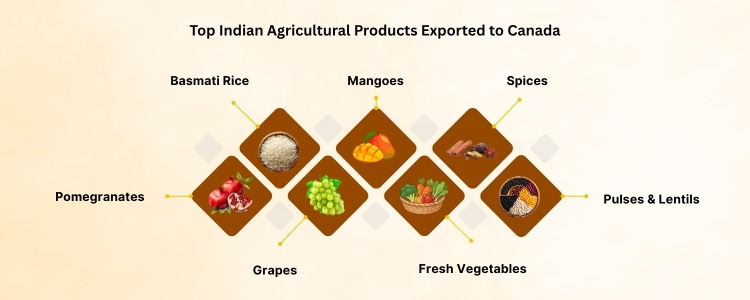
Fresh Fruit
The retail market in Canada is increasingly finding a place for fresh produce from India, particularly among Multicultural groups that have a taste for home-grown products.
Among the popular products that find takers are:
- Mango
- Pomegranate
- Grapes
- Bananas
There is a pressing need to ensure freshness and proper cold chain management of produce, as well as to comply with local regulations for exporting fresh produce.
Many exporters have strengthened their logistics services to enhance the quality of their products upon arrival.
Fresh Vegetables
Similarly, Canada also imports a variety of vegetables from India during lean production periods.
Among the crops that are exported are:
- Okra
- Green chilli
- Brinjal
- Drumsticks
- Bitter gourd
Most of these are considered ethnic products but are slowly making their way into mainstream retail markets as well.
Rice and Cereals
Rice continues to be one of the major agricultural exports of India. Basmati rice, in particular, is popular in Canada, owing to its good quality, fragrance, and cooking properties.
Other cereals and grains also play a role in enhancing export figures, particularly with regard to food processing companies and wholesale distributors.
Spices and Herbs
India is leading in the spice market globally.
Canadian importers source:
- Turmeric
- Cumin
- Coriander
- Cardamom
- Black pepper
As people are getting more interested in international cuisines and food at home, authentic Indian spices are in great demand.
Pulses and Lentils
Besides spices, lentils and pulses are also important for consumers both at home and for ethnic communities.
They include chickpeas, common beans, lentils, and some other goods.
The import demand for these goods stays strong because of their many usages.
What Drives Demand for Indian Agricultural Products in Canada?
There are some trends supporting India’s export of the products.
Multicultural consumer base
The multicultural nature of Canada is continually creating demand for Indian food products.
Consumers are in search of the products that correspond to traditional recipes.
Growing interest in healthy products
Thanks to the health concerns of consumers, many of them are trading natural grains, pulses, fruits, and spices more actively.
Indian agricultural products are on the rise due to their healthy characteristics.
Year-round availability
Canadian retailers are looking for the permanent supply of Indian products.
Thanks to a variety of climates in India, agricultural production is all the time ongoing and helping stabilize export.
How Can Exporters Identify Buyers in Canada?
Finding the right customers requires targeted market research and relationship building.
Potential buyers include:
- Wholesale food distributors
- Supermarket chains
- Import companies
- Food processors
- Hospitality suppliers
Many exporters begin by connecting with an agricultural buyer in Canada through trade fairs, export promotion councils, or international B2B marketplaces.
Long-term business relationships often develop through consistent product quality and dependable delivery performance.
What Quality Standards Must Exporters Meet?
Canadian food imports are subject to strict safety and quality regulations.
Exporters should focus on:
Product Quality
Fresh produce must meet grading standards relating to size, appearance, freshness, and cleanliness.
Packaging Requirements
Proper packaging protects products during international transportation while meeting retail presentation standards.
Packaging should include:
- Product identification
- Country of origin
- Batch details
- Storage instructions
Traceability
Canadian buyers increasingly expect transparent supply chains that enable product traceability from farm to retailer.
Many Agricultural products Exporters invest in digital tracking systems to improve supply chain transparency.
What Challenges Should Exporters Prepare For?
Although Canada offers significant opportunities, exporters should recognise several operational challenges.
Regulatory Compliance
Import regulations may evolve over time, requiring exporters to stay updated on food safety requirements.
Cold Chain Management
Fresh fruits and vegetables require efficient refrigerated transportation to preserve quality during transit.
Seasonal Market Fluctuations
Demand patterns may vary depending on harvest cycles, weather conditions, and consumer purchasing behaviour.
Exporters who maintain flexible production planning can respond more effectively to changing market conditions.
What Trends Will Shape Agricultural Exports to Canada in 2026?
Several emerging trends are expected to influence purchasing decisions.
Demand for Sustainable Farming
Consumers increasingly prefer products sourced through environmentally responsible farming practices.
Organic Product Growth
Organic fruits, vegetables, and grains continue to gain popularity among premium retail segments.
Digital Procurement
Canadian buyers are increasingly using online sourcing platforms to identify international suppliers and compare products.
Many agriculture importers in Canada now evaluate suppliers through digital catalogues before initiating commercial discussions.

Conclusion
Indian agricultural exporters can continue profiting from the growing demand for their products in Canada. Consumers in Canada are shifting toward higher consumption of fruits and vegetables, rice, spices, and legumes, given the country’s heavy reliance on imports for food.
However, simply having products available is not enough for successful entry into the market. Exporters need to ensure quality control, compliance with regulations, logistics, and long-term buyer relationships.
By providing the Canadian market with the expected high-quality agricultural products, Indian exporters can enhance their presence in the global food market and create sustainable export relations with one of the most dynamic food markets in North America.

Diptanshu
Leading research and marketing at Inductus Global, Diptanshu drives the company’s vision to transcend traditional trading through thought leadership in import-export. He spearheads a research-driven approach that prioritizes quality over price arbitrage, positioning Inductus as a strategic sourcing partner rather than a transactional intermediary. His work spans market intelligence, supply chain innovation, and trade dynamics, while playing a key role in sales and business development.