

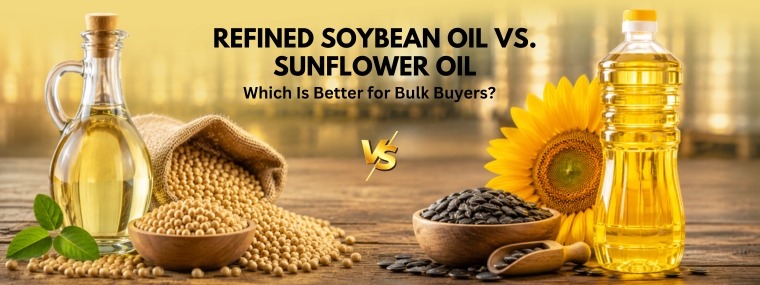
Refined Soybean Oil vs. Sunflower Oil: Which is Better for Bulk Buyers?
Cooking oil is one of the most consumed food items, which makes choosing the right supplier a crucial process for wholesale companies, distributors, processors, and retail shops. Among all edible oils, refined soybean oil and sunflower oil are leading in terms of their characteristics, affordability, and different applications.
In addition to food alternatives, substantial quantity clients also take price stability, total amounts supplied, the product’s shelf life, buyers’ needs, and transportation into consideration before making a decision. Moreover, organizations need to pay attention to the reliability of suppliers before signing a contract with them. With the help of Refined Soybean Oil Exporters or Sunflower Oil Suppliers from India, firms gain an understanding of the advantages of these products and minimize their expenses.
Understanding Refined Soybean Oil
Soybeans are the source of refined soybean oil, which goes through a refining process that eliminates impurities, smell, and unwanted compounds. This results in an oil that has a neutral flavour suited for several food uses.
The reason why this oil is so popular is that it can be used in many different fields. It is used in:
- Food production
- As well as in restaurants and commercial kitchens
- Snack food industry
- Bakery products
Is considered processed food manufacturing. Buyers from all over the world prefer to buy refined soybean oil from the leading exporters because of the quality of the product.
What Makes Sunflower Oil a Preferred Choice?
Sunflower oil has been derived from sunflower seeds and is known for its light body, neutral taste, and versatile uses in cooking.
Many food manufacturers and businesses often prefer sunflower oil which goes well with other cuisines without changing taste.
Sunflower oil Suppliers in India have significantly increased their market presence and extended their export potential over the years to serve Asian, African, European, and Middle Eastern markets.
Some of the uses are:
- Household cooking
- Frying
- Salad dressings
- Manufacturing packaged food
- High-end cooking oils
With more consumers becoming aware of better cooking options, the popularity of sunflower oil increases in different countries across the globe.
Price Comparison for Bulk Buyers
The importance of price is one of the major factors for procurement teams. Refined soybean oil is the best option because of its greater global output.
In the retail trade with small margins, refined soybean oil is frequently an economically convenient choice.
Nevertheless, sunflower oil might experience more significant price fluctuations depending on agricultural production, geopolitical events happening in the world, and the state of international trade.
Unlike soybean oil, for which the procurement price usually remains stable for businesses, sunflower oil is likely to be much more expensive wherever the demand for it is high.
Supply Chain and Availability
Reliability of supply is another significant factor that affects purchasing decisions. Soybean oil has broad cultivation in different countries, which lessens its reliance on just a few areas.
The supply chain of soybean oil is very diverse, which often contributes to stable procurement.
In comparison, sunflower oil production may have a more concentrated geographical area, meaning that any weather problems or disruptions would have a stronger effect on supply.
India’s position in the trade of oils is becoming stronger, with exports of sunflower oil from India increasing as companies are developing the refining industry and logistics.
When a company needs to have a constant supply of a commodity, it is equally important to look at inventory reserves and the supply chain strategy of a supplier along with the product’s technical parameters.
Applications Across Different Industries
Both oils are used in various industries, yet the preferences regarding their usage might differ depending on the application.
Food Industry
Refined soy oil is favored by big food producers, who find it to be efficient and cost-effective.
Retail Oil.
Sunflower oil is popular in retail sales due to being viewed as a high-quality oil for domestic cooking.
Hospitality Business.
Hotels, restaurants, etc. choose cooking oil based on fry quality; flavor neutrality, and price.
Processed Food Manufacturing
Snack producers, bakers, and ready meal companies compare oils based on production requirements and cost.
Quality Standards Buyers Should Evaluate
It does not matter what type of oil it is, what matters is that choosing a high-quality supplier is crucial.
Bulk-buying consumers have to look into the suppliers based on criteria like:
- Food safety certifications
- Quality of refinery processes
- Laboratory quality control
- Packaging protocols
- Experience in export operations.
The importance of maintaining consistent quality is vital to brand reputation, as it minimizes the chances of having to recall the product in case of any issue.
Importers should take note of the shelf life and storage instructions before making bulk purchases.
Consumer Preferences and Market Demand
Regional demand can be a factor in determining the buying approach. In some countries, sunflower oil is gaining popularity among health-conscious consumers, which makes retailers prefer it for premium categories.
At the same time, consider that soybean oil is one of the most popular edible oils in the world because of its low price and availability.
The increasing demand for sunflower oil in India is also making local producers increase their refining capacities and strengthen their export position.
Knowledge of the preferences of local consumers allows buyers to have informed procurement decisions.
Choosing the Right Supplier
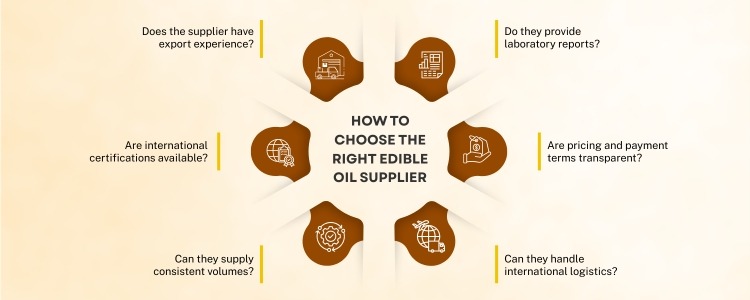
Supplier selection should focus on more than just price.
Companies need to consider:
- Production capacity
- Experience in exporting
- Quality certifications
- Logistics capacity
Proven suppliers will have a higher ability to meet the delivery timelines during the volatile period in the market.
Going through factory audits, requesting lab reports, and assessing the export records can help companies mitigate the risk in procurement.
Long-term relationships with suppliers usually mean lower costs for the buyers.

Conclusion
Both refined soybean oil and sunflower oil have various advantages for bulk buyers with the preferred choice depending on the business objectives, target markets, and procurement goals.
Refined soybean oil is usually more cost-effective and stable, making it suitable for mass production. Sunflower oil is still attractive for high-end buyers.
Companies that analyze the quality of the product, the reliability of the supplier, and logistics will be more likely to make good purchasing decisions.
By collaborating with seasoned Refined Soybean Oil Exporters as well as trusted Sunflower Oil Suppliers In India, a company can ensure smooth supply chain operations.

Diptanshu
Leading research and marketing at Inductus Global, Diptanshu drives the company’s vision to transcend traditional trading through thought leadership in import-export. He spearheads a research-driven approach that prioritizes quality over price arbitrage, positioning Inductus as a strategic sourcing partner rather than a transactional intermediary. His work spans market intelligence, supply chain innovation, and trade dynamics, while playing a key role in sales and business development.