

Edible Oil Exporters: The Complete Guide for Global Importers
The worldwide edible oil industry plays a crucial role in the global food supply system. From cooking at home to food processing in factories, edible oils have become an important product that is traded around the globe. With rising consumer demand and companies expanding into new markets, importers need reliable suppliers who can guarantee quality and ensure on-time delivery.
Choosing the correct Edible Oil Exporters is not simply about buying oil. This process includes scrutinizing production methods, legal compliance, logistics and delivery options, and supply reliability. For wholesalers, distributors, supermarket chains, and food processors, acquiring a trustworthy export source can increase efficiency and satisfaction in overall operations.
This guide looks into the aspects foreign buyers should take into consideration when making purchases of edible oils and will assist those companies in purchasing decisions in the global markets.
Why Are Edible Oil Exporters Important in Global Trade?
The edible oils trade has been widely prevalent across the globe serving different industries including retail, hospitality, food processing, and food manufacturing. It is through certified Edible Oil Exporters that manufacturers can meet the requirements of the international market while consistently supplying products to buyers.
Some of the responsibilities of these exporters include:
- Ensuring documentation flow for international trade
- Handling logistics and shipment
- Making sure that the quality standards are met
- Ensuring that products are delivered on time
- Supporting the ongoing contractual agreements of the clients.
Importers can find it beneficial to choose the right edible oil exporter enabling them to reduce their supply chain risks and ensuring the availability of the right stock.
What Types of Edible Oils Are Commonly Exported?
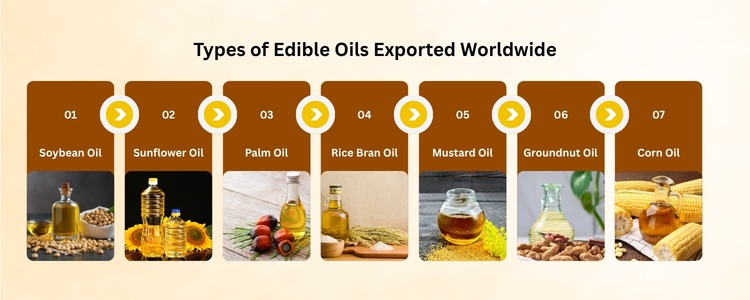
Exporters deal with a wide variety of edible oils that are used for various purposes in the industry.
Some of the most popular products are:
Each of these oils has its specific culinary and industrial purposes. Buyers are required to choose the products in accordance with demand, costs, and their intended applications.
How Can Importers Identify Reliable Exporters?
Supplier selection requires a systematic evaluation process instead of just looking at price tags.
Check Vendor Credentials
Importers must check whether the exporters possess valid export registration, food safety certifications, and quality management systems.
Some important certifications include:
- ISO
- HACCP
- FSSC 22000
- Local food compliance certifications
These certifications prove that a supplier meets international quality standards.
Evaluate Production Capacity
Exporters must be able to produce enough product to meet their current and future requirements.
Companies should evaluate their:
- Annual production capacity
- Refining capacity
- Packaging capabilities
- Inventory management systems
Most importers prefer getting in touch with seasoned edible oil manufacturers which operate from different plants and possess flexible production capacities.
Evaluate Experience in Export
Export experience is usually an indication of good knowledge of the customs documentation and the related laws.
Companies that serve different countries of the world generally perform better than those which focus only on local sales.
Several edible oil manufacturers from India have managed to get into international markets due to modern production techniques and infrastructure.
What Quality Standards Should Buyers Consider?
Supply Chain and Availability
Quality assurance is the key factor in edible oil purchase.
Importers need to consider:
Refining Process
Modern refining allows the elimination of impurities without damaging the product quality for a longer time.
Laboratory Testing
Reputable exporters do laboratory tests frequently, which lets them determine:
- Purity
- Moisture levels
- Free fatty acids
- Stability of the products.
Packaging Standards
The packaging should protect the product during international transport.
How Does the Export Process Work?
The international trade of edible oils has a proper supply chain. The steps include:
Order Confirmation
The buyer and the exporter agree on the product specifications, price and shipment time.
Production and Quality Check
After production, laboratory tests and quality checks are done on the product.
Packaging
The product is packed according to the requirements of the market in which the product will be sold.
Documentation
The exporter gets the following documents ready:
- Commercial invoice
- Packing list
- Certificate of origin
- Bill of lading
- Quality certification
International Transport
The product is transported using either air or sea transportation depending on the destination of the cargo.
Why is India Becoming a Preferred Export Hub?
India plays a key role internationally in edible oil trade thanks to its rich agricultural industry and booming food processing sector.
The country’s export environment is characterized by a number of advantages, including:
- Advanced refining facilities
- Competitively low production costs
- Presence of skilled labor force
- Developing logistics infrastructure
- Availability of shipping routes.
Increased exports of edible oil from India has enhanced the country’s image as a reliable supplier for foreign partners.
Government initiatives aimed at boosting agricultural exports served to further improve export competitiveness.
What Challenges Should Importers Anticipate?
Despite the fact that international edible oil commerce presents opportunities, buyers must be aware of many business difficulties.
Fluctuations in Prices of Commodities
Prices of edible oils on the world market can change because of weather conditions, crop volumes, or political events.
Regulatory Changes
Food safety standards and import rules may differ from market to market.
Supply Chain Problems
Transportations delays, lack of containers, and port congestion may have an impact on supply timing.
Organizations that diversify their suppliers and maintain the right amount of inventory are positioned better to deal with these challenges.
What Trends Will Shape Edible Oil Exports in 2026?
Various developments are anticipated to impact international edible oil sourcing.
Increase in the Demand for Sustainable Production
People are more likely to choose food products that are ethically sourced.
Increase in Traceability
Digital tracking systems provide greater transparency to agricultural supply chains.
Expansion of Private Label Products
Retailers are broadening their private label edible oil product offerings.
Increase in Demand for Premium Oils
Specialty oils and health-related cooking products keep gaining more share of the market in advanced economies.

Conclusion
Worldwide edible oil sourcing calls for thorough strategy, trustworthy alliances, and effective quality assurance system. Buyers who analyze suppliers’ capacity beyond cost can create robust supply chains and stable quality of the goods.
The choice of experienced Edible Oil Exporters ensures reliable supply of high-quality edible oils and cuts down procurement risks.
As international food trade continues changing, long-lasting collaboration with reliable exporters will keep on being an important factor for business growth.

Diptanshu
Leading research and marketing at Inductus Global, Diptanshu drives the company’s vision to transcend traditional trading through thought leadership in import-export. He spearheads a research-driven approach that prioritizes quality over price arbitrage, positioning Inductus as a strategic sourcing partner rather than a transactional intermediary. His work spans market intelligence, supply chain innovation, and trade dynamics, while playing a key role in sales and business development.