

Customs Clearance Challenges for Handicraft Items Imports and How to Solve Them
The demand for handcrafted items has been steadily increasing as more and more customers are interested in genuine, sustainably sourced, and culturally significant products. From home decor and furniture to textile and decorative products, Indian handicrafts have become renowned worldwide for their quality and craftsmanship.
There are many business opportunities to seize in the sourcing of handicrafts products; however, customs clearance is one of the most important stages of the importing process. The problem is that delays in customs can raise costs, disturb the inventory planning process, and complicate relations with retailers. Therefore, it is important for companies planning to import handicrafts not only to choose a good supplier but also to study all customs requirements.
It is possible to minimize delays in customs and thus save time and money by making sure that all the documents are prepared correctly, local regulations are followed, and logistics partners are consulted. This article will provide you with information on the main customs problems that importers of handicrafts encounter and how to solve them.
Why is Customs Clearance Important When You Import Handicraft Items?
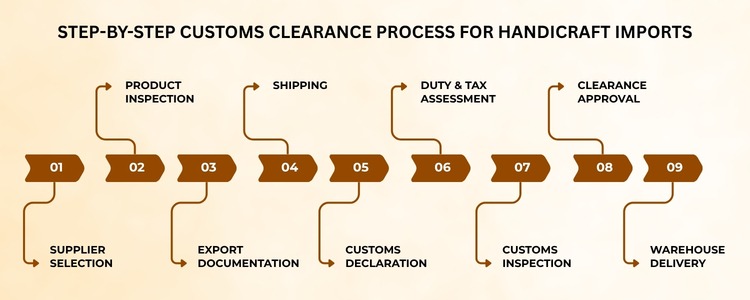
Customs clearance means assessing the imported item by authorities before its entry into the country. This process involves checking whether the item conforms to laws of importation, taxation requirements, and proper documentation.
Customs clearance is important for companies that import handicrafts because the following is achieved:
- It is ensured that the item is compliant with local laws.
- It is confirmed that all information related to goods is correct.
- Duties and taxes are duly verified.
Safety of the consumers is ensured by applying the standards.
Failing to conduct customs clearance properly may result in the delays, additional payments certified by customs and even cargo refusal.
What Are the Most Common Customs Clearance Challenges?
Handicrafts are traded internationally, and importers face many difficulties in their operations due to customs regulations.
- Wrong Product Classification
One of the most common reasons for customs delays is the incorrect classification of goods under the Harmonized System (HS) Code.
As handicraft goods are diverse, the classification might be done in different ways:
- Wooden decorations
- Metal products
- Ceramics
- Textile handicrafts
- Handmade items
Each product type falls under different tariff categories, so an error in coding may lead to wrong calculations or inquiries from customs.
Importers have to confirm their HS Codes with the customs authorities or licensed customs agents before sending the goods.
- Incorrect or Incomplete Documents
Documentation problems continue to be one of the most common reasons for customs delays.
The following papers are usually required:
- Commercial Invoice
- Packing List
- Transportation Document
- Certificate of Origin
- Insurance documents (when necessary)
Missing or incorrect information can cause customs officials to ask for further details which can lead to longer shipment processing.
Companies that import handicraft products have to ensure that their documentation follows the product description, quantity, and value.
3. Country-Specific Import Regulations
Every market for exports has laws that have to be followed.
The law may also contain rules for:
- Using wood
- Traditional textile products
- Animal materials
- Cultural items
Those introducing products to a new country should look into the tax laws of that particular country beforehand.
An instance of this case is businesses that send products to USA customers that offer goods related to handicrafts but are required to meet standards regarding wood treatment and product identification, among others.
Being familiar with this information beforehand allows for avoiding problems with the customs office and getting through the customs process without complications.
How Can Packaging Affect Customs Clearance?
When it comes to packaging, one must not ignore the critical impact that it holds over customs inspection.
Some specific aspects of good packaging include the following:
- Preventing fragile items from being damaged during transit.
- Properly identifying what is contained.
- Making sure that shipping labels are correctly displayed.
- Reducing the chance of products getting contaminated in transit.
It is important to note that customs agents usually pay special attention to shipments that are packed poorly or lack proper labeling.
Using high-quality export packaging is a smart way to reduce the chances of damage occurring during transportation.
Why is Product Valuation Important?
Accurate customs valuation directly affects import duties and tax calculations. Under-declaring product values may result in penalties, while inflated values can unnecessarily increase import costs.
Importers should ensure that commercial invoices accurately reflect:
- Unit price
- Total shipment value
- Freight charges (where applicable)
- Insurance costs (if included)
Transparent pricing helps facilitate smoother customs processing.
How Can Importers Reduce Customs Delays?
Several best practices can significantly improve customs clearance efficiency.
Conduct Supplier Verification
Experienced exporters are generally more familiar with international documentation and shipping procedures.
Buyers sourcing Wholesale Indian handicrafts products should prioritise suppliers with established export experience and a proven compliance record.
Reliable suppliers often maintain dedicated export teams capable of preparing documentation accurately.
Work with Licensed Customs Brokers
Customs brokers understand country-specific import procedures and can assist with:
- HS code classification
- Duty calculations
- Customs declarations
- Regulatory compliance
Their expertise often reduces the risk of documentation errors and shipment delays.
Maintain Complete Shipment Records
Importers should retain organised records of:
- Purchase agreements
- Commercial invoices
- Shipping documents
- Product specifications
- Quality certificates
Well-maintained records simplify customs audits and support future imports.
How Do Different Markets Approach Handicraft Imports?
Although customs principles remain similar worldwide, regulatory expectations vary across countries. Businesses supplying handicraft importers in Uk often encounter requirements relating to product safety, labelling, and customs declarations under UK import regulations.
Similarly, North American import procedures may emphasise product traceability, material composition, and environmental compliance.
Understanding destination-specific regulations before shipment reduces uncertainty during customs processing
What Trends Will Influence Handicraft Imports in 2026?
International trade continues to evolve alongside regulatory and technological developments.
Several trends are expected to shape handicraft imports in the coming years.
Digital Customs Documentation
Electronic documentation systems are improving processing speed and reducing paperwork.
Greater Product Traceability
Import authorities increasingly require transparency regarding product origin and manufacturing processes.
Sustainability Compliance
Environmental standards are becoming more important, particularly for products made from natural materials.
Risk-Based Customs Inspections
Many customs authorities now use digital risk assessment systems to identify shipments requiring additional inspection.
Importers that maintain accurate documentation and strong compliance records are less likely to experience unnecessary delays.
Conclusion
The growing international demand for handcrafted products presents valuable opportunities for retailers, wholesalers, and distributors. However, successful importing depends on more than sourcing attractive products at competitive prices.
Understanding customs procedures, preparing accurate documentation, selecting experienced suppliers, and complying with destination-country regulations are essential components of a successful import strategy.
Businesses planning to import Handicrafts items can significantly reduce customs-related risks by investing in careful preparation and working with knowledgeable logistics and customs professionals.
As international trade becomes increasingly regulated and digitally connected, businesses that adopt proactive compliance practices will be better positioned to maintain efficient supply chains and meet customer expectations.

Diptanshu
Leading research and marketing at Inductus Global, Diptanshu drives the company’s vision to transcend traditional trading through thought leadership in import-export. He spearheads a research-driven approach that prioritizes quality over price arbitrage, positioning Inductus as a strategic sourcing partner rather than a transactional intermediary. His work spans market intelligence, supply chain innovation, and trade dynamics, while playing a key role in sales and business development.