

Handwoven Rugs and Carpets from India: Wholesale Sourcing Guide for Importers and Retailers
Carpet weaving has a longstanding history in India, and the craftsmanship related to this style is designed to resemble art and cultural traditions. The legacy that has been established will continue in 2026 as Handwoven Rugs from India will continue to flourish in the global market due to a growing preference for authentic, sustainable living.
India is an attractive place for retailers and importers to source product. With many options in regards to style, material and price range, there is something for both the premium and mass-market. However, as an importer or retailer, you need to have a structured approach and knowledge of the overall landscape in order to successfully navigate the varied and unique nature of the industry.
The Global Appeal of Handmade Carpets from India
The demand for Handmade Carpets from India has been steadily increasing due to growing consumer interest in artisan-made products that are eco-friendly. One of the attributes of Handwoven Rugs vs. Machine Made Rugs are the different textures and patterns that are produced due to the individual artisans that are producing the goods.
The largest importers of Handmade Carpets from India are the USA, Europe and the Middle East; however, there is also demand emerging from Asia/Pacific markets. Indian Carpet Buyers are looking for durable, aesthetically appealing product that has cultural value associated with it.
There has been an increase in the number of interior design trends utilizing Indian Handmade Carpets; therefore, this will bolster the presence of Indian Carpets in the global Décor markets.
Key Types of Handwoven Rugs Available in India
India’s carpet industry has got immense diversity in terms of product offerings, i.e., customers have access to plenty of categories to suit their specific tastes.
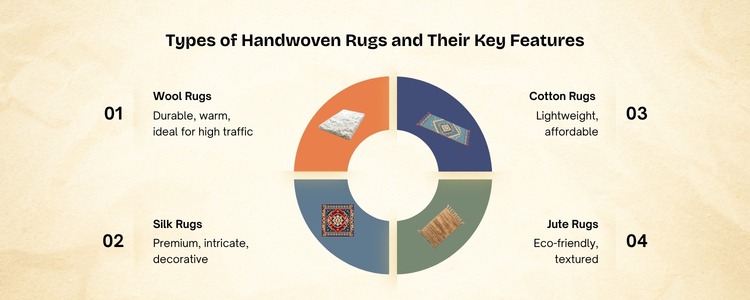
- Wool rugs
The most used material in creating carpets is wool due to how it is durable as well as soft. It also means that you’ll not have to replace your floor covering so often (which often means more money) if you go for a wool rug. Wool rugs work great in areas of high foot traffic and areas where the weather is generally cold.
- Silk Rugs
Silk carpets generally have exceptionally intricate designs and exquisite finishes and can be classified as luxury items to be collected or purchased by only premium market customers as they are considered an extreme symbol of peace and prosperity.
- Cotton rugs
For those wishing to add some softness to their home but who cannot afford to buy expensive carpets (or want something lightweight), cotton rugs tend to be one of the best options available. These rugs are perfect for very casual living areas or apartments and are very contemporary in terms of décor.
- Jute and natural fibre rugs
Due to the increased social awareness of environmental sustainability, rugs made from jute and other biodegradable materials remain among the most sought after by environmentally-conscious consumers.
Major Carpet Manufacturing Hubs in India
By understanding the unique attributes of various geographic regions, buyers can choose wisely where to procure or produce the rugs that they require.
- Bhadohi (Uttar Pradesh): Also known as the “Carpet City of India”, this city serves as the primary centre of production for many export-oriented carpet fabrics.
- Jaipur (Rajasthan): Renowned for the highly colourful designs and hand-tufted products.
- Kashmir: Known for its high-quality silk carpets with intricate designs.
- Panipat (Haryana): This region is an important manufacturing area because it has a large number of “entry-level” carpets produced on a large-scale and affordably priced.
All four of these areas house several of the major Indian carpet manufacturers, and they provide many types of rugs for retail buyers worldwide.
Identifying Reliable Suppliers
Choosing a suitable supplier is essential for importers to guarantee the quality and consistency of goods received.
Supplier Credential Verification When assessing potential suppliers, check the export certifications and compliance standards they have.
Examine the supplier’s client list. Determine their manufacturing capabilities or the ability to expand when needed.
Industry Leaders to Partner With Selecting carpet manufacturers in India that have a solid reputation in the industry can provide greater assurance of reliability, quality control, and timely shipments.
Factory Visits / Factory Audits Conducting on-site inspections of manufacturing facilities, if possible, is a good way to ensure that manufacturing processes and work environments meet acceptable standards of care.
Wholesale Sourcing Strategies for Buyers
Wholesale Procurement Needs When working with suppliers in India, buyers should seek to balance price and quality.
Advantages of Buying in Bulk Wholesale buying offers potential cost savings over smaller quantities and provides for guaranteed availability. However, quality across product lines must be maintained by verifying quality and testing samples before acceptance.
Opportunities for Customization (per website) Many manufacturers of rugs in India offer custom designs that allow buyers to provide products suited to their specific market.
Samples of New Products and Quality Control Purchases of larger volumes should always be preceded by sample orders with detailed inspections of the samples provided prior to placement of the larger order.
Pricing Dynamics and Cost Considerations
There are a number of pricing factors involved in the carpet industry:
- Material Used: A silk rug will be much more expensive than a cotton or jute rug.
- Knot Density: A rug with a higher knot count will be more finely crafted; therefore, it will cost more.
- Design Complexity: If a rug has many intricate designs (e.g., flowers), it will be more time-consuming and require a greater level of skill to create.
- Labour: The additional cost associated with the skill level of the craftsmanship will vary.
For the importer, there will also be additional costs related to importation: freight charges, customs duties, and insurance costs.
Export Logistics and Compliance
Efficient logistics are important for the success of international trade between countries.
Packaging Standards
Packaging is crucial to ensure that products are not damaged while they are in transit. Carpets are often rolled up and wrapped in protective material when they are in transit.
Documentation Needed
There are many types of documentation needed for goods coming into the US, including invoices, packing lists, certificates of origin, and compliance certificates.
Shipping Methods
Depending on the urgency and cost of the delivery, buyers have the option of shipping via sea freight or air freight.
Sustainability and Ethical Sourcing
Sustainable products are becoming a critical focus area for global procurement professionals.
Eco-Conscious Materials
The trend towards using natural fibers and natural dyes supports a commitment to being environmentally responsible.
Fair Trade Practices
The importance of guaranteeing that artisans are paid fairly and have safe working conditions continues to grow as brands strive to build a positive reputation.
Certifications
Buyers should look for certifications such as Good Weave or ISO compliance to know that products are being ethically sourced.
Challenges in the Indian Carpet Supply Chain
Despite its strengths, the sector faces certain challenges:
Fragmented Production
Many artisans work in small units, making coordination complex.
Quality Variability
Maintaining consistent quality across large orders can be challenging.
Lead Time Constraints
Handmade production processes require time, which may impact delivery schedules.
For buyers, these challenges highlight the importance of building long-term relationships with trusted suppliers.
Strategic Outlook for Importers and Retailers
Although there are many positive elements to the sector, it does still have some significant challenges.
The first challenge is the fragmentation of production. Many small artisan units operate independently from each other, making it very difficult to coordinate production between sellers and buyers.
There is also quality variability in the marketplace. Due to the independent nature of each unit, and the variety of techniques used, it can sometimes be very difficult to produce enough product consistently to fulfill large orders.
Lead time constraints present another challenge for artisans looking to sell their products directly to buyers. Because handmade items take time to create, they may not be delivered on time due to production delays.
These challenges are a reminder for buyers to develop long-term relationships with reliable suppliers.
Conclusion
India’s handwoven carpet industry combines both traditional artistry with modern use making India an attractive source for international buyers. The increase in the demand for Handwoven rugs from India demonstrates that consumers are now placing more emphasis on authenticity as well as sustainability in their product choices.
In order to achieve success as an importer or retailer, one must be familiar with all the details involved in the process of sourcing including choosing suppliers, logistics and ensuring quality standards. When approached using proper sourcing practices, the vast number of talented artisans in India can create many profitable opportunities for businesses within the global market place.

Diptanshu
Leading research and marketing at Inductus Global, Diptanshu drives the company’s vision to transcend traditional trading through thought leadership in import-export. He spearheads a research-driven approach that prioritizes quality over price arbitrage, positioning Inductus as a strategic sourcing partner rather than a transactional intermediary. His work spans market intelligence, supply chain innovation, and trade dynamics, while playing a key role in sales and business development.