

How to Import Products from India to the USA: Step-by-Step Guide for First-Time Buyers 2026-27
Global buyers are increasingly relying on India as a trusted sourcing country, particularly those located in the United States. India has an extensive manufacturing platform, lower cost of goods, and offers many different types of products makes it an ideal market for entrepreneurs who want to explore import & export business ideas. Buyers new to the import process find it challenging due to supplier compliance, regulations, suppliers selection, and logistics.
This guide explains the steps involved in importing from India to the United States in a step-by-step format and provides an overview of each step with illustrations to follow so you understand how to proceed in an orderly manner when doing business.
Understanding the India–USA Trade Landscape
India and the United States are involved in a two-way trading relationship that is aided by long-standing shipping trade lanes and multiple bilateral agreements designed to reduce the barriers to trade between the two nations. Imports from India traded with the United States include; textiles, handicrafts, industrial machinery, spices and pharmaceuticals.
The ability of India to provide buyers in the United States both traditional and innovative products at reasonable prices creates strong buying opportunities for both parties. A complete source of skilled labour and an established supply chain give buyers in the United States confidence that they will receive products at the same level of quality control and within their expected timeframes.
Step 1: Identify the Right Product to Import
When starting an import business, picking the right product is the most important part of your successful import business. It is essential for the buyer to consider demand, the margins associated with that product as well as the regulations around that product.
The main factors to consider are:
- Market demand – Manufacturers should look for items that have not only a consistent demand but have a growing demand throughout the United States.
- Profit margins – Manufacturers should look closely at their cost structure from sourcing through to shipping and adding any duties to the product.
- Compliance – Some items may require certifications or approval before they can be imported.
Some products frequently imported from India include textiles, jewelry, leather goods, and agricultural products. A good way to get an advantage over your competition is to find a product that is already niche in nature.
Step 2: Conduct Reliable Product Sourcing
The next step after determining your product is to find a dependable supplier. A supplier is key to ensuring that your product has a competitive price, is good quality and is delivered on a timely basis.
There are a variety of sources that buyers can use when searching for a supplier, including:
– Trade shows and exhibitions
– Online B2B marketplaces
– Directly contacting manufacturers
– Industry networks
In addition, using professional sourcing consultants to assist with this process can be beneficial for new import businesses that are unfamiliar with the local market to verify suppliers, negotiate price on the suppliers behalf, and conduct quality inspections.
Step 3: Verify Suppliers and Negotiate Terms
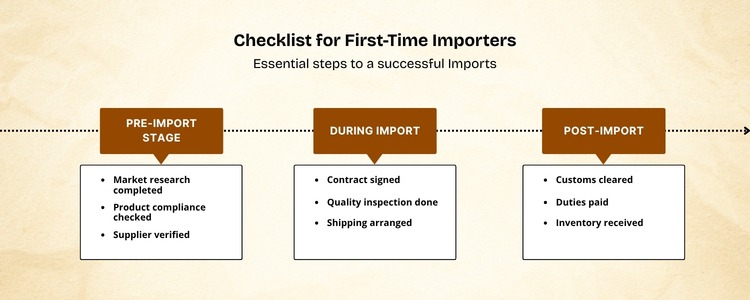
Supplier verification is essential in risk reduction. Before executing a contract, buyers must perform due diligence on potential suppliers to validate their claims about the necessary documentation concerning:
- Business Registration and certifications
- Production capacity and ability to provide quality products
- Availability (of supplier) of export experience in the country where the buyer resides
- Client references
There is value in negotiating price, payment terms, and delivery dates with a supplier to establish an understanding of what each party expects from one another so as to prevent miscommunication about those expectations.
Step 4: Understand Legal and Regulatory Requirements
Importing into the US can involve various compliance requirements. Newer importers are encouraged to become educated about those requirements so they can avoid compliance violations, such as delays in getting their goods into or out of the US or fines for non compliance.
Compliance includes:
- An importer of record (IOR) must be designated to assure compliance with US customs regulations that are enforced by US Customs and Border Protection (CBP).
- Certain products have to comply with specific standards issued by government agencies such as the Food and Drug Administration (FDA) and the US Department of Agriculture (USDA).
There are also requirements on the types of documentation that need to be submitted to US customs to facilitate the clearing of imported goods. The documentation required by US customs typically consists of invoices, packing lists, certificates of origin, and bills of lading.
Step 5: Choose the Right Import Export Company or Partner
Using the services of a qualified export or import company can reduce the costs of the logistics process and simplify the logistics process by providing qualified expertise in the areas of transportation and documenting shipments and complying with governmental regulations to help first-time importers minimize potential costs associated with any paperwork associated with the customs clearance process.
Alternatively, an importer may use a freight forwarder or customs broker that provides services directly to an importer. Regardless of the method of importing products into the US, aligning with a provider that can provide efficient and effective coordination of activities within the logistics process will enhance the likelihood of minimizing operational risk.
Step 6: Manage Shipping and Logistics
Importing goods requires managing the shipping component of the transaction. Buyers have two shipping options; they need to weigh their options between air and sea freight based on cost, urgency of absorption, and type of product they’re importing.
Sea Freight
- More economical for moving bulk cargo over longer distances
- Longer delivery times (due to vessel schedules) than through air freight.
Air Freight
- Faster delivery service for time sensitive shipments
- Most costly method of delivery.
Ensuring that products are packaged properly for movement is critical for their protection in transit. Therefore, exporters generally employ the same type of standardized packaging materials to increase the durability of their packages and to comply with international shipping regulations.
Tracking shipment status and communicating regularly with logistics partners helps ensure that delivery time frames are met.
Step 7: Handle Customs Clearance in the USA
Many perceive customs clearance as one of the most difficult stages in the importation process. If the importer is well-prepared, however, issues can be handled with relative ease.
Essentially, the import process is about the following steps:
– Properly filing entry documents with CBP;
– Paying the required duties and taxes upon receipt of the goods;
– Complying with all relevant customs rules and regulations;
It may be advantageous to engage a customs broker in order to facilitate the customs clearance process. By hiring a customs broker, they take your documentation and make the necessary arrangements with the appropriate customs authorities on your behalf.
Step 8: Quality Inspection and Final Delivery
Prior to shipment, an importer should perform a quality inspection in order to ensure that the goods do not differ from the agreed specifications. This quality check will minimize any potential costs associated with returning a defective product or resolving a dispute over the discrepancies in what the importer has sent and what the customer received.
Once the goods arrive in the US, the products must be transported to warehouses then distributed to retail outlets. Good inventory management helps ensure that products are delivered to the final consumers in a timely manner.
Common Challenges Faced by First-Time Importers
While many of the advantages of importing goods from India exist, there may be challenges for first-time buyers as follows:
- Gaps in communication between buyer and supplier due to differences in language and conducting business;
- Issues with quality – as the production standards may differ;
- Regulatory complexities – as they relate to the US import regulations; and
- Delivery delays – as it relates to how long it takes to ship items from India to the US plus total time to have the goods clear customs.
Careful planning, working with reliable partners and clear understanding of the overall import process will help to address these issues.
Opportunities in the India–USA Import Market
There are many vital areas of growth despite considerable challenges, due to the ever-growing demand in the USA for unique items that are cost effective; thus creating a positive situation for the importers of these types of products. The current major driving forces are:
- The increasing interest in handmade & sustainable products
- The expansion of eCommerce platforms
- The increase in demand for ethnic & specialty goods
Those who would like to start an import & export business will certainly be able to utilize these trends to develop a successful company.
Conclusion
The importation of products from India into the United States in 2026-27 offers an excellent opportunity for first-time purchasers who are willing to put in the effort to complete all of the necessary steps with sound planning and due diligence. Each step between selecting a product, logistics, and compliance must all be handled correctly to ensure success.
Although the overall process may seem complicated at first, if proper methodology is followed and appropriate partners are found to assist you, it can be accomplished successfully & profitably. As global trade continues to grow/evolve, India will become an ever-increasingly significant place to source products, providing international buyers with both diversity & value.

Diptanshu
Leading research and marketing at Inductus Global, Diptanshu drives the company’s vision to transcend traditional trading through thought leadership in import-export. He spearheads a research-driven approach that prioritizes quality over price arbitrage, positioning Inductus as a strategic sourcing partner rather than a transactional intermediary. His work spans market intelligence, supply chain innovation, and trade dynamics, while playing a key role in sales and business development.






2 Replies to “How to Import Products from India to the USA: Step-by-Step Guide for First-Time Buyers 2026-27”
Rohitha
13 Apr 2026Hello!
I’m a first-time importer based in Texas planning an e-commerce business selling Indian whole grains, legumes, lentils, spices, and pure handloom cloth to the US market. I’m exploring your services and guidance on how to best proceed with this. Can we please setup a call sometime this week with your one of your experts?
Thank you,
Rohitha
Global
13 Apr 2026Hi, Please Contact Us Handphone/WhatsApp: +91 8810457285
E-Mail: Diptanshu.anand@InductusGroup.com