

How to Source Wholesale Footwear from India: Step-by-Step Process for Importers
India’s footwear manufacturing industry has developed greatly into a world-renowned manufacturing centre that offers many categories of footwear priced competitively. International companies can take advantage of India’s many advantages as a sourcing location including; highly-skilled artisanship, a variety of footwear products, and a well-developed export infrastructure in India. Those first entering the Indian sourcing market should have a well-defined roadmap as to how they will work with their wholesale suppliers of footwear in order to create a steady, profitable supply chain.
Footwear produced in India includes many different styles at a wide range of price points including both high-end quality and low-end affordable footwear. When sourcing footwear from India, you must have a clear plan, have the suppliers evaluated, and have the footwear quality and compliance standards clearly defined.
Understanding India’s Footwear Manufacturing Landscape
India ranks among the top ten global footwear producers with significant domestic market, as well as substantial export market. The Indian footwear manufacturing industry consists of both large and small manufacturing operations providing flexibility in both the quantity of production, as well as the ability to customize products.
The Major manufacturing clusters (or per se cities shoe manufactures) in India include:
- Agra – Home to leather shoes, known for great craftsmanship
- Chennai – Primary hub for export-oriented production
- Kanpur – A major city that produces durable leather shoes
- Delhi-NCR – Predominantly produces casual, fashion, and synthetic shoes
These clusters allow buyers to select from numerous styles, types of materials, and price points for their customers.
Step 1: Define Your Product Requirements
To successfully source goods, importers must first identify their product specifications such as target market, consumer preferences and price strategy. Important product attributes to consider include:
– type of shoe, e.g. formal, casual, athletic and sandals
– choice of material such as leather shoes or synthetic
– desired price and quality level
– branding/costomisation requirements
Before selecting required suppliers, Importers need to clearly understand how their specifications fit into their overall business strategy.
Step 2: Identify Reliable Wholesale Footwear Suppliers
However, securing successful credentials with a reliable supplier can be a challenging part of the sourcing process. There are a number of methods for buyers to connect with suppliers including:
– Trade Shows and Industry Trade Shows
– B2B Market Places
– Factory Visits
– Online Platforms Buying Footwear Products on the Internet
Once a buyers has narrowed down their potential supplier list, the buyer will then need to assess their supplier finalists production capacity, available product lines and export experience. Depending on your suppliers level of experience, your supplier can withstand predetermined levels of business risk and can guarantee delivery and consistent product quality.
Step 3: Conduct Supplier Verification and Due Diligence
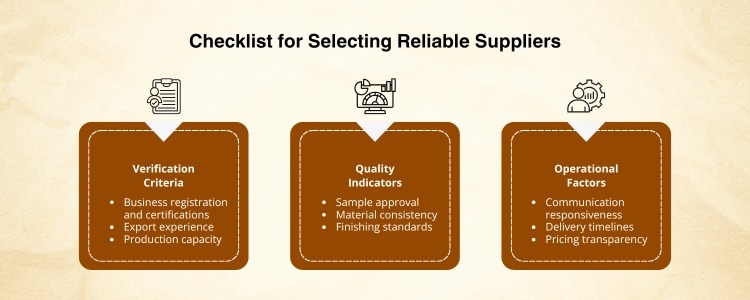
The following are examples of verification steps:
When verifying a supplier, it is necessary to:
- Verify the supplier’s business licences and’ certificates.
- Evaluate the supplier’s manufacturing processes (Production Facility).
- Review the supplier’s Quality Control procedures.
- Request samples from the supplier for your evaluation.
- Review the supplier’s export history and customer review/feedback.
Having clear communication and being transparent are crucial elements in establishing and maintaining trust between both parties and building long term relationships.
Step 4: Request Samples and Evaluate Quality
Sampling is one of the most critical parts of the sourcing process. It allows the buyer (the importer) to assess the quality of the product, accuracy of design and durability of the material.
When sampling, it is essential to consider the following:
- Quality of stitching and finish.
- Material Consistency.
- Comfort and Fit.
- Packaging.
When sourcing bulk footwear, this is especially important as minor defects can result in a considerable amount of defects when evaluated on a per-unit basis.
Step 5: Negotiate Pricing and Order Terms
The negotiation process has a major impact on the overall profitability to your organization. The buyer should be looking to balance the cost of an item against its quality. Depending upon your negotiation abilities and agenda as the purchaser, makes it difficult to determine how these discussions ultimately impact an organization financially.
Important Negotiation Objectives in Purchases
- Unit price and volume pricing (or bulk discounts)
- Minimum Order Quantity (MOQs)
- Terms of payment (i.e. before goods received, letter of credit, etc.)
- Deliveries timeline or production timeliness
Having clearly defined contract terms will help eliminate any confusion during the execution of a purchase order.
Step 6: Understand Compliance and Certification Requirements
Understanding the regulations/laws of the country in which the shoes or footwear will be imported is an important factor to consider in international trade. Buyers should familiarize themselves with the regulations that may apply to footwear imports to the country in which you will be importing from (tickets) to ensure there are no delays due to non-compliance or no penalties due to the lack of compliance.
Key compliance issues include:
- Material safety standards
- Labeling and packaging requirements
- Environmental norms and ethical sourcing
It is beneficial to purchase your footwear from suppliers who have experience exporting to the designated import market.
Step 7: Plan Logistics and Shipping
An efficient logistics management program is essential for a buyer to comply with their delivery dates, and therefore will play a major role in determining the overall financial viability of the purchase. A buyer must make a decision to use air freight or ocean freight, depending on both the size and urgency of the shipment.
Air Freight
- Higher cost for faster delivery
Ocean Freight
- Less expensive for larger shipments
- Longer transit time
In addition, the proper packaging and handling of footwear are critical to preventing mishaps during transit. Proper coordination with your exporter and/or freight forwarder will help to facilitate the distribution process for any footwear you purchase.
Step 8: Quality Inspection and Final Dispatch
A pre-dispatch inspection is highly recommended to help ensure that final product meets the specifications that have been agreed upon. A third party inspection agency or quality control agency can assist with verifying:
– Product consistency
– Quantity accuracy
– Packaging standards
Taking this step will reduce the risk of receiving defective or non-compliant items.
Challenges in Sourcing Footwear from India
Although importing from India has many benefits for importers, it can also present challenges such as:
– Quality variability (differences between sample and bulk production)
– Communication issues (difference in language and culture)
– Transportation bottlenecks (shipping delays and port issues)
– Regulation complications (cost of compliance with international standards)
To overcome these challenges, careful planning, clear communication, and dependable business relationships are essential.
Opportunities for Importers
While there are challenges, the footwear sector in India offers huge opportunities. Also, because of India’s ability to produce products at low prices, many people continue to see India as an attractive location for sourcing.
Here are some of the greatest opportunities for sourcing from India:
– The availability of skilled artisans and unique designs.
– Competitive prices when sourcing at scale.
– Growing demand for sustainably produced and ethically made footwear.
– The growth of e-commerce as a channel for global distribution.
By utilizing all of the advantages India has to offer, importers can create strong and scalable businesses.
Conclusion
Importing footwear from India can be a structured process with many details involved from the product selection phase through to product delivery. Partnering with reputable wholesale footwear distributors can improve the likelihood of success through strong quality assurance and compliance.
The process of importing footwear from India can seem complicated for first-time importers; however, with the proper approach and forward-thinking strategy, it can be a manageable and rewarding process. India has a footwear industry that blends traditional and modern principles and continues to be an ideal choice for global purchasers looking for quality products, variety, and value.

Diptanshu
Leading research and marketing at Inductus Global, Diptanshu drives the company’s vision to transcend traditional trading through thought leadership in import-export. He spearheads a research-driven approach that prioritizes quality over price arbitrage, positioning Inductus as a strategic sourcing partner rather than a transactional intermediary. His work spans market intelligence, supply chain innovation, and trade dynamics, while playing a key role in sales and business development.